 December 2025 in “TURKDERM”
 This article discusses Trikostazis spinuloza (TS), a dermatological condition often misdiagnosed, and reviews its demographic, clinical, and dermoscopic features, but reports no new clinical results.
21 citations
,
March 2015 in “Neurological Sciences” This study reports that a novel frameshift mutation in the HTRA1 gene in a CARASIL pedigree led to reduced HTRA1 protein and increased TGF-β1 expression, potentially causing severe CARASIL and peripheral small arterial disease.
 9 citations
,
May 2021 in “International Journal of Dermatology”
9 citations
,
May 2021 in “International Journal of Dermatology” In this study, sublingual tofacitinib achieved a longer estimated half-life than oral administration in treatment-resistant alopecia areata patients, potentially supporting daily dosing; overall treatment response was modest.
 2 citations
,
April 2024 in “Dermatology Practical & Conceptual”
2 citations
,
April 2024 in “Dermatology Practical & Conceptual” This study found that Janus Kinase inhibitors, tofacitinib and baricitinib, showed effectiveness and safety in treating severe alopecia areata in a real-world setting, with optimal tolerability noted in younger individuals.
 16 citations
,
January 2010 in “American Journal of Neuroradiology”
16 citations
,
January 2010 in “American Journal of Neuroradiology” This case report describes a 3-year-old boy with trichothiodystrophy, highlighting specific MRI findings of diffuse dysmyelination and osteosclerosis that may be unique to the disorder.
April 2016 in “Journal of Investigative Dermatology” Mutations in the TSPEAR gene cause a new form of ectodermal dysplasia affecting hair and tooth development.
4 citations
,
July 2023 in “Frontiers in Microbiology” HGF combined with ADA is highly accurate for diagnosing tuberculous pleural effusion, especially in younger females.
196 citations
,
November 2014 in “PubMed” This article discusses the diagnosis and treatment of tinea infections, emphasizing the importance of confirming certain diagnoses with lab tests and recommending treatments such as terbinafine for tinea capitis and onychomycosis.
This abstract compiles a list of medical syndromes and conditions related to tongue abnormalities and other systemic features but reports no new research findings.
This study found that tenuazonic acid from Alternaria alternata can cause significant damage to vital organs in mice at low doses and highlights the need for regulatory measures to manage its risk in agricultural products.
 41 citations
,
December 2015 in “JAMA Dermatology”
41 citations
,
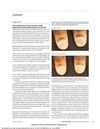
December 2015 in “JAMA Dermatology” Tofacitinib citrate improved nail dystrophy and pain in patients with alopecia universalis without causing side effects.
January 2022 in “Clinical Cases in Dermatology” This review discusses prevention, diagnosis, and treatment strategies for traction alopecia but presents no new clinical findings; the authors emphasize early intervention to prevent permanent hair loss.
 July 2018 in “Elsevier eBooks”
 This chapter reviews traction alopecia, discusses its clinical presentation and severity grading, and reports no new clinical results; the authors highlight controversies in its treatment and prevention strategies.
 60 citations
,
April 2018 in “Clinical, cosmetic and investigational dermatology”
60 citations
,
April 2018 in “Clinical, cosmetic and investigational dermatology” This review discusses the causes and diagnosis of traction alopecia, emphasizing education for high-risk populations as there is currently no cure, and presents no new clinical findings.
July 2026 in “Cosmoderma” This study highlights that alopecia areata, an autoimmune condition often starting in childhood, poses a higher risk of becoming chronic with an early onset and can result in poor therapy response.
 88 citations
,
August 2019 in “Nature communications”
88 citations
,
August 2019 in “Nature communications” In this study, researchers identified a specific T cell receptor associated with carbamazepine-induced severe cutaneous adverse reactions, demonstrating its potential for therapeutic development in patients with the HLA-B*15:02 genotype.
November 1968 in “Journal of the American Pharmaceutical Association”  December 2025 in “Cureus”
 This study reports a case of traumatic anserine folliculosis in a young male, where treatment with topical retinoids and keratolytics combined with avoiding friction significantly improved symptoms after nine months.
 130 citations
,
February 2018 in “Journal of Investigative Dermatology”
130 citations
,
February 2018 in “Journal of Investigative Dermatology” This study found that tofacitinib led to ≥50% hair regrowth in eight out of twelve patients with moderate to severe alopecia areata, suggesting a potential benefit for using JAK inhibitors in treating this condition.
 17 citations
,
January 2019 in “Dermatologic Therapy”
17 citations
,
January 2019 in “Dermatologic Therapy” The article in Dermatologic Therapy discusses clinical experiences with using tofacitinib to treat alopecia areata in 63 patients, but no specific results are reported in the abstract.
 238 citations
,
November 2016 in “Journal of The American Academy of Dermatology”
238 citations
,
November 2016 in “Journal of The American Academy of Dermatology” In this study, tofacitinib was reported to improve scalp hair regrowth in patients with severe alopecia areata, alopecia totalis, and alopecia universalis, showing a higher response in alopecia areata.
 November 2024 in “PubMed”
 This case report describes an 18-month-old boy who developed a rare phototoxic skin reaction to terbinafine, likely triggered by sunlight exposure, which resolved after treatment with corticosteroid cream and sun avoidance.
3 citations
,
November 1998 in “PubMed” This article discusses tinea capitis prevention and treatment strategies, emphasizing the importance of systemic therapy for effective antifungal action and reducing contagion risk.
 1 citations
,
September 2022 in “International Journal of Trichology”
1 citations
,
September 2022 in “International Journal of Trichology” In this case report, a young adult male with resistant alopecia areata showed nearly 90% hair regrowth after 3 months of treatment with tofacitinib, alongside biotin supplementation, without any side effects observed.
 28 citations
,
July 2007 in “Development”
28 citations
,
July 2007 in “Development” In this study, inactivating the TAF4 subunit of transcription factor TFIID in mouse epidermis disrupted gene expression linked to skin and hair function, and increased tumor risk.
 November 2025 in “SKIN The Journal of Cutaneous Medicine”
 In this phase 3 trial, baricitinib showed effectiveness and safety in both adolescents and adults with severe alopecia areata, with adolescents achieving higher response rates despite more severe baseline conditions, suggesting the advantages of early treatment.
 26 citations
,
October 2020 in “Pediatric Dermatology”
26 citations
,
October 2020 in “Pediatric Dermatology” This study found that oral tofacitinib led to clinically significant improvement in alopecia areata severity scores among pre-adolescents, though results varied and further evaluation in clinical trials is needed.

This article discusses the clinical features of tumid lupus erythematosus and emphasizes its importance as a differential diagnosis for noncicatricial alopecia, highlighting a case similar to alopecia areata without reporting new clinical results.
34 citations
,
January 2004 in “Genomics” In this study, researchers identified a cluster of hair-specific keratin-associated protein genes within the 21q22.3 region, revealing a novel transcription mechanism involving TSPEAR/C21orf29 that may bypass typical transcriptional termination sites.
188 citations
,
October 2014 in “Thyroid” This study found that dabrafenib was well tolerated and led to durable responses in patients with BRAF-mutant differentiated thyroid carcinoma, with a median progression-free survival of 11.3 months.