 4 citations
,
November 2021 in “Frontiers in endocrinology”
4 citations
,
November 2021 in “Frontiers in endocrinology” This study systematically compared pediatric and adult Cushing's disease patients, revealing more severe and earlier-onset symptoms in males, and distinct gender-specific clinical manifestations.
15 citations
,
March 2023 in “BioMed” This review discusses multisystem inflammatory syndrome in adults (MIS-A) related to SARS-CoV2 and outlines the existing knowledge and unanswered questions, reporting no new clinical results.
46 citations
,
October 2012 in “Seminars in reproductive medicine” This review describes how recent discoveries in genetic defects and alternative pathways in androgen biosynthesis are reshaping our understanding of male sexual differentiation, but it presents no new clinical findings.
1 citations
,
November 2018 in “immuneACCESS” This study found that in alopecia areata, treatment with the oral JAK-inhibitor tofacitinib decreased clonally expanded CD8⁺ T cells in the scalp, but many expanded clones did not completely disappear, potentially leading to relapse after stopping treatment.
October 1984 in “Immunology Today” 8 citations
,
November 2011 in “Journal of Medical Case Reports” This case report describes a 23-year-old Asian woman with fluoxetine non-responsive trichotillomania who showed significant improvement with bupropion and cognitive behavior therapy, though confirmation in larger trials is needed.
 32 citations
,
July 2017 in “Wiley Interdisciplinary Reviews-Developmental Biology”
32 citations
,
July 2017 in “Wiley Interdisciplinary Reviews-Developmental Biology” This review discusses the emerging roles of transit-amplifying cells in tissue regeneration and cancer formation, highlighting their significance beyond a mere transitional state in hair follicles and the hematopoietic system.
1 citations
,
September 2024 in “Journal of the American Academy of Dermatology” Poor air quality increases the risk of atopic dermatitis in Taiwan.
2 citations
,
January 2016 in “Experimental Dermatology” This symposium updated participants on the latest advances in understanding and managing hidradenitis suppurativa, emphasizing the need for individualized treatment plans and highlighting recent progress in therapies and epidemiology.
 10 citations
,
September 2022 in “Psychiatry and Clinical Neurosciences”
10 citations
,
September 2022 in “Psychiatry and Clinical Neurosciences” This review discusses post-acute sequelae of SARS-CoV-2 infection, highlighting the challenges in diagnosing and managing the variety of persistent symptoms, and reports no new clinical results.
55 citations
,
November 2010 in “Journal of Allergy and Clinical Immunology” This study found that the TLR3 L412F genetic variant is associated with severe viral infections, especially CMV, and immune dysfunction in a subgroup of chronic mucocutaneous candidiasis patients.
1 citations
,
January 2024 in “Dermatologic Therapy” This study found that combining excimer light at 308 nm with tacrolimus 0.1% was more effective in treating alopecia areata of the scalp compared to excimer light alone, as indicated by a greater reduction in the SALT score and better improvement in Treg function.
This study found no predictive link between mothers’ PCOS symptoms and the adolescent phenotype, but identified certain gene alleles associated with higher testosterone levels in affected adolescents.
 11 citations
,
November 2019 in “Journal of the American Academy of Dermatology”
11 citations
,
November 2019 in “Journal of the American Academy of Dermatology” This study suggests that oral tofacitinib may be an effective treatment for beard regrowth in men with alopecia areata of the beard, with a strong correlation observed between beard and scalp hair regrowth.
3 citations
,
June 2018 in “Internal Medicine” In this study, a patient with Cronkhite-Canada syndrome complicated by severe sepsis and disseminated intravascular coagulation was successfully treated using combined therapies, including recombinant human soluble thrombomodulin, despite the absence of a standard treatment regimen for CCS.
 May 2023 in “International Journal of Trichology”
 In this case report, the researchers described the use of tofacitinib in treating a 14-year-old boy from India with severe alopecia areata, achieving complete hair regrowth within 2 months without serious adverse events, highlighting tofacitinib's potential benefits and safety in adolescent cases.
 248 citations
,
December 2011 in “Journal of Neuroscience”
248 citations
,
December 2011 in “Journal of Neuroscience” This study demonstrated that stress-derived neurosteroid THDOC shifts from inhibiting to activating the HPA axis under stress, presenting potential therapeutic targets for stress-related disorders.
28 citations
,
November 2018 in “American Journal of Medical Genetics Part A” This report describes a neurometabolic disorder linked to gain-of-function variants in the ODC1 gene, characterized by developmental delay, ectodermal abnormalities, and notable facial and neuroimaging features.
November 2025 in “Journal of Investigative Dermatology” Certain immune cells in atopic dermatitis skin could be targeted for treatment.
 17 citations
,
December 2020 in “Journal of Genetic Counseling”
17 citations
,
December 2020 in “Journal of Genetic Counseling” This review outlines best practices for providing culturally competent care to transgender patients and discusses considerations for assessing disease risk, but reports no new research findings.
 13 citations
,
March 2002 in “Pediatric Dermatology”
13 citations
,
March 2002 in “Pediatric Dermatology” This article discusses temporal triangular alopecia, emphasizing the need for increased awareness to prevent misdiagnosis and ineffective treatment, but reports no new clinical results.
11 citations
,
April 2023 in “Annals of General Psychiatry” This study found that males treated with serotonergic antidepressants had an increased risk of erectile dysfunction, with an adjusted odds ratio of 3.2, and the risk for post-SSRI sexual dysfunction was 0.46%, emphasizing the importance of informed consent due to these potential irreversible side effects.
 70 citations
,
April 2016 in “Experimental Dermatology”
70 citations
,
April 2016 in “Experimental Dermatology” In this study, oral tofacitinib treatment led to significant hair regrowth and changes in skin and blood biomarkers in a patient with alopecia areata.
 43 citations
,
December 2020 in “PLOS Genetics”
43 citations
,
December 2020 in “PLOS Genetics” This study used a new statistical approach, PLACO, to identify several novel shared genetic regions associated with both Type 2 Diabetes and Prostate Cancer in two large GWAS datasets.
July 2025 in “Journal of Investigative Dermatology” Enhancing Tregs can protect against alopecia areata.
 1 citations
,
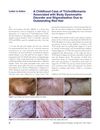
January 2013 in “International Journal of Trichology”
1 citations
,
January 2013 in “International Journal of Trichology” A girl with red hair developed hair-pulling and body image disorders after being bullied for her hair color.
This study investigated dual TCR Treg cells in mouse tissues, revealing a high proportion and diverse pairing patterns compared to single TCR Tregs, providing insights into their origins and characteristics across different tissue locations.
 9 citations
,
May 2021 in “International Journal of Dermatology”
9 citations
,
May 2021 in “International Journal of Dermatology” In this study, sublingual tofacitinib achieved a longer estimated half-life than oral administration in treatment-resistant alopecia areata patients, potentially supporting daily dosing; overall treatment response was modest.
 44 citations
,
November 2009 in “Archives of Dermatology”
44 citations
,
November 2009 in “Archives of Dermatology” This study observed that patients with CYLD mutations frequently experienced severe, painful tumors beyond the head and neck, impacting their quality of life, with hormonal factors possibly contributing to tumor development.
January 1999 in “대한피부과학회지” This study aimed to explore the relationship between stress and dermatologic disorders and found that the connection remains unclear, but it also examined the potential influence of coping strategies.