 11 citations
,
May 2022 in “Journal of immunology research”
11 citations
,
May 2022 in “Journal of immunology research” This review characterizes breast implant illness and its autoimmune symptoms, reporting an association between breast implants and autoimmune diseases, with explantation relieving symptoms in over half of patients.
January 2026 in “International Journal of Innovative Technologies in Social Science” This review synthesizes information on isotretinoin’s systemic toxicity, emphasizing that its adverse effects, including mucocutaneous, hepatic, and musculoskeletal reactions, primarily reflect its pharmacodynamic actions and are generally manageable with individualized dosing and monitoring, though its teratogenicity remains a significant safety concern.
November 2025 in “Journal of Clinical Medicine” This review article explores the potential systemic nature of alopecia areata, highlighting the association with ocular abnormalities and suggesting that shared pathogenic pathways may lead to eye symptoms occurring at younger ages than usual.

This study developed a new analytical method to identify a wide range of endocrine disrupting compounds in full-term amniotic fluid, revealing diverse substances with potential endocrine activity.
 18 citations
,
July 2022 in “Frontiers in Immunology”
18 citations
,
July 2022 in “Frontiers in Immunology” This review discusses the potential impact of volatile organic compound exposure on the onset and progression of autoimmune diseases and reports no new experimental findings.
 26 citations
,
February 2016 in “Respiratory Medicine”
26 citations
,
February 2016 in “Respiratory Medicine” This article reviews strategies for serological testing in diagnosing ILD linked to systemic rheumatic diseases and introduces a potential diagnostic algorithm for pulmonologists, while noting further validation is needed.
1 citations
,
October 2025 in “Ophthalmology Science” In this experimental study, researchers found that intravitreal injections of up to 100μg of topotecan in rabbits caused no systemic or ocular toxicity, while 200μg doses resulted in localized retinal changes and decreased electroretinography amplitudes near the injection site.
November 2025 in “Clinics and Practice” This case report describes a rare and severe systemic reaction to red tattoo ink, including erythroderma, alopecia universalis, anhidrosis, and vitiligo, highlighting significant diagnostic and therapeutic challenges.
 May 2025 in “The Journal of Rheumatology”
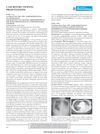
 This case report details a rare instance of primary adrenal insufficiency as a manifestation of antiphospholipid syndrome, with the patient successfully managed through glucocorticoids, warfarin, and hydroxychloroquine.
 April 2024 in “Dermatovenerologiâ, kosmetologiâ”
 This material provides comprehensive information about actinic keratosis, highlighting its potential outcomes, risk factors, clinical features, diagnosis, and treatment considerations for medical specialists.
March 2024 in “Antioxidants” This study examines the effects of excessive or prolonged exposure to blue light on retinal function and highlights its potential health implications, noting that both photoreceptor and intrinsically photosensitive retinal ganglion cells (ipRGCs) are particularly sensitive to blue wavelengths.

This study found that in an androgenetic alopecia mouse model, phospholipid-bile salt mixed micelles for topical Finasteride delivery improved hair regrowth and reduced systemic absorption compared to a hydroalcoholic solution, suggesting a safer and more effective treatment option.
 14 citations
,
January 2015 in “Hormones and Cancer”
14 citations
,
January 2015 in “Hormones and Cancer” This study found that androgen receptor inactivation in male and female mice reduced susceptibility to DMBA-induced skin cancer, but the effect varied by the carcinogenesis model.
45 citations
,
August 2018 in “Journal of Lipid Research” This study observed that partial autotaxin deficiency in mice protects against diet-induced obesity and systemic insulin resistance, suggesting the ATX-LPA pathway negatively affects skeletal muscle insulin signaling and mitochondrial function during obesity.
34 citations
,
February 2015 in “Frontiers in Cellular Neuroscience” This study identified new genes and compounds affecting hair cell survival during ototoxin exposure using the zebrafish model, potentially aiding in understanding and preventing hearing loss and balance disorders in humans.
 9 citations
,
April 1976 in “Archives of Dermatology”
9 citations
,
April 1976 in “Archives of Dermatology” This report observed that two teenagers developed skin issues, including abscess-like pustules, after taking kelp supplements, which cleared when the supplements were discontinued.
2 citations
,
June 2018 in “Physiology & behavior” The study found that ondansetron decreased alcohol consumption only in adult rats that experienced altered neuroactive steroid levels from early post-natal finasteride exposure, suggesting increased 5HT3 receptor sensitivity in these rats.
1 citations
,
September 2024 in “iScience” In a study on mice, researchers found that exposure to artificial light environments causing circadian misalignment impaired hair growth by reducing the hair growth rate during the anagen phase, suggesting these light conditions as a potential risk factor for hair loss.
February 2026 in “Frontiers in Immunology” This review highlights the role of the brain–gut–skin axis in systemic inflammatory skin conditions, revealing potential interventions like microbiome-directed treatments and integrative therapies, though emphasizes the need for more robust clinical validation.
 February 2026 in “Indian Journal of Dermatology”
 This study from a dermatology department found that patch test positivity for allergic contact dermatitis is lower in geriatric patients than in adults, likely due to age-related immune changes and reduced allergen exposure.
November 2025 in “Wiley Interdisciplinary Reviews Forensic Science” This article reviews recent advancements in forensic hair testing, emphasizing its growing use for detecting past substance exposure, identifying emerging trends like micro-segmentation and hair scanning, and proposing standardized procedures to improve reliability and application in forensic toxicology.
May 2025 in “International Journal of Women’s Dermatology” In this retrospective cohort study, researchers found that exposure to 5-alpha reductase inhibitors and spironolactone in female alopecia patients was not linked to an increased risk of developing malignant or benign gynecologic tumors when compared to minoxidil use.
 November 2024 in “PubMed”
 This case report describes an 18-month-old boy who developed a rare phototoxic skin reaction to terbinafine, likely triggered by sunlight exposure, which resolved after treatment with corticosteroid cream and sun avoidance.
 January 2019 in “Springer eBooks”
 This review discusses drugs and mechanisms possibly responsible for chemical- and drug-induced hair loss but presents no new research findings.
February 2009 in “Mayo Clinic proceedings” This case report found that the most likely cause of the patient's seizures and brain tumor was prior radiation exposure, with seizures managed effectively using intravenous lorazepam and subsequent treatment for the brain mass.
 10 citations
,
May 1983 in “International Journal of Dermatology”
10 citations
,
May 1983 in “International Journal of Dermatology” This study found that four out of ten patients with alopecia areata experienced some hair regrowth after PUVA therapy, though this treatment should be reserved for those unresponsive to other options due to potential long-term side effects.
68 citations
,
May 2024 in “International Journal of Molecular Sciences” This review of acne management strategies highlights current treatments, such as topical and systemic therapies, procedural methods, and dietary changes, while also discussing emerging options like biologics and probiotics as potential future treatments, emphasizing personalized care due to acne's complex nature.
25 citations
,
June 2024 in “Pharmaceutics” This review highlights the potential of scaffold-based drug delivery systems to revolutionize oral cancer treatment by enhancing targeted and localized drug administration, reducing systemic side effects, and providing environments conducive to non-cancerous cell growth, though challenges like scalability and biocompatibility remain.
 September 2025 in “BULLETIN OF STOMATOLOGY AND MAXILLOFACIAL SURGERY”
 In this review, researchers explored the complex mechanisms behind chemotherapy-induced side effects like nausea, fatigue, and hair loss, and discussed potential strategies using natural agents to manage these toxicities, improving understanding for targeted adjunct therapies.
August 2025 in “MedComm – Biomaterials and Applications” This review highlights recent advances in liposome-based transdermal drug delivery systems, emphasizing their potential to improve drug penetration for both skin and systemic diseases while discussing the challenges and future directions in this field.