 July 2026 in “Preprints.org”
 In this study, incorporating a novel amino acid compound into a hair-straightening formulation improved humidity-resistant straightening and enhanced the surface and mechanical properties of hair fibers, including increased bending stiffness, reduced friction, and better shape retention under high temperature and humidity conditions.
11 citations
,
August 2023 in “Regenerative Therapy” This study proposes a reporting guideline, CLINIC - STRA-SVF, to standardize and improve the design and reporting of clinical studies involving SVF, highlighting its safety and effectiveness despite the low level of current evidence.
July 2026 in “Open Minds International Journal” This review suggests that multifunctional cosmetic systems, particularly HIVEN Curl Code ®, may help control frizz and maintain curl definition in highly curly hair by utilizing various conditioning and biofunctional ingredients.
13 citations
,
August 2007 in “Journal of Investigative Dermatology” Mouse hair can regrow in a special lab setup without serum.
September 2026 in “AlQalam Journal of Medical and Applied Sciences” This study found that a combination of Ziziphus lotus, Linum usitatissimum, and Opuntia ficus-indica extracts may reduce porosity and improve surface condition in bleached hair when used as a conditioner.
11 citations
,
June 2013 in “PubMed” This study found that controlled thermal straightening can achieve irreversible smoothing of curly hair without chemicals, with effectiveness dependent on temperature and cycles, and silicone enhancing straightening quality.
 June 2026 in “Zenodo (CERN European Organization for Nuclear Research)”
 This study formulated a natural hair conditioner using liquorice, flaxseed, and curry leaf extracts, coconut oil, glycerine, and rose water, reporting that it effectively improved hair smoothness, shine, moisture retention, and manageability, offering a potential eco-friendly alternative to synthetic conditioners.
1 citations
,
January 1998 in “Cosmetics and toiletries” Both amodimethicone and dimethicone copolyol amine are effective hair conditioners.
 April 2023 in “Research Square (Research Square)”
 The researchers reported that combining stromal vascular fraction (SVF) with fractional CO2 laser treatment significantly improved burn scar outcomes and patient satisfaction compared to using the laser alone.
January 2026 in “Brazilian Journal of Pharmaceutical Sciences” This study assessed the effects of chemical treatments on hair fiber integrity and found that conditioners with vegetable oils like jojoba and coconut enhanced hydrophobicity and reduced combing friction except for jojoba, while participants preferred these oil-containing conditioners over the base formulation.
July 2024 in “International journal of agriculture and food sciences research.” This study found that a hair conditioner using peptides from Pneumatophorus japonicus heads improved damaged hair's structure, gloss, and smoothness more effectively than a commercial wheat protein conditioner by increasing amino acid content and interacting with hair keratin.
 January 2020 in “Journal of Pharmacognosy and Phytochemistry”
 This study observed that a polyherbal hair oil made from virgin coconut oil and extracts of nine different herbs demonstrated effectiveness in promoting hair growth with a cooling effect and no reported side effects, based on various evaluated properties.
7 citations
,
January 1995 This study found that using a high-viscosity, high-amine-content silicone fluid as a pretreatment can protect hair from bleaching and dyeing damage without affecting these processes.
September 2018 in “Journal of Society of Cosmetic Chemists of Japan” This study found that applying a solution containing oil-soluble vitamin C to damaged hair improved hair cuticle condition and water repellency, suggesting a new cosmetic function beyond its known skin whitening effects.
 4 citations
,
March 2021 in “Journal of Surfactants and Detergents”
4 citations
,
March 2021 in “Journal of Surfactants and Detergents” This study found that hair treated with shampoo containing water-soluble silicone demonstrated smoother sliding and better detangling, compared to shampoo with water-insoluble silicone, due to differences in conditioning film formation.
 June 2026 in “Zenodo (CERN European Organization for Nuclear Research)”
 This study evaluated a conditioner made from herbal ingredients like liquorice and flaxseed extracts, finding it potentially effective and safe for enhancing hair smoothness and moisture while offering an eco-friendly alternative to synthetic options.
14 citations
,
May 2023 in “Dermatologic Surgery” VYC-12L effectively improves skin smoothness, reduces fine lines, and boosts hydration.
This article introduces REVVup Hair Therapy as an alternative to surgery for early-stage hair loss but reports no new clinical findings.
 18 citations
,
January 2008 in “Sen'i Gakkaishi”
18 citations
,
January 2008 in “Sen'i Gakkaishi” This study observed that repeated perm treatments decrease disulfide bonds in hair due to their conversion largely into cysteic acid, affecting the waving efficiency depending on the reduction agent used.
 3 citations
,
December 2020 in “Journal of the turkish academy of dermatology”
3 citations
,
December 2020 in “Journal of the turkish academy of dermatology” This study concluded that stromal vascular fraction treatment was effective in increasing hair density and thickness in patients with androgenetic alopecia over a three-month period.
 January 2024 in “Forte Journal”
 This study found that formula 4 of the citronella and coconut oil combination promoted rabbit hair growth comparably to the positive control.
 February 2025 in “Medico Research Chronicles”
 In this clinical study, Verilich hair serum significantly reduced hair shedding by 40% or more in 75% of female patients with Telogen Effluvium and Female Pattern Hair Loss after one month of use.
11 citations
,
March 2013 in “Journal of Ophthalmic Inflammation and Infection” This report describes two cases of VKH disease and SO where severe alopecia, likely due to incomplete treatment, improved following systemic steroid therapy.
February 2021 in “International journal of regenerative medicine” In this study, emulsifying microfragmented adipose tissue increased the number of stromal vascular fraction cells available for regenerative treatments, suggesting the method's potential use in medical facilities.
 November 2022 in “International journal of biology, pharmacy and allied sciences”
 In this study, the researchers formulated an herbal shampoo and found it exhibited excellent cleansing properties and foam stability, comparable to commercial shampoos, suggesting it as a safe and cost-effective alternative to marketed formulations.
 December 2017 in “Actas Dermo-Sifiliográficas”
 Scalp cooling reduces chemotherapy-induced hair loss without increasing risk of skin metastases.
This study found that mouse vibrissa follicles in early anagen grew better than in other hair cycle phases, and growth was enhanced by removing the upper follicle third in vitro.
 10 citations
,
June 2001 in “International Journal of Cosmetic Science”
10 citations
,
June 2001 in “International Journal of Cosmetic Science” This study found that laboratory-formulated natural shampoos condition hair better than commercial herbal shampoos, as shown by SEM micrograph analysis of hair microstructure.
January 2025 in “Journal of Carcinogenesis” This study concluded that stromal vascular fraction and topical minoxidil both improved hair characteristics in male and female patients with androgenetic alopecia, but SVF offered a more satisfactory treatment experience.
 13 citations
,
April 2001 in “Journal of The American Academy of Dermatology”
13 citations
,
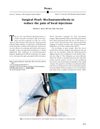
April 2001 in “Journal of The American Academy of Dermatology” Using a vibrating device during injections can help reduce pain.