1 citations
,
February 2024 in “JAMA Dermatology” Support groups help people with alopecia areata feel better emotionally, but more awareness and access are needed.
November 2025 in “Journal of the Dermatology Nurses’ Association” This text describes the missions and activities of various organizations focused on supporting people with conditions such as allergies, autoimmune diseases, and skin disorders, emphasizing outreach, education, research, and advocacy. Results from specific studies are not provided.
 September 2024 in “Journal of the American Academy of Dermatology”
 This study reports that cancer patients experiencing chemotherapy-induced alopecia actively engage in Facebook groups for support, instructions, and product recommendations related to scalp cooling, but only 5% consult dermatologists for hair loss concerns, highlighting the platform's influence on patient treatment decisions.
 20 citations
,
August 2018 in “Clinics in Dermatology”
20 citations
,
August 2018 in “Clinics in Dermatology” This study highlights the significant psychological impact of alopecia areata, emphasizing the reciprocal relationship between the disorder and psychiatric issues, and underscores the importance of identifying patients needing additional psychological support, especially women, young individuals, and those with severe alopecia or previous psychiatric history.
 20 citations
,
November 2013 in “The Open Cancer Journal”
20 citations
,
November 2013 in “The Open Cancer Journal” This observational study provides cause-specific mortality estimates to help patients and physicians better understand long-term outcomes for localized prostate cancer based on initial treatment choices.
 3 citations
,
May 2010 in “Nursing Standard”
3 citations
,
May 2010 in “Nursing Standard” This article discusses autoimmune-associated alopecia areata, highlighting its psychological and social impact, but reports no new clinical findings.
 November 2023 in “The journal of investigative dermatology/Journal of investigative dermatology”
 This study developed a questionnaire based on Andersen’s behavioral model to explore psychological well-being and mental health help-seeking behaviors among alopecia areata patients from underserved communities, aiming to better understand factors influencing their mental healthcare utilization.
5 citations
,
July 2023 in “Journal of Autonomous Intelligence” This study evaluates a framework using neural networks and machine learning techniques to classify and detect Alopecia Areata from hair images, aiming for accurate differentiation between healthy hair and the condition.
3 citations
,
January 2024 in “Health Psychology Report” This study explored the psychological experiences of Black women with autoimmune alopecia, revealing that cultural significance of hair and social support are crucial factors, and suggesting a need for increased awareness and targeted support from health professionals and communities.
1 citations
,
September 2023 in “Journal of the American Academy of Dermatology” This study found that self-stigma is common among alopecia areata patients, with 85% experiencing it to some degree, and that factors like increased social support and illness acceptance correlate with lower stigmatization levels, while helplessness correlates with higher levels.
 August 2013 in “Actas Dermo-Sifiliográficas”
 This study found that 29.1% of Cochrane Skin Group reviews provided strong evidence for or against interventions, showing their potential impact on clinical decision-making.
 4 citations
,
May 2024 in “Supportive Care in Cancer”
4 citations
,
May 2024 in “Supportive Care in Cancer” In this survey study, participants from scalp cooling Facebook groups reported benefiting from shared experiences, instructions, insurance advice, and product recommendations, although only a minority sought dermatologist consultations, suggesting these groups provide a significant informational platform for chemotherapy-induced alopecia patients.
14 citations
,
January 2023 in “Nature Immunology” iNKT cells help develop and maintain healthy skin in young mice.
 July 2025 in “Consilium Medicum”
 In this study, women with telogen effluvium showed significant improvement in hair loss and hair growth density when treated with a combination of oral Pantovigar, a Microxidil-containing topical lotion, and mesotherapy with a placental preparation compared to those not receiving Pantovigar.
February 2025 in “Clinical and Experimental Dermatology” According to this study, Ireland’s current eligibility criteria for financial assistance on hair replacement products exclude many individuals with alopecia, such as children with non-chemotherapy-induced alopecia, and expanding support could align the country with more inclusive international policies.
August 2025 in “Geburtshilfe und Frauenheilkunde” This paper reviews the new German and international guidelines for diagnosing and managing PCOS in adolescents, emphasizing a provisional diagnosis for those with partial criteria and recommending revisiting this diagnosis three and eight years after menarche.
 14 citations
,
June 2021 in “British journal of dermatology/British journal of dermatology, Supplement”
14 citations
,
June 2021 in “British journal of dermatology/British journal of dermatology, Supplement” This paper presents consensus guidelines for standardized diagnostic criteria and assessment methods for frontal fibrosing alopecia to improve clinical research and data collection globally.
1 citations
,
October 2016 in “Molecular biology of the cell” This essay shares the scientific pursuits and leadership approaches of the author's lab but presents no new research findings.
 October 2022 in “Journal for Research in Applied Sciences and Biotechnology”
 This study found that polymorphism of the SHBG gene (rs1799941) is associated with an increased risk of Polycystic Ovary Syndrome in Iraqi women.
May 2026 in “JDDG Journal der Deutschen Dermatologischen Gesellschaft” This guideline reports that corticosteroids are the only topical treatment for alopecia areata with a high recommendation level, while systemic corticosteroids and JAK inhibitors are recommended for adults.
 7 citations
,
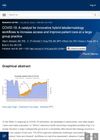
April 2021 in “Journal of The American Academy of Dermatology”
7 citations
,
April 2021 in “Journal of The American Academy of Dermatology” This study found that the implementation of the SAVe teledermatology model increased access to dermatologic care during COVID-19, reducing referral wait times significantly compared to in-person visits.
 July 2024 in “Journal of Investigative Dermatology”
 A single medium, PRIME AIRLIFT, supports better human hair follicle formation in grafts.
 October 2019 in “Turkderm”
 This study examined the demographics of patients diagnosed with pernio and compared their vitamin B12, folate, and ferritin levels with those of a control group.
 48 citations
,
May 2013 in “Canadian Medical Association Journal”
48 citations
,
May 2013 in “Canadian Medical Association Journal” This article discusses common causes of hair loss, specifically androgenetic alopecia and alopecia areata, but reports no new clinical findings.
October 2025 in “JDDG Journal der Deutschen Dermatologischen Gesellschaft” Hair loss negatively impacts quality of life, and psychological support can help.
 28 citations
,
January 2015 in “Journal der Deutschen Dermatologischen Gesellschaft”
28 citations
,
January 2015 in “Journal der Deutschen Dermatologischen Gesellschaft” This study found that Greek adult women with scarring alopecia experience more significant psychological burden and quality of life impairment compared to those with non-scarring alopecia.
March 2026 in “Ukrains kyi Visnyk Psykhonevrolohii” In this study, female patients with mixed alopecia reported significantly lower quality of life compared to those with metabolic alopecia, with poorer psychological well-being and personal fulfillment, linked closely to mental maladaptation severity, suggesting a biopsychosocial treatment approach.
 May 2026 in “Journal of Clinical Medicine”
 This meta-analysis found a significantly higher prevalence of depressive symptoms in women with PCOS compared to a control group, with 42.11% versus 13.62% according to the BDI assessment, highlighting the need for psychiatric evaluation and support for women with this syndrome.
 1 citations
,
February 2018 in “Journal of Nursing UFPE on line”
1 citations
,
February 2018 in “Journal of Nursing UFPE on line” This study explored the significance of alopecia for women with breast cancer undergoing chemotherapy and found that their experiences varied, influenced by personal and social factors, and the support from adornments, groups, and family.
June 2025 in “British Journal of Dermatology” Among patients with alopecia, this study observed that the internet was the most used source of information, providing helpful advice 73% of the time, although it often felt overwhelming, while hairdressers and support groups were also consulted but varied in helpfulness.