 December 2025 in “Journal of Food Innovation, Nutrition, and Environmental Sciences”
 This study evaluated the effects of sun drying and solar drying on Chaya leaves, finding that solar drying better preserves chlorophyll and phytochemicals while maintaining comparable nutritional quality to sun drying, suggesting its adoption could improve shelf life and maintain quality in areas without refrigeration.
 2 citations
,
March 2025 in “Archives of Dermatological Research”
2 citations
,
March 2025 in “Archives of Dermatological Research” HEV light can harm or help skin and scalp, so safe exposure guidelines are needed.
 April 2019 in “Journal of Investigative Dermatology”
 This study found that ultraviolet radiation causes significant damage to human hair follicles, including increased cell apoptosis and oxidative DNA damage, but this damage may be mitigated by topical caffeine.
4 citations
,
October 2013 in “PLoS ONE” This study found that Vemurafenib led to a broad range of cutaneous side effects in nearly all patients with advanced melanoma, highlighting the need for regular dermatologic management and UV protection.
11 citations
,
July 2024 in “Cancers” This review discusses common skin toxicities from cancer treatments and offers management strategies, particularly for regions like Australia and New Zealand with high UV exposure.
April 2024 in “International journal of molecular sciences” This narrative review discusses the promising role of photobiomodulation in dermatology, emphasizing its non-invasive nature and potential benefits, but acknowledges the need for further research to establish standard protocols.
July 2025 in “Journal of Investigative Dermatology” This study found that high-dose UVA-1 therapy appeared to improve both patient-reported outcomes and objective clinical measures in patients with morphea and systemic sclerosis, supporting its potential efficacy for treating scleroderma.
 6 citations
,
January 1998 in “Journal of Investigative Dermatology”
6 citations
,
January 1998 in “Journal of Investigative Dermatology” This study found that oxybenzone is very stable under light exposure, contradicting previous findings of its oxidation to semiquinone after solar irradiation.
 April 2016 in “Journal of The American Academy of Dermatology”
 Daylight photodynamic therapy is effective and well-tolerated for treating actinic keratoses with minimal side effects.
 January 1993 in “Side effects of drugs annual”
 This chapter covers various dermatological drugs, cosmetics, and topical agents, focusing on the properties and uses of propolis, but does not present new clinical findings.
This chapter summarizes the efficacy of NB-UVB monotherapy for vitiligo and notes that patients treated with tacrolimus showed significantly better repigmentation.
 27 citations
,
July 2015 in “International Journal of Dermatology”
27 citations
,
July 2015 in “International Journal of Dermatology” This study found that skin disorders are prevalent among elderly individuals and are often associated with underlying systemic diseases.
 10 citations
,
July 2022 in “Dermatology and Therapy”
10 citations
,
July 2022 in “Dermatology and Therapy” This review discusses the pathogenesis of melasma, including genetic, environmental, and hormonal factors, and highlights potential avenues for new treatments and preventive strategies, but reports no new experimental findings.
July 2025 in “Journal of Investigative Dermatology” Some sunscreen ingredients may be linked to hair loss, but more research is needed.
29 citations
,
January 2020 in “BioMed Research International” This study found that sinapic acid promotes the browning of 3T3-L1 adipocytes and may offer therapeutic potential for obesity by influencing mitochondrial biogenesis through the p38 MAPK/CREB signaling pathway.
 September 2022 in “The American journal of dermatopathology/American journal of dermatopathology”
 In this pilot study, researchers found no sunscreen particles in the hair follicle units of patients with frontal fibrosing alopecia, suggesting no direct link between sunscreen use and the condition.
 74 citations
,
March 2001 in “Seminars in Cutaneous Medicine and Surgery”
74 citations
,
March 2001 in “Seminars in Cutaneous Medicine and Surgery” This review summarizes the cutaneous manifestations of lupus erythematosus, noting both non-specific and disease-specific lesions, and highlights the role of skin biopsies and treatments available for cutaneous LE.
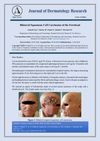
A 70-year-old man with skin cancer on both sides of his forehead was treated with surgery and cryotherapy, highlighting the need for early detection and prevention.
 17 citations
,
April 2004 in “Acta Clinica Belgica”
17 citations
,
April 2004 in “Acta Clinica Belgica” This study found that ultraviolet light-enhanced visualization can detect subtle skin changes linked to carotene and vitamin A deficiency, which improved with dietary correction in deficient individuals.
 April 2017 in “Journal of nutritional health & food engineering”
 This article discusses the widespread issue of vitamin D deficiency affecting over 65% of the UAE population and highlights its often unnoticed symptoms, urging awareness due to potential long-term health consequences; it provides no new results.
 February 2024 in “Asian journal of medical sciences”
 This study found that pityriasis capitis was the most common skin disease among 507 hostellers in Pudukottai, followed by acne vulgaris and pediculosis capitis, with factors such as poor hygiene, lack of sunscreen use, junk food intake, and stress contributing to their prevalence.
 December 2020 in “Nippon Laser Igakkaishi”
 This review covers the mechanisms and reported clinical effects of Photobiomodulation therapy, particularly in the fields of plastic surgery and dermatology, without presenting new clinical results.
 23 citations
,
March 2019 in “The journal of investigative dermatology/Journal of investigative dermatology”
23 citations
,
March 2019 in “The journal of investigative dermatology/Journal of investigative dermatology” This study found that extracellular ATP released from UVB-irradiated keratinocytes promotes melanin production through the P2X7 receptor, indicating a role for ATP-P2X7 signaling in UV-induced melanogenesis.
7 citations
,
April 1996 in “Archives of dermatological research” This study found that after topical application in rats, 1,24-dihydroxyvitamin D3 absorbed through both the stratum corneum and hair follicles, with about 30% excreted via the faeces.
 6 citations
,
August 1993 in “Archives of Dermatology”
6 citations
,
August 1993 in “Archives of Dermatology” This study found that polymorphous light eruption (PLE) may include a wide range of conditions, requiring careful differentiation from similar skin disorders such as benign summer light eruption.
 3 citations
,
January 2022 in “Journal of The American Academy of Dermatology”
3 citations
,
January 2022 in “Journal of The American Academy of Dermatology” This study found that sunscreen and moisturizer use was associated with a higher likelihood of developing frontal fibrosing alopecia in the reviewed studies.
 January 2023 in “Indian dermatology online journal”
 This case study highlights that sarcoidosis lesions can occur following hair removal by waxing, emphasizing the need to consider superficial traumas as potential triggers for cutaneous sarcoidosis.
 1 citations
,
March 2022 in “Journal of burn care & research”
1 citations
,
March 2022 in “Journal of burn care & research” This case study highlights that even professional eyebrow tinting can lead to chemical burns, and increasing consumer awareness is crucial as its popularity grows and unregulated products become more common.
8 citations
,
April 2016 in “Experimental dermatology” This study found that the immune-competent B6. Cg‐Tyr c−2J Hr hr /J congenic mouse line had a more pronounced delayed sunburn response and different proliferative skin reactions to UV exposure compared to SKH 1 mice.

This study observed that, after 90 hours of light exposure, Finasteride retained 57% of its concentration, whereas Diclofenac and Naproxen retained only 12% and 9%, respectively.