 February 2026 in “Frontiers in Medical Technology”
 This review discusses current knowledge of keratinocyte stem cell dynamics, including their regenerative roles and potential applications beyond wound healing, but presents no new clinical findings.
 January 2026 in “Frontiers in Cellular Neuroscience”
 This study discusses the complex roles and effects of brain-synthesized sex neurosteroids, highlighting sex differences in their concentrations and their varied impacts on synaptic plasticity, cognitive behavior, and aging-related cognitive decline.
 January 2026 in “Frontiers in Immunology”
 This review highlights icariin’s potential to regulate macrophages in varying conditions, discussing its effects on macrophage polarization, metabolism, and disease mechanisms, and noting the development of delivery systems to enhance its therapeutic impact.
 January 2026 in “Military Medicine”
 This article discusses how lipopolysaccharide (LPS) from gram-negative bacteria activates platelets and affects vascular responses, emphasizing the role of reactive oxygen species (ROS) in these processes, without reporting new experimental findings.
 December 2025 in “ADMET & DMPK”
 This review synthesizes recent research to propose a precision framework for treating androgenetic alopecia and alopecia areata based on genetic insights and pathway biology, highlighting the roles of androgen-receptor signaling, immune dysregulation, and emerging therapies like regenerative medicine and AI-assisted diagnostics.
August 2025 in “Therapeutics” In this study, low concentrations of DMSO were found to decrease androgen receptor expression and inhibit the migration of prostate cancer cells, suggesting potential as an anticancer therapy.
A new mutation in the TRPS1 gene caused Trichorhinophalangeal syndrome in a 17-year-old, highlighting the need for genetic testing.
This study found that culturing fibroblasts on stiffer substrates mimicking fibrotic wounds led to an aligned EDA fibronectin matrix with thinner fibers and decreased YAP activity, suggesting disrupted signaling that might be restored to promote regenerative wound repair.
December 2023 in “Journal of clinical medicine” This study reports the case of an elderly patient with a keratosis pilaris-like skin eruption after beginning treatment with imatinib for chronic myeloid leukemia, discussing similar skin reactions to BCR-ABL inhibitors and exploring potential mechanisms behind these adverse cutaneous reactions.
 September 2023 in “bioRxiv (Cold Spring Harbor Laboratory)”
 This study describes the use of a genetically engineered mouse model, mTurquoise2-Col4a1, to fluorescently label collagen IV and observe basement membrane dynamics during skin development, revealing its stability and pliability during rapid growth phases.
 September 2023 in “Journal of Cosmetic Dermatology”
 In a pilot study examining potential treatments for androgenic alopecia, researchers reported that over four months, topical cetirizine 1% improved hair length but not other measures, while diclofenac 3% showed no significant effects, unlike minoxidil, which showed significant improvement across all measured variables.
This abstract suggests that cost barriers limit the application of standard aesthetic procedures in developing countries, while exploring platelet-rich plasma as a potentially safer and less invasive option in geriatric aesthetics. Detailed results were not reported.
 November 2011 in “APMIS. Acta pathologica, microbiologica et immunologica Scandinavica./APMIS”
 This study found that Polyomavirus A2 infection in mice led to the development of pilomatricomas in hair follicles, with the virus replicating initially in the skin and later infecting matrix cells.
August 2025 in “Journal of Investigative Dermatology” Fibronectin is essential for hair follicle regeneration and may help rejuvenate aged skin.
 12 citations
,
July 2025 in “Journal of Clinical and Translational Hepatology”
12 citations
,
July 2025 in “Journal of Clinical and Translational Hepatology” This review discusses how targeting TGF-β with specific inhibitors, including components from Traditional Chinese Medicine, may help reduce liver fibrosis by acting through various signaling pathways.
 September 2025 in “Journal of Dermatology Research Reviews & Reports”
 This study found that men aged 33 to 44 with androgenetic alopecia experienced significant hair improvement over 7 months after treatment with autologous cells using the Rigenera® system, as evaluated by HairMetrix® technology.
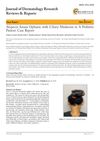 July 2025 in “Journal of Dermatology Research Reviews & Reports”
 In this case study, a 10-year-old girl with infantile ophiastic alopecia areata and ciliary madarosis showed excellent hair and eyelash regrowth after 56 days of treatment involving oral corticosteroids, topical minoxidil, and clobetasol hair lotion, following an initial diagnosis and psychological evaluation.
 May 2024 in “Journal of clinical case studies reviews & reports”
 This case report detailed a unique instance of hypopituitarism in a 65-year-old male presenting with symptoms including nausea, vomiting, and fatigue, attributed to secondary adrenal insufficiency, which improved following appropriate cortisol treatment.
 September 2023 in “Frontiers in cell and developmental biology”
 This study found that a catalytically active version of Vav2 significantly altered gene expression patterns in hair follicle stem cells in mice, with these changes varying over the animals' lifespans.
44 citations
,
May 2023 in “MedComm” This review highlights the potential of PROTAC technology in drug discovery for previously undruggable targets, particularly in cancer therapy, while emphasizing the urgent need to discover more E3 ligase recruiters to optimize targeted protein degradation.
4 citations
,
January 2023 in “Marine Drugs” This review explores enzyme inhibitors from gorgonians and soft corals and highlights their potential industrial and biomedical applications, but it reports no new experimental results.
 4 citations
,
January 2021 in “Journal of Clinical Medical Research”
4 citations
,
January 2021 in “Journal of Clinical Medical Research” This review provides an in-depth analysis of the structure and function of c-kit activation, and its role in both normal physiological and pathological conditions, with no new research findings reported.
 1 citations
,
January 2021
1 citations
,
January 2021 In this study, CD4+ non-haematopoietic, skin-resident stem cell-like populations were identified in both murine and human epidermis, suggesting they may serve as potential basal cell carcinoma precursors.
276 citations
,
April 2003 in “Molecular endocrinology” This review explores the diverse physiological roles of the vitamin D endocrine system, discussing current research on receptor structure, transcription details, murine models, and alternative receptors, but reports no new findings.
 182 citations
,
November 2017 in “Molecular Aspects of Medicine”
182 citations
,
November 2017 in “Molecular Aspects of Medicine” This review discusses various therapeutic strategies targeting platelet-derived growth factor signaling in diseases like cancer and atherosclerosis, and evaluates existing treatments without presenting new clinical data.
 88 citations
,
July 2014 in “Journal of the American Academy of Dermatology”
88 citations
,
July 2014 in “Journal of the American Academy of Dermatology” This review discusses common cutaneous reactions to targeted cancer drugs such as tyrosine kinase inhibitors and reports no new clinical results.
56 citations
,
November 2007 in “Molecular and cellular endocrinology” This study identified enzymes responsible for regulating androgen action in the human prostate, suggesting that inhibiting AKR1C2 or RL-HSD may have therapeutic potential in androgen insufficiency or benign prostatic hyperplasia, respectively.
49 citations
,
December 2022 in “Pharmacological Reviews” This review discusses androgen receptor targeting as a potential treatment strategy for triple-negative breast cancer and reports no new experimental outcomes.
 42 citations
,
March 2010 in “Endocrinology”
42 citations
,
March 2010 in “Endocrinology” This study reports the development of the first rodent model for androgenetic alopecia, demonstrating that overexpression of androgen receptors in mice delays hair regeneration and can be used to test new treatments.
 38 citations
,
June 2015 in “Expert Opinion on Therapeutic Targets”
38 citations
,
June 2015 in “Expert Opinion on Therapeutic Targets” This review explores potential indications for prolactin receptor inhibitors beyond breast and prostate cancers, emphasizing the need for potent antibodies to further research prolactin receptor expression.