February 2014 in “Cancer Research” This study found that MYH9 acts as a tumor suppressor in squamous cell carcinomas by stabilizing p53 in the nucleus, suggesting its role in cancer prevention.
21 citations
,
August 2002 in “British Journal of Ophthalmology” This report notes that while surgical excision is typically curative for squamous cell carcinoma, the authors suggest considering the intralesional use of cidofovir for its potential success without systemic toxicity.
 21 citations
,
May 1988 in “Journal of The American Academy of Dermatology”
21 citations
,
May 1988 in “Journal of The American Academy of Dermatology” This article reviews the challenges of providing dermatology care in prisons and reports no new clinical findings, highlighting common skin conditions like tinea pedis, pruritus, and alopecia areata linked to stress and the environment.
17 citations
,
October 2001 in “British Journal of Ophthalmology” This report highlights a case where intralesional cidofovir successfully treated squamous cell carcinoma without systemic toxicity, suggesting it may be a viable alternative to surgical excision.
15 citations
,
August 2002 in “British Journal of Ophthalmology” This paper discusses a case where intralesional cidofovir successfully treated squamous cell carcinoma without systemic toxicity, but surgical excision remains the standard for curative treatment and margin evaluation.
 April 2016 in “Journal of Investigative Dermatology”
 The researchers reported that SOX4 expression is significantly upregulated in melanoma and its knockdown in cell lines resulted in reduced tumor progression, suggesting potential for targeted therapies.
20 citations
,
October 2001 in “British Journal of Ophthalmology” This case report suggests that intralesional cidofovir may be a consideration for treating squamous cell carcinoma, as it showed a successful outcome without systemic toxicity, although surgical excision remains preferred.
42 citations
,
January 2003 in “International Journal of Gynecological Pathology” This research observed that multifocal pseudoepitheliomatous hyperplasia may explain some cases of squamous nests in vulvar lichen sclerosus with lichen simplex chronicus, potentially as a reaction to tissue damage rather than squamous cell carcinoma.
75 citations
,
June 2007 in “Journal of Biological Chemistry” This study found that the combination of MT-DADMe-ImmA and MTA selectively induced apoptosis in head and neck squamous cell carcinoma cell lines FaDu and Cal27, but not in normal fibroblasts or MTAP-deficient breast cancer cells.
 5 citations
,
January 2013 in “Journal der Deutschen Dermatologischen Gesellschaft”
5 citations
,
January 2013 in “Journal der Deutschen Dermatologischen Gesellschaft” The document concludes that individualized treatment for malignant epithelial tumors is necessary and more research on metastatic squamous cell carcinoma treatments is needed.
 May 2025 in “Cellular Oncology”
 This study suggests that dual inhibition of P-cadherin and c-Met could be an effective treatment strategy for head and neck squamous cell carcinoma by targeting resistant tumor cells.
January 1999 in “Universitas Philosophica” This study found that cornifin-alpha/SPRR1 expression in mouse skin increases significantly in response to phorbol ester treatment and in papillomas and squamous cell carcinomas, particularly in differentiated areas.
 January 2026 in “International Journal of Research and Innovation in Applied Science”
 This case report details a rare instance of malignant proliferating trichilemmal tumour in a 60-year-old male, emphasizing the significance of histochemical and immunohistochemical markers for accurate diagnosis and differentiation from squamous cell carcinoma.
10 citations
,
August 2019 in “European Journal of Dermatology” This abstract provides no new clinical results; it discusses the role of surgery and interventional radiotherapy in treating cutaneous squamous cell carcinoma.
 December 2023 in “Archives of iranian medicine”
 This study used hair samples to assess mineral levels and found that higher iron status may be associated with an increased risk of esophageal squamous cell carcinoma, while no significant associations were observed for copper and magnesium levels in this cohort.
October 2025 in “Cell Death and Disease” In this study, researchers developed two novel mouse models to investigate how CD271 deletion in keratinocytes affects skin homeostasis, finding that it leads to changes resembling dysplastic skin conditions with immune cell recruitment and inflammatory cytokine release.
1 citations
,
December 2020 The skin is the body's largest organ, with layers, cells, and structures that protect and support it.
 August 2010 in “Journal of Investigative Dermatology”
 New hair regrowth model introduced, imiquimod kills skin cancer cells, T-cadherin loss makes skin cancer more invasive, no strong link between PTCH1 gene and skin cancer after transplant, and male teens more likely to have hereditary hair loss.
January 2017 in “Enlighten: Publications (The University of Glasgow)” This study found that in mice with deregulated β-catenin and PTEN signaling, increased follicular hyperplasia and sebaceous gland changes occur, but typical papillomas do not develop, potentially due to p21 response and reduced stem cell markers.
July 2024 in “Journal of Investigative Dermatology” A new test helps find drugs to treat head and neck cancer by targeting c-Rel.
August 2024 in “Postgraduate Medical Journal” A rare skin reaction from cancer treatment was successfully managed with topical treatments and antihistamines.
2 citations
,
November 2024 in “JAAD Case Reports” Anti-PD-L1 immunotherapy can cause hair loss and unexpected hair color change, but treatment can restore hair growth and color.
 4 citations
,
January 2018 in “Cancer treatment and research”
4 citations
,
January 2018 in “Cancer treatment and research” This review discusses current strategies for head and neck cancer treatment, highlighting the effectiveness of cisplatin in combination therapies, and notes increased toxicity with multimodal treatments but no overall survival advantage for doublet regimens; it reports no new clinical results.
 April 2018 in “Journal of Investigative Dermatology”
 This study found that ERBB2 mutations and amplifications are likely key drivers of extramammary Paget disease, suggesting potential for targeted therapies and cancer immunotherapy due to the moderately high mutational load observed.
 8 citations
,
September 2016 in “The American Journal of Dermatopathology”
8 citations
,
September 2016 in “The American Journal of Dermatopathology” This study found that eccrine duct dilation is significantly more frequent in cicatricial alopecias compared to noncicatricial alopecias, possibly due to the scarring process.
 January 2022 in “Dermatology Review”
 This case report details an occurrence of PRIDE syndrome accompanied by lumbosacral hypertrichosis.

This thesis explores how optical coherence tomography and advanced imaging methods may address clinical needs in fields like interventional pulmonology and dermatology, highlighting their potential for disease assessment and staging.
November 2001 in “Oncology Times” The committee unanimously voted against recommending approval of the injectable cisplatin/epinephrine gel IntraDose for certain head and neck cancer patients, citing insufficient clinical benefit and concerns about toxicity in this study.
62 citations
,
October 2018 in “Journal of pathology” This review discusses the mechanisms of keratin 17 regulation in diseases such as psoriasis and cancers but presents no new experimental findings, calling for further exploration of anti-K17 therapies.
 2 citations
,
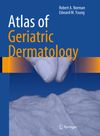
January 2014 in “Springer eBooks”
2 citations
,
January 2014 in “Springer eBooks” The book details skin conditions in older adults, their link to mental health, cancer treatment importance, hair loss remedies, and managing autoimmune and itchy skin.