 2 citations
,
May 2021 in “Stem Cells International”
2 citations
,
May 2021 in “Stem Cells International” This study reviewed the progress in developing induced platelets from human stem cells as an alternative source to meet clinical demands, although challenges remain for large-scale production and clinical application.
 1 citations
,
August 2021 in “Primary Care Diabetes”
1 citations
,
August 2021 in “Primary Care Diabetes” This article reviews maternal-fetal outcomes in patients with gestational diabetes and COVID-19 through a case study and literature analysis but reports no new clinical results.
1 citations
,
September 2025 in “JAAD reviews.” This review discusses the condition alopecia areata and summarizes its available treatments, mentioning three recently approved Janus kinase inhibitors, but reports no new clinical results.
1 citations
,
October 2023 in “Heliyon” In this study, the researchers reported a new case of Hutchinson-Gilford progeria syndrome with a novel LMNA mutation and successful surgical intervention for airway obstruction.
 1 citations
,
July 2023 in “Journal of the American Academy of Dermatology”
1 citations
,
July 2023 in “Journal of the American Academy of Dermatology” This review reports that pressure-induced alopecias, occurring from ischemic pressure, are often reversible without treatment if diagnosed promptly, but prognosis varies with severity and treatment timing.
 1 citations
,
November 2022 in “Anais Brasileiros de Dermatologia”
1 citations
,
November 2022 in “Anais Brasileiros de Dermatologia” This study found that hospitalized pediatric COVID-19 patients frequently display skin, mucosal, and nail manifestations, particularly periorbital erythema and edema, and the authors suggest COVID-19 be considered among childhood viral exanthem rashes.
1 citations
,
May 2022 in “International journal of molecular sciences” This study found that in Hutchinson–Gilford progeria syndrome, iPSCs committed to the keratinocyte lineage faster than normal cells, with LEF1 expression reduced and a partial rescue of the phenotype achieved through adenine base editing.
 1 citations
,
March 2010 in “Internal medicine journal”
1 citations
,
March 2010 in “Internal medicine journal” A 72-year-old man with sudden taste issues and hair growth was diagnosed with a severe stomach cancer and died within 5 months.
 April 2024 in “International journal of women's health”
 This review explores adult female acne, focusing on its multifactorial causes, treatment options, and impact on quality of life, but reports no new clinical results.
 May 2023 in “International Journal of Trichology”
 This expert consensus discusses the potential use of oral minoxidil for treating alopecia and provides guidance to clinicians based on a comprehensive literature review and expert feedback; it reports no new clinical results.
 August 2022 in “Frontiers in genetics”
 This study identified a novel bi-allelic missense variant in the DSC3 gene linked to severe Hypotrichosis with Recurrent Skin Vesicles in a Saudi child, supporting its role in the condition.
 February 2026 in “Trials”
 The Exfoliate-Dissolve-Repair skincare approach may effectively treat keratosis pilaris and reduce the need for corticosteroids.
 July 2025 in “Frontiers in Medicine”
 This study found that topical immunotherapy is effective for treating severe alopecia areata, though patient responses can vary, highlighting the importance of individualized treatment approaches and prolonged therapy to optimize outcomes.
March 2025 in “Revista Foco” This review describes the clinical signs, symptoms, and diagnostic findings for alopecia frontal fibrosante, emphasizing the importance of early diagnosis and variable treatment options, and reports no new findings.
 September 2024 in “PubMed”
 This case reported that a 6-year-old patient with scalp lesions, diagnosed with tinea capitis and head lice, successfully responded to a new treatment regimen including griseofulvin, permethrin, and prednisolone, highlighting the need for better diagnosis and interprofessional communication.
June 2024 in “Regenerative Therapy” This review discussed the potential of induced pluripotent stem cells (iPSCs) for hair follicle regeneration, covering current approaches and challenges, iPSC differentiation, and their possible future clinical applications in hair restoration.
This case report describes an ulcerated lesion in the oral cavity of an 85-year-old man that has not responded to various treatments and remains without a conclusive diagnosis.
January 2015 in “Journal of cosmetics, dermatological sciences and applications” This study observed that a low energy pulsed-light device combined with galvanic energy was effective and safe for reducing unwanted hair in individuals with dark skin types V and VI.
 June 2008 in “The Journal of Urology”
 This letter to the editor discusses the relationship between lower urinary tract symptoms and erectile dysfunction as reported in a previous study, but presents no new findings.
 32 citations
,
March 2021 in “Journal of cosmetic dermatology (Print)”
32 citations
,
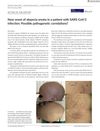
March 2021 in “Journal of cosmetic dermatology (Print)” This letter to the editor discusses a potential link between new onset alopecia areata and SARS-CoV-2 infection, but reports no new clinical results.
249 citations
,
May 2003 in “Developmental Biology” Ectodysplasin-A1 is crucial for developing hair, teeth, and glands.
 109 citations
,
April 2000 in “European Urology”
109 citations
,
April 2000 in “European Urology” In this study, significantly fewer men treated with finasteride for moderate to severe BPH symptoms experienced acute urinary retention or required subsequent BPH-related surgery compared to placebo-treated patients.
87 citations
,
September 2016 in “Journal of the American Academy of Dermatology” In this prospective case series, intralesional triamcinolone injections significantly reduced erythema, edema, suppuration, size, and pain in acute hidradenitis suppurativa flares, though the study's small size and design limit the findings.
 73 citations
,
May 1976 in “JAMA”
73 citations
,
May 1976 in “JAMA” This case report associates severe zinc deficiency with long-term total parenteral nutrition, suggesting the need for trace element supplementation in such nutritional management.
 30 citations
,
February 2003 in “Annals of Neurology”
30 citations
,
February 2003 in “Annals of Neurology” This editorial discusses the hormonal basis of catamenial epilepsy, particularly focusing on the roles of progesterone and neurosteroids, and presents no new research findings.
26 citations
,
September 2023 in “Journal of Allergy and Clinical Immunology” Regulatory T cells help prevent autoimmunity and have potential for treating autoimmune diseases.
 21 citations
,
July 2022 in “Orphanet journal of rare diseases”
21 citations
,
July 2022 in “Orphanet journal of rare diseases” This review discusses recent advancements in therapies for ichthyosis, highlighting promising prospects in protein replacement and gene therapy, but it reports no new clinical results.
 18 citations
,
March 2016 in “Cosmetics”
18 citations
,
March 2016 in “Cosmetics” This review discusses telogen effluvium, including its triggers, clinical presentations, and management options, and does not report new research findings, emphasizing the need for identification and exclusion of underlying causes.
15 citations
,
January 2015 in “Dermatitis” This review discusses the efficacy and safety of topical sensitizers for treating alopecia areata and reports no new clinical results; it emphasizes advancements in pediatric use, molecular mechanisms, and targeted delivery methods.
14 citations
,
December 2017 in “Journal of Intensive Care” Lithium poisoning can cause severe health complications and requires careful monitoring.