 11 citations
,
September 2021 in “Journal of molecular endocrinology”
11 citations
,
September 2021 in “Journal of molecular endocrinology” This review discusses differences in ERβ signaling between rodents and humans and reports no new clinical results; the authors highlight the need for further research in humans before using ERβ agonists clinically.
December 2022 in “International Journal of Molecular Sciences” This study used machine learning to identify FDA-approved drugs afatinib, neratinib, and zanubrutinib as potential KRASG12C inhibitors for resistant non-small-cell lung cancer, highlighting the potential of AI in drug repurposing.
93 citations
,
January 2000 in “Annals of Medicine” This discussion reviews the molecular mechanisms of ADP-induced platelet activation and suggests the P2Y1 receptor as a promising target for developing new antithrombotic drugs, without reporting new research findings.
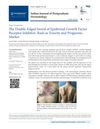 June 2026 in “Indian Journal of Postgraduate Dermatology”
 In this reported case, a 50-year-old man developed an acneiform rash, a common skin side effect of EGFR inhibitor therapy, after starting lapatinib for breast cancer; treatment with doxycycline and hydrocortisone cream led to significant improvement within one week.
January 2025 in “Scholarly Commons (University of Pennsylvania)” This study found that the X-linked gene UTX is crucial for regulating skin differentiation and inflammation in females by affecting retinoic acid signaling, also highlighting potential links to sex disparities in skin diseases.
September 2017 in “Journal of Investigative Dermatology” LRIG1 protein affects hair growth by regulating skin receptors, leading to hair loss when overexpressed.
 April 2024 in “JEADV clinical practice”
 This study reports a case where a patient with rheumatoid arthritis and alopecia areata saw significant improvement in both conditions after switching to daily upadacitinib treatment, specifically achieving complete hair regrowth within six months.
46 citations
,
May 2021 in “Stem Cell Research & Therapy” This study found that strontium ranelate promotes cartilage regeneration in rats by enhancing chondrogenic differentiation of bone mesenchymal stem cells while inhibiting the Wnt/β-catenin signaling pathway.
 10 citations
,
November 2015 in “Experimental Dermatology”
10 citations
,
November 2015 in “Experimental Dermatology” The study observed that mRAGE expression is prevalent in keratinocytes of the healthy human epidermis and may regulate inflammation and apoptosis to maintain skin homeostasis rather than responding to aging processes.
January 2024 in “Ankara City Hospital Medical Journal” This case report details a 42-year-old woman with Rhupus, a rare overlap syndrome of rheumatoid arthritis and systemic lupus erythematosus, emphasizing diagnostic challenges due to non-specific clinical criteria and documenting symptoms like inflammatory arthritis, malar rash, and hematological abnormalities.
July 2026 in “Journal of the American Academy of Dermatology” 36 citations
,
March 2014 in “Annals of the Rheumatic Diseases” This study found that activating liver X receptors with an agonist reduced skin fibrosis in experimental models, particularly in inflammation-driven conditions, by inhibiting macrophage infiltration and interleukin-6 release.
This study found that among Indian rheumatoid arthritis patients, the MTHFR A1298C polymorphism was associated with varying responses to methotrexate, with 1298CC genotypes showing higher toxicity and poorer efficacy compared to 1298AA genotypes.
48 citations
,
July 2023 in “Pediatric Dermatology” This study found that among adolescents with alopecia areata and significant hair loss, treatment with ritlecitinib resulted in greater hair regrowth and self-reported improvement compared to placebo over 48 weeks, with common side effects including headache, acne, and nasopharyngitis.
1 citations
,
June 2018 in “World rabbit science” This study identified differentially expressed microRNAs between back and belly skin in Rex rabbits, highlighting their potential roles in skin development processes.
This case report describes a young female with Rhupus syndrome, characterized by symptoms of both Systemic Lupus Erythematosus and Rheumatoid Arthritis, who achieved clinical remission with treatment.
February 2026 in “International Journal of Dermatology” In a single-center study, adolescents with moderate-to-severe alopecia areata treated with ritlecitinib 50 mg daily for 24 weeks showed significant hair regrowth, with 27.3% achieving near-complete regrowth and 45.5% substantial improvement, without serious safety concerns, according to these researchers.
 1 citations
,
November 2020 in “International Journal of Dermatology”
1 citations
,
November 2020 in “International Journal of Dermatology” In this case report, the authors suggest that methotrexate-induced rheumatoid papular eruption is a rare side effect of methotrexate, resolved after discontinuation, which may be linked to rheumatic conditions.
July 2025 in “SKIN The Journal of Cutaneous Medicine” This study describes characteristics and outcomes for adults initiating ritlecitinib for severe alopecia areata, highlighting increased hair regrowth and physician satisfaction with longer treatment durations, despite ongoing psychosocial impacts like embarrassment and anxiety among patients.
 7 citations
,
January 1993 in “Rheumatology”
7 citations
,
January 1993 in “Rheumatology” This article discusses suspected skin toxicity from drugs used to treat rheumatoid arthritis but reports no new clinical findings.
32 citations
,
May 2018 in “The Plant Cell” This article discusses the crucial role of root hairs in water and nutrient uptake from soil and reports no new findings.
1 citations
,
August 2019 in “Journal of pediatric & adolescent gynecology” This report describes a novel AR gene mutation in a female patient, contributing to androgen insensitivity syndrome, and emphasizes its potential impact on genetic counseling.
48 citations
,
March 2007 in “The journal of investigative dermatology/Journal of investigative dermatology” This study observed that retinoic acid biosynthesis and signaling in hair follicles have a spatial and temporal regulation linked to distinct stages of the hair cycle in mice.
February 2026 in “Toxicology Letters” This study used an in silico/in vitro approach to identify potential inhibitors of the enzyme SRD5A2, finding that the androgen receptor modulator MK-0773 is a moderate inhibitor, although it does not act as a covalent inhibitor like finasteride.
 6 citations
,
June 2018 in “Journal of pediatric endocrinology & metabolism/Journal of pediatric endocrinology and metabolism”
6 citations
,
June 2018 in “Journal of pediatric endocrinology & metabolism/Journal of pediatric endocrinology and metabolism” In this study, eight patients with hereditary vitamin D-resistant rickets who share a specific VDR mutation showed improved clinical symptoms except alopecia after up to 11 years of treatment.
3 citations
,
September 2021 in “EClinicalMedicine” In this study, ALRV5XR treatment significantly increased terminal hair density in men with androgenetic alopecia after 24 weeks, while also decreasing vellus hair density, and was well tolerated without adverse events, suggesting its potential efficacy over standard therapies.
June 2011 in “Portuguese National Funding Agency for Science, Research and Technology (RCAAP Project by FCT)” The researchers reported that both estrogen receptors ERα and ERβ are expressed in human testis, and identified two novel genes, Aven and Regucalcin, linked to estrogen and androgen regulation, which may be crucial for spermatogenesis.
3 citations
,
August 2000 in “Anatomia Histologia Embryologia” In this study, prenatal exposure to a non-teratogenic dose of all-trans-retinoic acid showed no adverse effects on vibrissal follicle development in NMRI mice.
24 citations
,
July 1994 in “Journal of Investigative Dermatology”  1 citations
,
January 2022 in “BMC Genomic Data”
1 citations
,
January 2022 in “BMC Genomic Data” In this study, researchers found that androgen receptor activation in dermal papilla cells mainly affected the focal adhesion pathway and downregulated caveolin-1 gene expression, which could help identify new therapeutic targets for testosterone-related diseases.