 1 citations
,
February 2009 in “Journal of Investigative Dermatology”
1 citations
,
February 2009 in “Journal of Investigative Dermatology” This review discusses insights into the role of lipase H in controlling hair form and texture, emphasizing genetic mutations linked to autosomal recessive woolly hair/hypotrichosis, and reports no new experimental results.
40 citations
,
February 1946 in “Canadian Journal of Research/Canadian journal of research” This study observed that the hair loss in homozygous rhino mice is associated with widening of the hair canal due to hyperkeratosis, leading to insufficient support for hair anchoring.
October 2024 in “Journal of the Endocrine Society” This case report highlights that a patient with resistance to thyroid hormone was misdiagnosed as having Graves’ disease, leading to unnecessary radioactive iodine treatment.
7 citations
,
July 2023 in “Immunotherapy” Ritlecitinib works well and is safe for treating alopecia areata.
 October 2010 in “International journal of radiation oncology, biology, physics”
 In this randomized study, patients with early favorable Hodgkin lymphoma showed similar complete remission and survival rates whether receiving 2 or 4 cycles of ABVD and 20 Gy or 30 Gy IFRT, though reduced toxicity was associated with fewer cycles and lower radiation doses.
February 2023 in “Archives of Dermatological Research” This study found that despite challenges, a combination of oral antibiotics, anti-androgens, oral retinoids, biologics, and surgery were important in managing hidradenitis suppurativa in patients with intellectual and developmental disabilities.
December 2022 in “Biochemical and Biophysical Research Communications” This study found that HtrA2 inactivation in mnd2 mice is associated with delayed hair cycle phases and growth retardation of adipocytes, suggesting HtrA2's role in regulating adipogenesis-related hair growth.
 1 citations
,
November 1995 in “Postgraduate medical journal”
1 citations
,
November 1995 in “Postgraduate medical journal” This article presents a case of 5-alpha-reductase deficiency in a Saudi individual, reporting no new research findings.
This study found that RXR and RAR proteins were detectable in normal human skin, suggesting they may play a role in epidermal cell differentiation and hair and gland physiology.
 5 citations
,
May 2019 in “Anais Brasileiros de Dermatologia”
5 citations
,
May 2019 in “Anais Brasileiros de Dermatologia” This article discusses the connection between prenatal androgen exposure, marked by the second-to-fourth digit ratio, and seborrheic dermatitis, but reports no new experimental findings.
June 2020 in “Zenodo (CERN European Organization for Nuclear Research)” This study analyzed pediatric and adult patients with antibody deficiencies at a PID center, finding frequent severe infections and genetic mutations, with treatment primarily involving IVIG replacement therapy.
47 citations
,
October 2021 in “Journal of Nanobiotechnology” This study found that hollow polydopamine nanoparticles enhanced the regenerative potency of the peptide RL-QN15, suggesting potential for improved therapeutic approaches in skin wound healing.
 1 citations
,
January 2016 in “Journal of Nepal Paediatric Society”
1 citations
,
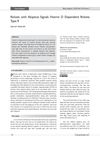
January 2016 in “Journal of Nepal Paediatric Society” This case report discusses a 27-month-old girl with vitamin D-dependent rickets type II, who showed minor improvement in skeletal features and alopecia after high-dose oral calcium and vitamin D3 treatment.
 July 2025 in “SKIN The Journal of Cutaneous Medicine”
 This study reported that ritlecitinib was generally well tolerated over 72 months in patients aged 12 and older with alopecia areata, with adverse events like headache and nasopharyngitis observed, and safety outcomes consistent with previous studies.

This study found that the Lim-homeodomain transcription factor Lhx2 regulates Sonic Hedgehog signaling during early retinal neurogenesis in mice by controlling the expression of pathway genes in retinal progenitor cells.
 4 citations
,
October 2024 in “American Journal of Clinical Dermatology”
4 citations
,
October 2024 in “American Journal of Clinical Dermatology” This study found that ritlecitinib improved patient-reported outcomes related to hair growth in individuals with alopecia areata, with some experiencing clinically meaningful hair regrowth, although changes in emotional symptoms and activity limitations were minimal and similar across treatment groups.
2 citations
,
May 2021 in “Neuropathology & applied neurobiology/Neuropathology and applied neurobiology” This correspondence reports the case of a young woman with severe lipid storage myopathy due to a rare mutation, who showed significant temporary improvement with plasmapheresis and immunoglobulin treatment before stabilizing with riboflavin and coenzyme Q10 supplementation, challenging the initial assumption of an immune-mediated condition.
1 citations
,
October 2025 in “International Journal of Dermatology” In this study, participants receiving a 50-mg maintenance dose of ritlecitinib reported greater improvements in emotional and activity limitations due to hair loss by Week 48 compared to those on a 10-mg dose.
 July 2025 in “The Journal of Dermatology”
 This study identified common and unexpected adverse events associated with ritlecitinib in real-world use, providing insights into its safety profile for treating severe alopecia areata.
1 citations
,
November 2023 in “SKIN The Journal of Cutaneous Medicine”  12 citations
,
July 2016 in “British journal of dermatology/British journal of dermatology, Supplement”
12 citations
,
July 2016 in “British journal of dermatology/British journal of dermatology, Supplement” This study observed phenotypic diversity in hair loss among Japanese individuals homozygous for the LIPH c.736T>A mutation and suggests that differences in hair thickness may contribute to varying severities.
3 citations
,
July 2025 in “Clinical and Experimental Dermatology” This study reported that patients with alopecia areata treated with ritlecitinib in a real-life setting had a higher rate of positive response on the Severity of Alopecia Tool score compared to those in the ALLEGRO trial.
4 citations
,
August 2006 in “The Journal of Dermatology” This case report describes the first known association of hypertrichosis lanuginosa acquisita with autoimmune hepatitis, expanding the list of conditions linked to this rare disorder.
This study concluded that the combination of all-trans-retinoic acid and tocopherol-α is not recommended for treating del(5q) myelodysplastic syndromes due to low efficacy and high incidence of adverse effects.
January 2026 in “Acta Dermato Venereologica” This source reports that four weeks of dupilumab treatment led to notable improvement in skin lesions, including multiple erythematous patches and papules on the face, back, and limbs.
 41 citations
,
November 2011 in “The Journal of Dermatology”
41 citations
,
November 2011 in “The Journal of Dermatology” This review identifies genetic mutations associated with congenital hair loss disorders in Japanese populations, particularly highlighting common LIPH gene mutations linked to woolly hair/hypotrichosis, and reports no new clinical results.
3 citations
,
September 2022 in “European Journal of Dermatology” This report identifies a novel splice-site variant in the LAMB3 gene linked to junctional epidermolysis bullosa, emphasizing the need for gene sequencing in diagnosing the disease.
5 citations
,
February 2025 in “Pediatric Dermatology” In this study, ritlecitinib was generally well tolerated in pediatric alopecia areata patients aged 6 to <12 years, with no severe or serious adverse events reported, and the drug's pharmacokinetic parameters were successfully characterized.
December 2021 in “OPAL (Open@LaTrobe) (La Trobe University)” This study found that knocking out the Hars2 gene in mouse cochlear hair cells led to mitochondrial dysfunction and ROS stress, resulting in progressive hearing loss and differential effects on inner and outer hair cells.
 1 citations
,
March 2026 in “American Journal of Clinical Dermatology”
1 citations
,
March 2026 in “American Journal of Clinical Dermatology” In this Italian retrospective study, ritlecitinib 50 mg/day showed effectiveness and good tolerability for treating severe alopecia areata over 24 weeks, achieving significant hair regrowth particularly in adolescents, as well as improvements in eyebrows, eyelashes, nails, and quality of life, with mostly mild adverse effects.