 1 citations
,
June 1979 in “The Journal of Dermatologic Surgery and Oncology”
1 citations
,
June 1979 in “The Journal of Dermatologic Surgery and Oncology” Doctors successfully rebuilt a sideburn using skin and hair from near the ear in one surgery.
 4 citations
,
January 2009 in “Indian Journal of Plastic Surgery”
4 citations
,
January 2009 in “Indian Journal of Plastic Surgery” This study observed that good surgical outcomes for secondary cicatricial alopecia were achieved in 18 patients, with method selection influenced by the size, location, and shape of alopecia.
 February 2026 in “Journal of Cutaneous and Aesthetic Surgery”
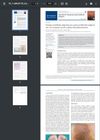
 In this study, a case of a 20-year-old woman revealed ectopic acanthosis nigricans at a post-syndactyly-release surgical site, suggesting this rare condition could result from epidermal–dermal mismatch and altered growth factor signaling in grafted skin, without indicating any metabolic or malignancy concerns.
 January 2022 in “Plastic and Aesthetic Research”
 This review explores techniques for scalp reconstruction, focusing on local flap design and execution, without reporting new clinical findings.
3 citations
,
March 1956 in “PubMed” This study discusses a surgical skin planing procedure using new technology and freezing agent that is reported to be a safe, effective treatment for cutaneous defects like pitted acne scars.
 2 citations
,
September 2003 in “Annals of Plastic Surgery”
2 citations
,
September 2003 in “Annals of Plastic Surgery” This paper discusses a method for eyebrow reconstruction using intermediate hair from the forehead hairline with a pedicled temporoparietal fascial flap and reports no new clinical results.
 January 2025 in “Surgical & Cosmetic Dermatology”
 In this case study, a 35-year-old man with recalcitrant folliculitis decalvans was successfully treated with Erbium-YAG laser, showing rapid improvement without hair loss, though further clinical studies are needed to define its benefits more comprehensively.
This article discusses the effects of ablative carbon dioxide laser treatment for skin rejuvenation, noting it requires only a single treatment but involves more complex postoperative management, without reporting new clinical outcomes.
 August 2024 in “Clinical Cosmetic and Investigational Dermatology”
 This report describes the successful resolution of an epidermoid cyst using a minimally invasive approach with intralesional injection of recombinant enzymes.

This research observed that removing RNase L in mice enhances regenerative capacity through increased IL-36 and wound-induced hair neogenesis, highlighting RNase L as a gene that represses regeneration by moderating immune responses during viral infections.
 25 citations
,
November 2008 in “Ophthalmic Plastic and Reconstructive Surgery”
25 citations
,
November 2008 in “Ophthalmic Plastic and Reconstructive Surgery” This study found no significant differences in sensation recovery or scar formation between radiofrequency and scalpel incisions in upper blepharoplasty, although radiofrequency caused greater tissue damage.
June 2018 in “Dermatologic Surgery” This abstract describes the Dermatologic Surgery journal's extensive focus on skin surgery procedures, but it presents no new research findings.
17 citations
,
December 2013 in “Journal of Investigative Dermatology Symposium Proceedings” The excimer laser may help hair regrow in alopecia areata patients.
32 citations
,
September 1996 in “Archives of Dermatological Research” 6 citations
,
September 1996 in “Archives of Dermatological Research”  4 citations
,
June 2020 in “Journal of Cosmetic Dermatology”
4 citations
,
June 2020 in “Journal of Cosmetic Dermatology” This review describes the edge out punch for follicular unit excision, which may reduce follicle transection with its thicker walls and internal bevel design compared to other punch shapes, but reports no new clinical results.
July 2023 in “Media Dermato Venereologica Indonesiana” This case study highlights that RDEB-mitis can be misdiagnosed in older adults, emphasizing the importance of accurate diagnosis as it does not require immunosuppressive treatment.
 2 citations
,
October 2010 in “Springer eBooks”
2 citations
,
October 2010 in “Springer eBooks” Using cheek skin and cartilage grafts for nose reconstruction after skin cancer surgery can maintain shape and function but may require multiple surgeries and hair removal in men.
 79 citations
,
September 2009 in “Pediatric dermatology”
79 citations
,
September 2009 in “Pediatric dermatology” This study found that the 308-nm Excimer laser was effective and safe for treating patchy alopecia areata in children, with hair regrowth observed in 60% of treated scalp patches.
 11 citations
,
August 2020 in “Dermatologic Surgery”
11 citations
,
August 2020 in “Dermatologic Surgery” This review discusses the various designs of follicular unit excision punches used in hair transplantation without reporting new clinical results; it emphasizes the importance of understanding each punch's benefits and limitations.
4 citations
,
June 1988 in “The American journal of cosmetic surgery” This paper describes a method for treating facial pitted scars using donor grafts and reports expected outcomes and potential complications, without providing new clinical results.
6 citations
,
March 1990 in “The American journal of cosmetic surgery” 42 citations
,
September 1990 in “Journal of Investigative Dermatology”  1 citations
,
April 1998 in “Dermatologic Clinics”
1 citations
,
April 1998 in “Dermatologic Clinics” This article outlines the evolving landscape of surgical dermatology and highlights the promising future as new techniques continue to emerge, but it presents no new research results.
October 2022 in “Hair Transplantation” This study highlights that beard hairs are a preferred nonscalp donor source for hair transplantation, especially when scalp donor supply is insufficient due to severe androgenetic alopecia, with careful planning and technique needed to minimize scarring and enhance outcomes.
 11 citations
,
August 2004 in “Facial Plastic Surgery”
11 citations
,
August 2004 in “Facial Plastic Surgery” This review describes endoscopic techniques for rejuvenating the upper two-thirds of the face, highlighting their safety, reliability, and fewer complications compared to traditional open procedures, and reports no new clinical results.
1 citations
,
July 2017 in “Skin Appendage Disorders” A woman developed permanent hair loss after a face-lift surgery despite various treatments.
13 citations
,
December 2005 in “Dermatologic surgery” In this study, Er:YAG laser therapy initially improved the appearance of eruptive vellus hair cysts but was ultimately ineffective due to early recurrence and concerns about atrophy or scarring.
 7 citations
,
April 1994 in “Archives of Otolaryngology-head & Neck Surgery”
7 citations
,
April 1994 in “Archives of Otolaryngology-head & Neck Surgery” This article discusses scalp tissue expansion as a superior reconstructive option for large defects over traditional skin grafts and flap methods, but reports no new clinical outcomes.
 87 citations
,
February 2004 in “Plastic and Reconstructive Surgery”
87 citations
,
February 2004 in “Plastic and Reconstructive Surgery” In this study, researchers achieved complete reepithelialization and hair growth on a burn-injured scalp using a tissue-engineered dermal template with early micrograft hair follicle implantation.