122 citations
,
October 2010 in “Clinica Chimica Acta” In this study, washing rhesus monkey hair with water or shampoo significantly reduced cortisol levels, suggesting potential underestimation of chronic stress hormone deposition in hair due to washing.
 March 2014 in “Human Physiology”
 This study found that prolonged administration of DHEA improved long-term memory and brain activity balance in old rhesus macaques, with effects like increased motor activity and restored hair lasting a year.
 March 2024 in “Asian Journal of Advanced Research and Reports”
 In this study, researchers found no significant link between ABO blood type, rhesus factor, or genotype and premature graying of hair, but observed potential associations with lifestyle factors such as smoking and alcohol intake.
66 citations
,
February 1985 in “Archives of dermatological research” Hair dyes penetrate the scalp very minimally, less than 1%.
 43 citations
,
January 1977 in “Toxicology and Applied Pharmacology”
43 citations
,
January 1977 in “Toxicology and Applied Pharmacology” In this study, minoxidil was found to have low toxicity in various animals, with specific heart lesions observed only in dogs at certain doses.
 430 citations
,
July 2002 in “Journal of Endocrinology”
430 citations
,
July 2002 in “Journal of Endocrinology” This hypothesis paper suggests that PCOS may result from genetically determined ovarian hypersecretion of androgens, influencing hormone regulation and insulin resistance, with obesity further affecting its severity; no new clinical results are reported.
21 citations
,
February 1988 in “Toxicology” This study found that high doses of TCB caused severe toxicity in cotton top marmoset monkeys, with clinical and histological changes similar to those in humans and other primates exposed to PCBs.
 17 citations
,
November 2013 in “American Journal of Primatology”
17 citations
,
November 2013 in “American Journal of Primatology” This study reported species and demographic differences in alopecia rates among macaques, with the highest rates in pigtail macaques and noted age-related improvements in alopecia scores.
15 citations
,
January 2020 in “ILAR Journal” This review discusses the occurrence and impact of background histopathologic changes in nonhuman primate research, emphasizing the importance of understanding these factors to enhance study validity and interpretation.
12 citations
,
May 2016 in “Experimental Dermatology” The researchers concluded that their new reconstructed human epidermis model from plucked hair follicle-derived keratinocytes offers a safer and simpler alternative to traditional skin-derived models for studying epidermal function.
79 citations
,
January 1999 in “Dermatologic surgery” This review discusses various dermatologic treatments for periorbital skin rejuvenation but reports no new clinical results; it highlights the importance of patient selection and aging severity in choosing appropriate therapies.
 December 2018 in “Journal of Patan Academy of Health Sciences”
 This study found that three-quarters of patients experienced hair loss following laparoscopic sleeve gastrectomy, with female gender, preoperative serum folic acid, and percent excess weight loss as significant risk factors.
 May 2026 in “Zenodo (CERN European Organization for Nuclear Research)”
 This study developed a new triamcinolone acetonide serum combined with a microneedling device, showing promise for treating alopecia areata by targeting hair follicles in a less invasive, patient-friendly way with confirmed drug solubility, compatibility, and safety.
 May 2026 in “Zenodo (CERN European Organization for Nuclear Research)”
 This study developed a low-viscosity triamcinolone acetonide serum, used with a derma stamp microneedling device, to improve targeted treatment of alopecia areata, reporting favorable drug solubility, spreadability, and permeation to hair follicles, while maintaining skin safety.
 232 citations
,
December 2005 in “Andrology”
232 citations
,
December 2005 in “Andrology” This review explores the hypothesis that polycystic ovary syndrome may originate in fetal life due to genetic predispositions and environmental influences, but it reports no new clinical findings.
 44 citations
,
May 2012 in “Endocrinology”
44 citations
,
May 2012 in “Endocrinology” This review discusses the etiology of polycystic ovary syndrome, emphasizing the role of genetic and environmental factors, and reports no new experimental findings.
 39 citations
,
June 1982 in “The BMJ”
39 citations
,
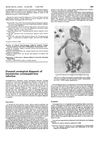
June 1982 in “The BMJ” Blood tests confirmed a baby in the womb had a CMV infection.
 35 citations
,
August 1980 in “Circulation”
35 citations
,
August 1980 in “Circulation” Minoxidil may cause heart issues in animals and humans.
 11 citations
,
February 2011 in “Current Zoology”
11 citations
,
February 2011 in “Current Zoology” The researchers reported that alopecia is common in Japanese macaques, particularly adult females, and varies seasonally and between different populations, with a new scoring system proposed for monitoring.
 10 citations
,
February 2007 in “Current Opinion in Endocrinology, Diabetes and Obesity”
10 citations
,
February 2007 in “Current Opinion in Endocrinology, Diabetes and Obesity” This review discusses the early developmental origin of premature adrenarche and polycystic ovary syndrome and highlights potential utero-based mechanisms, reporting no new clinical findings.
 4 citations
,
February 2016 in “Clinical Pharmacology & Therapeutics”
4 citations
,
February 2016 in “Clinical Pharmacology & Therapeutics” Hair follicle samples effectively show how well the drug MK-0752 targets and engages with the Notch pathway.
 3 citations
,
June 2018 in “International Journal of Clinical Pharmacy”
3 citations
,
June 2018 in “International Journal of Clinical Pharmacy” In this case report, maternal use of finasteride during early pregnancy was not associated with external genitalia abnormalities in a male infant, but the findings are limited to one case and broader safety conclusions cannot be drawn.
 May 2026 in “Signal Transduction and Targeted Therapy”
 This study found that rete ridge morphogenesis in mammalian skin is directed by a BMP-dependent developmental program, which is evolutionarily distinct from other known pathways controlling the development of hair follicles, sweat glands, and fingerprint ridges.
 November 2025 in “Frontiers in Immunology”
 This study introduces stem cell activity as a key factor influencing the effects of IFN-γ and TGF-β1 on autoimmune disease dynamics, showing that varying cytokine levels can modulate stem cell activity and immune privilege, impacting tissue regeneration and disease flares.
 December 2023 in “International journal of statistics and probability”
 In this study, the authors used a Bayesian Poisson - Hidden Markov Model to analyze COVID-19 cases by blood type in Europe and Africa, finding differences in hidden states and infection rates based on blood type across these regions.
 September 2016 in “Springer eBooks”
 This review discusses how physical appearance, including skin, facial features, and physique, is linked to aging and health risks, but reports no new experimental results.
 991 citations
,
January 2011 in “Nature Reviews Endocrinology”
991 citations
,
January 2011 in “Nature Reviews Endocrinology” This paper reviews the diagnostic criteria, associated morbidities, and possible evolutionary advantages of polycystic ovary syndrome, but does not report any new findings.
 989 citations
,
August 2007 in “The Lancet”
989 citations
,
August 2007 in “The Lancet” This article reviews the clinical features, diagnostic criteria, and possible genetic and environmental influences of polycystic ovary syndrome but provides no new research findings.
 815 citations
,
April 2010 in “The Journal of Clinical Endocrinology & Metabolism”
815 citations
,
April 2010 in “The Journal of Clinical Endocrinology & Metabolism” This review examines the relationship between polycystic ovary syndrome and cardiovascular disease risk, but reports no new clinical findings; the panel calls for guidelines to prevent CVD in this population.
 658 citations
,
June 2003 in “Endocrine reviews”
658 citations
,
June 2003 in “Endocrine reviews” This review discusses the role of androgens in the progression of cardiovascular disease and explores novel therapeutic targets without reporting new clinical results.