January 2026 in “Clinical Case Reports” This case report describes a 6-year-old girl diagnosed with the rare concurrence of monilethrix and trichorrhexis nodosa, characterized by sparse, brittle hair, who showed minimal clinical improvement with low-dose oral and topical minoxidil treatment.
 November 2017 in “Pediatrics in Review”
 This case study identifies early-onset trichotillomania in a 4-year-old girl, treated with behavioral interventions that led to decreased hair pulling and regrowth over three months.
 July 2025 in “Dermatology Practical & Conceptual”
 A 2-year-old boy has a rare hair disorder causing brittle hair and hair loss, which may improve with age.
 1 citations
,
April 2020 in “Asian Journal of Medicine and Biomedicine”
1 citations
,
April 2020 in “Asian Journal of Medicine and Biomedicine” This article reports a case of hair tourniquet syndrome in a child's toe, successfully treated surgically, and emphasizes the need for healthcare providers to be aware for early detection and treatment.
6 citations
,
January 2008 in “Indian Journal of Dermatology” This case report describes a rare autosomal dominant hair shaft disorder, monilethrix, observed in three consecutive generations of a family, with gradual improvement noted with age.
 9 citations
,
January 1980 in “Dermatology”
9 citations
,
January 1980 in “Dermatology” This report suggests that peripilar hair casts, potentially linked to modern hair styling or mild trichotillomania, may be more prevalent than currently reported.
August 2011 in “SpringerReference”  33 citations
,
June 2016 in “Pediatric Dermatology”
33 citations
,
June 2016 in “Pediatric Dermatology” This review examines hair shaft disorders, reporting limited evidence for treatments like minoxidil and oral retinoids, and emphasizes gentle hair care and genetic counseling for managing congenital cases.
4 citations
,
January 2018 in “Indian dermatology online journal” This case report found that dermoscopy, showing characteristic "comma" and "corkscrew" hairs, effectively identified tinea capitis in a 7-year-old girl, allowing for early treatment before confirmation with fungal culture.
 28 citations
,
January 2012 in “Case Reports in Medicine”
28 citations
,
January 2012 in “Case Reports in Medicine” This article discusses Hair-thread Tourniquet Syndrome in children, emphasizing the need for prompt examination and intervention to prevent severe complications, but reports no new clinical results.
3 citations
,
January 2020 in “JAAD Case Reports” This report describes a patient with symptoms suggestive of both loose anagen hair syndrome and uncombable hair syndrome, adding to previous instances of overlapping features between these conditions.
January 2016 in “Prairie schooner” This abstract is a narrative piece discussing themes of womanhood, beauty, and resilience, and does not report any new research findings.
2 citations
,
September 2016 in “Journal of Dermatological Science” Reduced TRPS1 leads to increased STAT3 and SOX9 in hair follicles, affecting hair growth.
June 2023 in “The Journal of Family Practice” This report presents a case of an 18-year-old female-to-male transgender man experiencing hair loss and varied hair lengths over his temples, raising questions about the diagnosis as the patient exhibited no itching or rash.
50 citations
,
February 2016 in “Journal of Investigative Dermatology” A mutation in the KRT25 gene causes a rare hair disorder with thin, woolly hair.
 January 2013 in “The Pan African medical journal”
 This report describes two cases of monilethrix in Afghan siblings, detailing the hair disorder's clinical presentation and potential influences on hair growth, such as hormonal changes and iron supplementation.
 January 2012 in “International Journal of Trichology”
 Two siblings have a rare genetic condition causing curly, coarse hair.
2 citations
,
March 2024 in “Pediatric Dermatology” This case report described two siblings with uncombable hair syndrome characterized by unique hair features, and identified a new pathogenic variant in the PADI3 gene (c.1374dup; p. Val459ArgfsTer15) not previously documented.
 August 2021 in “Acta medica Philippina”
 This case study highlights how trichoscopy helped differentiate between diffuse alopecia areata and trichotillomania in an 11-year-old girl, demonstrating its importance in distinguishing hair disorders with similar presentations.
October 2024 in “Skin Research and Technology” This report describes several cases of pili annulati in children, highlighting its genetic predisposition and distinctive "zebra stripe" hair pattern, but notes no effective treatment is available.
February 2025 in “International Journal of Clinical & Experimental Dermatology” In this study, trichoscopy was identified as an effective tool for diagnosing trichotillomania in children, and a multidisciplinary, individualized approach along with family support was deemed essential for managing the condition and achieving sustained remission.
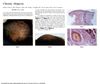 June 1995 in “Archives of Dermatology”
 This case report describes a 27-year-old woman with a family history of hair thinning and a 6-year history of alopecia on the scalp.
September 2023 in “Ukraïnsʹkij žurnal Perinatologìâ ì pedìatrìâ” This study highlights the importance of recognizing tourniquet syndrome in children, particularly caused by hair or threads, as it can lead to serious complications like necrosis if not swiftly addressed.
 10 citations
,
May 2010 in “Journal of The American Academy of Dermatology”
10 citations
,
May 2010 in “Journal of The American Academy of Dermatology” This report presents a rare case of short anagen syndrome in a 38-year-old African American woman, expanding the documented demographic beyond previously reported Caucasian individuals with fine blond hair.
 27 citations
,
January 1990 in “Child Psychiatry & Human Development”
27 citations
,
January 1990 in “Child Psychiatry & Human Development” This review discusses the demographic, dermatologic, clinical, and psychodynamic aspects of trichotillomania, exploring its potential link to anxiety but reports no new clinical findings.
June 2011 in “European Journal of Pediatric Dermatology” This study diagnosed an 11-year-old girl with initial androgenetic alopecia and monilethrix after observing unique hair shaft abnormalities and skin conditions, unlike her affected parents.
 January 2013 in “International Journal of Trichology”
 This case report highlights the discovery of a novel TRPS1 gene mutation in a 17-year-old with TRPS type I, underscoring the diagnostic importance of hair symptoms in congenital hair diseases.
 January 2021 in “American Academy of PediatricsItasca, IL eBooks”
 Telogen effluvium is a condition that causes temporary hair loss due to stress or shock to the body.
July 2026 in “Journal of the American Academy of Dermatology” Ritlecitinib helps adolescents with severe alopecia areata regrow scalp hair and normalize body hair and nails.
 February 2024 in “Curēus”
 In this report, a rare case of hair tourniquet syndrome was described in a six-month-old girl, involving the uvula and requiring surgical intervention to remove the constricting hair.