 10 citations
,
October 2016 in “Monoclonal antibodies in immunodiagnosis and immunotherapy”
10 citations
,
October 2016 in “Monoclonal antibodies in immunodiagnosis and immunotherapy” This study developed rat monoclonal antibodies that specifically detect Pax1/PAX1 protein, which could improve diagnostic protocols for conditions involving deregulated Pax1/PAX1 expression.
 37 citations
,
August 2014 in “Journal of experimental botany”
37 citations
,
August 2014 in “Journal of experimental botany” This study identified the AtPRPL1 gene in Arabidopsis thaliana as being involved in cell elongation processes, despite unclear changes in cell wall composition from its altered expression.
44 citations
,
May 1998 in “PubMed” In this study, a specific retinoic acid receptor antagonist caused severe craniofacial anomalies in mouse fetuses when administered early in pregnancy, but not limb anomalies, highlighting developmental stage-specific roles of retinoic acid.

This review synthesizes current advances in transcriptomics and RNA regulatory networks, alongside stem cell-derived skin organoid research, to propose a conceptual framework for understanding and potentially guiding regenerative skin repair, without claiming clinical readiness.
3 citations
,
June 2025 in “Gyemyeong uidae haksulji” This review suggests that PDRN shows promise as a safe and versatile regenerative agent for wound healing and other dermatological applications, based on its dual mechanisms and clinical evidence of efficacy.
January 2015 in “프로그램북(구 초록집)” This study reports significant hair regrowth in two alopecia areata patients resistant to intralesional corticosteroids after treatment with intralesional polydeoxyribonucleotide.
January 2025 in “Buleria (Universidad de León)”  October 2024 in “Skin Appendage Disorders”
 This study evaluated the effects of autologous micrografts for androgenetic alopecia, reporting moderate improvements in hair loss reduction and hair density among most patients after treatment, with satisfactory results noted in patient satisfaction and treatment tolerability.
2 citations
,
September 2016 in “Journal of Dermatological Science” Reduced TRPS1 leads to increased STAT3 and SOX9 in hair follicles, affecting hair growth.
 18 citations
,
February 2010 in “Odontology”
18 citations
,
February 2010 in “Odontology” This report describes Rabson-Mendenhall syndrome cases in two siblings and briefly reviews the literature, highlighting insulin receptor gene mutations as the underlying cause.
This study suggests that disruptions in the Ran system related to nuclear transport may be a key factor in the development of cellular issues in Hutchinson Gilford Progeria Syndrome.
October 2002 in “Dermatologic Surgery” This notice corrects an article on fluridil for androgenetic alopecia, indicating potential conflicts of interest due to the authors' patent holdings and funding source; it reports no new research findings.
October 2024 in “Developmental Dynamics” This paper highlights advances in Developmental Dynamics, noting how epoa-deficient zebrafish can model Diamond-Blackfan anemia like disorders for drug screening, Alx4 mouse models offer insights into craniofacial development, and mTORC1 signaling is crucial for retinal development.
 2 citations
,
March 2021 in “bioRxiv (Cold Spring Harbor Laboratory)”
2 citations
,
March 2021 in “bioRxiv (Cold Spring Harbor Laboratory)” In this study, researchers used an evolutionary-rate-based method to identify genetic elements associated with reduced hair in mammals, finding a dichotomy between accelerated coding sequences and noncoding regulatory elements influencing hair growth.
This abstract compiles a list of medical syndromes and conditions related to tongue abnormalities and other systemic features but reports no new research findings.
This study identified the combination of NCBP3, SDHA, and PTPRA as stable reference genes for normalizing gene expression in goat skin tissue research.
December 2024 in “CONICET Digital (CONICET)” This study found that the small signaling peptide RALF22 plays a key role in root hair growth response to volatile compounds emitted by Penicillium aurantiogriseum through ethylene, auxin, and photosynthesis signaling in Arabidopsis.
May 2026 in “Journal of Medicinal Chemistry” In this study, the authors developed a novel PROTAC named dAR-6–1, which demonstrated superior hair regeneration in an AGA mouse model compared to minoxidil, highlighting its promise as a therapy due to potent AR degradation and excellent skin permeability.
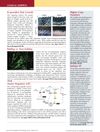 July 2016 in “Experimental Dermatology”
 This article provides clinical snippets from Experimental Dermatology and reports no new research findings.
51 citations
,
September 2012 in “Gene” In this study, researchers identified a putative ovine KAP24-1 gene in sheep, revealing four unique DNA sequences with some similarity to KRTAP24-1 sequences from other species.
 February 2025 in “Biomolecules”
 This study found that activation of RORA significantly promotes the level of autophagy in rat hair follicle stem cells, suggesting a potential target for research on hair follicle development and treatments for conditions like alopecia.
20 citations
,
September 1983 in “Archives of dermatology” This study observed that minimal doses of the arotinoid RO 13-6298 successfully treated two cases of severe psoriasis and psoriatic arthritis unresponsive to traditional therapies, despite some side effects.
July 2025 in “Frontiers in Medicine” This study identified compound heterozygous mutations, c.1101del and c.736 T > A, in the LIPH gene responsible for causing autosomal recessive woolly hair in a child, with c.1101del being a novel frameshift mutation.
 1 citations
,
December 2018 in “Journal of genetic medicine”
1 citations
,
December 2018 in “Journal of genetic medicine” In this case report, a 20-year-old male with tricho-rhino-phalangeal syndrome was found to have a de novo frameshift mutation in the TRPS1 gene, highlighting the challenges in diagnosing this rare disorder.
 December 2022 in “Small methods”
 This study developed dissolving microneedles incorporating a new AR degrader for treating androgenetic alopecia, showing that a single application leads to superior hair regeneration compared to daily minoxidil, without systemic toxicity or androgen-related issues.
This review discusses the off-label use of drugs like Minoxidil, Aripripazole, and others, providing insights for physicians and pharmacists but reports no new clinical findings.
 142 citations
,
March 2019 in “Frontiers in Cellular Neuroscience”
142 citations
,
March 2019 in “Frontiers in Cellular Neuroscience” This review discusses the development and potential therapeutic applications of adenosine receptor agonists and positive allosteric modulators, noting that while many clinical trials have been unsuccessful, initial results for new compounds are promising.
July 2025 in “Clinical Case Reports” In this case report, a 17-year-old male with a specific TRPS1 gene mutation presented with sparse, soft hair, short thumbs and toes, misaligned teeth, and distinctive bone abnormalities in the fingers and toes as observed through X-ray analysis.
 May 2026 in “Scientific Reports”
 In this study, researchers overexpressed Lrig3 in mouse skin and observed hair loss linked to changes in skin protein profiles and signaling pathways, suggesting a potential role for Lrig3 in maintaining skin homeostasis.

This study identified specific lncRNAs and mRNAs differentially expressed in miniaturized follicles compared to normal follicles in patients with androgenetic alopecia, with AL136131.3 potentially inhibiting hair growth and accelerating follicle transition to catagen through effects on glycolysis-related genes.