 20 citations
,
May 2013 in “International Journal of Molecular Medicine”
20 citations
,
May 2013 in “International Journal of Molecular Medicine” This study identified a novel missense MAFB variant in a family with some unaffected members, suggesting incomplete penetrance and the potential influence of modifier genes, epigenetic mechanisms, or environmental factors on MCTO phenotype.
34 citations
,
January 2004 in “Genomics” In this study, researchers identified a cluster of hair-specific keratin-associated protein genes within the 21q22.3 region, revealing a novel transcription mechanism involving TSPEAR/C21orf29 that may bypass typical transcriptional termination sites.
82 citations
,
January 2011 in “New Phytologist” This study demonstrated that AtVLN4 plays a role in root hair growth by regulating actin organization in a calcium-dependent manner.
 2 citations
,
January 2022 in “bioRxiv (Cold Spring Harbor Laboratory)”
2 citations
,
January 2022 in “bioRxiv (Cold Spring Harbor Laboratory)” This study found that low temperatures and nitrogen deficiency trigger root hair elongation through a molecular mechanism involving the receptor kinase FERONIA and the TOR Complex 1.
 April 2013 in “Developmental Cell”
 This study found that the chromatin remodeler Brg1 plays a crucial role in hair follicle maintenance and epidermal repair by regulating the Shh signaling pathway and forming a positive feedback loop.
 May 2023 in “Skin research and technology”
 This study found that WD-aptamer increased β-catenin expression and promoted human hair follicle dermal papilla cell proliferation by interfering with the CXXC5-Dvl1 interaction in the Wnt signaling pathway.
4 citations
,
January 2014 in “The Journal of urology/The journal of urology” This study found that folliculin deficient renal cancer cells were more sensitive to irradiation due to increased autophagic cell death, suggesting a potentially enhanced therapeutic approach when combined with autophagy inducers like rapamycin.
19 citations
,
July 2020 in “EBioMedicine” In this study, the researchers identified a variant in the CCHCR1 gene associated with an alopecia areata subtype characterized by impaired keratinization and autoimmune events.
 1 citations
,
April 2018 in “Journal of Investigative Dermatology”
1 citations
,
April 2018 in “Journal of Investigative Dermatology” This study found that FZD2 is crucial for hair follicle formation and postnatal growth in mice and has a novel role in regulating early epidermal development, including stratification and cornification.
 1 citations
,
December 2018 in “Journal of genetic medicine”
1 citations
,
December 2018 in “Journal of genetic medicine” In this case report, a 20-year-old male with tricho-rhino-phalangeal syndrome was found to have a de novo frameshift mutation in the TRPS1 gene, highlighting the challenges in diagnosing this rare disorder.

This study identified a genetic locus associated with rhabdomyosarcoma susceptibility in mice and found that specific differentiation markers are linked to the regression of basal cell carcinoma.
1 citations
,
December 2023 in “International journal of molecular sciences” In this study, researchers found that miR-199a-3p plays a regulatory role in hair follicle development via the PTPRF/β-catenin axis and established a mouse model of alopecia areata by downregulating this small RNA, suggesting its potential value in studying alopecia diseases.
 November 2020 in “bioRxiv (Cold Spring Harbor Laboratory)”
 This study found that the Polycomb Repressive Complex 2, particularly its component Ezh2, is crucial in regulating dermal fibroblast differentiation and epidermal keratinocyte proliferation during murine skin development.
18 citations
,
February 2006 in “Genomics” A new genetic mutation in mice causes permanent hair loss and skin wrinkling.
12 citations
,
December 2011 in “Journal of Dermatological Science” This study suggests that the C-terminal of AHF is crucial for its binding to keratin bundles and modulating the keratin meshwork in hair follicles.
116 citations
,
April 1986 in “The journal of cell biology/The Journal of cell biology” This study reports that a 190,000 molecular weight protein, identified as trichohyalin, may play a matrix role in the development of inner root sheaths in hair follicles.
 181 citations
,
January 2009 in “Nature Genetics”
181 citations
,
January 2009 in “Nature Genetics” In this study, researchers linked defects in U2HR, an inhibitory region in the HR gene, to Marie Unna hereditary hypotrichosis, suggesting a mechanism for controlling hair growth and addressing hair loss.
 21 citations
,
April 2014 in “PLoS ONE”
21 citations
,
April 2014 in “PLoS ONE” In this study, researchers identified a novel KRT74 gene mutation associated with autosomal recessive pure hair and nail ectodermal dysplasia in a Pakistani family, expanding the known genetic causes of the disorder.
May 2025 in “Dermatology Reports” In this case study from King Fahad University Hospital, an 11-month-old Saudi boy with a history of short, non-growing hair was diagnosed with autosomal recessive woolly hair/hypotrichosis, attributed to a homozygous mutation in the LIPH gene.
Results are not reported in this abstract, which notes that while Janus kinase inhibitors like baricitinib show therapeutic benefits for alopecia areata, the mechanisms and reliable predictors of response remain unclear.
 111 citations
,
October 2008 in “Nature Genetics”
111 citations
,
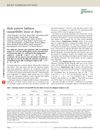
October 2008 in “Nature Genetics” In their study, Tim Spector and colleagues identified a new genetic association at chromosome 20p11.22 with male-pattern baldness, confirmed by the increased risk when combined with a known androgen receptor gene variant.
11 citations
,
May 2013 in “Journal of Investigative Dermatology” KRTAP10 proteins help form the hair shaft's tough outer layer by interacting with specific hair keratins.
1 citations
,
July 2007 in “Journal of Investigative Dermatology” The mutation causes hairless mice due to mislocalized and dysfunctional HR protein.
 46 citations
,
December 2010 in “The journal of investigative dermatology/Journal of investigative dermatology”
46 citations
,
December 2010 in “The journal of investigative dermatology/Journal of investigative dermatology” This study found that Acvr1b signaling is crucial for both hair follicle development and cycling in mice, with the genetic disruption leading to hair loss and a thickened epidermis.
 44 citations
,
February 2012 in “The journal of neuroscience/The Journal of neuroscience”
44 citations
,
February 2012 in “The journal of neuroscience/The Journal of neuroscience” This study observed that Ptprq mutant mice exhibit significant abnormalities in hair bundle structure and vestibular dysfunction, suggesting similar issues may contribute to hearing loss and vestibular problems in humans with PTPRQ mutations.
28 citations
,
February 2010 in “Experimental Dermatology” This study concluded that the frizzy mutation in mice is linked to a T to A transversion in Prss8 and is orthologous to the 'hairless' mutation in rats.
May 2023 in “Pharmaceuticals” In this in silico study, researchers analyzed nonsynonymous SNPs in the LIPH gene linked to hypotrichosis and identified three potentially harmful variants (W108R, C246S, and H248N) out of 215 total, using sequence- and architecture-based bioinformatics techniques to differentiate between harmful and benign SNPs.
39 citations
,
December 2012 in “The American Journal of Human Genetics” This study identified mutations in the SNRPE gene that may disrupt hair growth, linking a spliceosome component to hereditary hair loss disorders.
91 citations
,
December 2019 in “The EMBO Journal” This study found that the E3 ligases NEDD4 and NEDD4L regulate intestinal stem cell priming by degrading the LGR5 receptor, and their loss leads to increased Wnt activation and crypt proliferation, which in turn accelerates intestinal tumor progression in mice.
 11 citations
,
January 2012 in “Journal of cell science”
11 citations
,
January 2012 in “Journal of cell science” This study demonstrates that Rac1 activity is essential for normal hair follicle formation but influences hair structure and pigmentation, in terminal differentiation, through alterations in hair shaft, cuticle, and pigmentation organization.