 6 citations
,
May 2016 in “Urolithiasis”
6 citations
,
May 2016 in “Urolithiasis” This study found that the risk of urinary stone disease increased significantly in patients with severe androgenetic alopecia, and that testosterone deficiency was more frequent among these patients.
 5 citations
,
December 2024 in “Archivio Italiano di Urologia e Andrologia”
5 citations
,
December 2024 in “Archivio Italiano di Urologia e Andrologia” This review discusses medical therapies for benign prostatic hyperplasia, highlighting the importance of personalizing treatments to individual patient needs and preferences.
 4 citations
,
May 2013 in “Canadian Urological Association Journal”
4 citations
,
May 2013 in “Canadian Urological Association Journal” This study found that finasteride reduced prostate cancer incidence by 30%, with no significant difference in Gleason scores compared to placebo after re-evaluation of pathology and extended follow-up.
 3 citations
,
September 2016 in “Natural Product Communications”
3 citations
,
September 2016 in “Natural Product Communications” This study identified 8-hydroxy germacrene B from Curcuma aeruginosa as a highly potent in-vitro 5-alpha reductase inhibitor with significant anti-androgenic activity, while exhibiting mild cytotoxicity on prostate cancer cells without affecting human dermal papilla cells at tested concentrations.
 3 citations
,
January 2008 in “Endocrine journal”
3 citations
,
January 2008 in “Endocrine journal” In this case report, the authors describe a partial androgen insensitivity syndrome patient with a novel AR gene mutation, highlighting challenges in gender assignment decisions for infants with partial AIS.
 1 citations
,
June 2025 in “Scientific Reports”
1 citations
,
June 2025 in “Scientific Reports” In this study on testosterone-induced benign prostatic hyperplasia in rats, hydroxychloroquine significantly reduced prostate-related markers and enhanced therapeutic effects when combined with finasteride, suggesting potential as a new treatment approach.
This review explores the risk factors, associated comorbidities, and psychological impacts of early-onset androgenetic alopecia, highlighting its complexity and potential implications for treatment response and overall health.
June 2021 in “F1000Research” This review explores plant-derived phytochemicals, such as phytosterols, polyphenols, and fatty acids, for their potential use as alternative treatments for prostate cancer, emphasizing their effects on 5-alpha-Reductase enzyme isozymes. It reports no new clinical results.
 May 2019 in “Australasian Journal of Dermatology”
 A new diagnostic tool for Vulvovaginal Lichen Planus is highly accurate, and updated treatments for various skin conditions, including melanoma and Hidradenitis Suppurativa, were discussed.
 June 2017 in “Journal of The American Academy of Dermatology”
 Most men with lichen planopilaris had it confirmed by biopsy and often had thyroid issues, sexual dysfunction, or prostate cancer, hinting at a link with hormonal problems.
 December 2016 in “University of Birmingham Institutional Research Archive (University of Birmingham)”
 This study suggests that the adrenal gland may contribute to prostate cancer treatment resistance and indicates potential steroid production or dependency in ovarian cancer.
January 2016 in “Dermatology Online Journal” This review discusses dermatologic issues specific to transgender patients undergoing hormonal therapy and offers guidance for dermatology providers, but does not report new clinical results.
 May 2013 in “Trends in Urology & Men's Health”
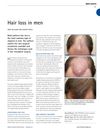
 This article reviews non‐surgical treatments and surgical techniques for male‐pattern hair loss and does not present new findings.
 April 2013 in “The Journal of Urology”
 Higher CRP levels suggest chronic inflammation is linked to bladder-related urinary symptoms in men with enlarged prostates.
 September 2012 in “African Journal of Urology”
 This review describes the clinical features of testosterone deficiency syndrome in aging men but reports no new experimental findings, highlighting the need for clinical recognition and treatment of TDS.

This commentary notes that 5-alpha reductase inhibitors have successfully treated benign prostatic hyperplasia and androgenetic alopecia but reports no new findings.
 September 2009 in “European Urology Supplements”
 This study found that a 3 mm margin around the prostate CTV may be adequate if accompanied by frequent imaging, but superior-inferior displacements were notably greater than in other directions.
 January 2009 in “Springer eBooks”
 The document concludes that treating skin conditions should include psychological care and a multidisciplinary approach is essential for effective management.
 April 2003 in “Experimental Dermatology”
 This workshop review from the Australian Hair and Wool Research Society discusses findings in cutaneous biology and endocrinology but presents no new research results.
 October 2015 in “Elsevier eBooks”
 Finasteride helps hair growth and prostate issues but may cause sexual side effects and increase tumor risk.
 November 1999 in “Journal of Cutaneous Medicine and Surgery”
 Treatments for hair loss include hormone modifiers, minoxidil, and hair transplant surgery.
 1 citations
,
January 2016 in “ARC Journal of Urology”
1 citations
,
January 2016 in “ARC Journal of Urology” This study found that Thermobalancing therapy using Dr Allen's Device significantly improved symptoms and quality of life in men with benign prostatic hyperplasia, but larger prostate sizes may require longer treatment.
 29 citations
,
July 2013 in “The Journal of Sexual Medicine”
29 citations
,
July 2013 in “The Journal of Sexual Medicine” This review discusses the potential role of androgen receptor CAG repeat polymorphism testing in hypogonadism management for both sexes, but its clinical utility remains unclear and requires further investigation.
 5 citations
,
August 2023 in “The World Journal of Men s Health”
5 citations
,
August 2023 in “The World Journal of Men s Health” This study found that red ginseng oil (RXGIN) significantly improved lower urinary tract symptoms and some aspects of sexual function in men, with no serious adverse events reported.
 2295 citations
,
August 2012 in “The international journal of transgenderism/International journal of transgenderism”
2295 citations
,
August 2012 in “The international journal of transgenderism/International journal of transgenderism” This publication reviews the World Professional Association for Transgender Health's Standards of Care for supporting transgender and gender nonconforming people, with adjustments needed for diverse global contexts and no new clinical results.
 179 citations
,
September 1998 in “BMJ”
179 citations
,
September 1998 in “BMJ” This article reviews the pathogenesis, genetic basis, and recent treatment breakthroughs for androgenetic alopecia but reports no new clinical findings.
106 citations
,
August 2024 in “Annals of Medicine and Surgery” This paper reviews AI integration in robotic surgical systems, highlighting enhanced precision and reduced fatigue but noting challenges like high costs and ethical concerns, suggesting responsible adoption to realize potential benefits for surgical care.
 103 citations
,
June 2007 in “Endocrinology and Metabolism Clinics of North America”
103 citations
,
June 2007 in “Endocrinology and Metabolism Clinics of North America” This article discusses treatment options for androgenetic alopecia, noting that medical interventions like finasteride and minoxidil can halt and partially reverse hair loss in mild to moderate cases, especially when combined with surgery.
 46 citations
,
February 2012 in “Oncology Reports”
46 citations
,
February 2012 in “Oncology Reports” This review summarizes existing studies on sorafenib, noting its promising effects in some cancers, but also highlights its limitations and potential synergy when combined with other anticancer treatments.
 41 citations
,
September 2014 in “JAMA Facial Plastic Surgery”
41 citations
,
September 2014 in “JAMA Facial Plastic Surgery” This review discusses current medical and surgical treatments for androgenetic alopecia, highlighting the use of finasteride and minoxidil for men and the role of hair transplantation techniques, without providing new clinical results.