 532 citations
,
August 2011 in “Journal of the American Academy of Dermatology”
532 citations
,
August 2011 in “Journal of the American Academy of Dermatology” This article discusses the clinical presentation, histopathologic findings, and pathogenesis hypotheses of vitiligo without reporting new clinical results.
 391 citations
,
January 2010 in “Journal of The American Academy of Dermatology”
391 citations
,
January 2010 in “Journal of The American Academy of Dermatology” This article reviews the clinical presentation and histopathologic features of alopecia areata and proposes a hypothesis for its development, but it reports no new clinical results.
22 citations
,
November 2018 in “Anti-Inflammatory & Anti-Allergy Agents in Medicinal Chemistry” This study reviewed the initial clinical presentation of SLE patients in Oman, revealing diverse symptoms and highlighting the importance of nationwide collaboration for effective management of the condition.
 21 citations
,
April 2019 in “Clinical, cosmetic and investigational dermatology”
21 citations
,
April 2019 in “Clinical, cosmetic and investigational dermatology” This article reviews the causes and clinical presentation of pseudofolliculitis barbae, highlighting how genetic susceptibility and hair removal practices contribute to its development, but reports no new research findings.
 16 citations
,
November 2018 in “Singapore Medical Journal”
16 citations
,
November 2018 in “Singapore Medical Journal” This article reviews the clinical presentation, contributing factors, and prevalence of polycystic ovary syndrome but provides no original research findings.
15 citations
,
August 2022 in “The Application of Clinical Genetics” This review describes the clinical presentation, diagnosis, and management of adrenomyeloneuropathy, including rehabilitative therapies and spasticity management, and reports no new clinical results.
 14 citations
,
October 2019 in “International Journal of Women's Health”
14 citations
,
October 2019 in “International Journal of Women's Health” This article discusses the clinical presentation and management challenges of menopausal acne, noting its multifactorial etiology and recommending tailored treatment approaches based on acne severity and associated features, without reporting new clinical results.
12 citations
,
November 2011 in “Pediatric dermatology” This case report describes a rare presentation of Becker's nevus in a 16-year-old boy, with two nevi located on the left side of the face extending to the oral mucosa.
11 citations
,
January 2018 in “Jaypee's international journal of clinical pediatric dentistry” This report describes the clinical presentation of Papillon-Lefèvre syndrome in two brothers and reviews the related literature, without providing new clinical outcomes.
 9 citations
,
October 2013 in “Pediatric dermatology”
9 citations
,
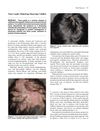
October 2013 in “Pediatric dermatology” This study highlights a dissecting cellulitis-like presentation of tinea capitis in children that should be identified to ensure correct diagnosis and treatment to prevent scarring alopecia.
 9 citations
,
January 2005 in “Pediatric Dermatology”
9 citations
,
January 2005 in “Pediatric Dermatology” This report details the clinical presentation and management of cutaneous mastocytosis in Indian children and provides no new experimental findings.
8 citations
,
August 2019 in “JAAD case reports” This narrative review discusses the presentation and progression of discoid lupus erythematosus in chronic cutaneous lupus erythematosus and does not report new research findings.
5 citations
,
August 2015 in “Sultan Qaboos University medical journal” This case report highlights an atypical presentation of vitamin B12 deficiency in a 28-year-old man with reversible symptoms including localized hand hyperpigmentation and megaloblastic anemia, resolved after B12 supplementation.
5 citations
,
January 2011 in “Archives de Pédiatrie” This study illustrates the severe neonatal clinical presentation of Netherton syndrome, which can be fatal despite intensive care, highlighting a specific homozygous mutation (c.1431-12G > A) associated with lethal cases.
4 citations
,
March 2025 in “Pediatric Dermatology” This review examines the clinical presentation of alopecia areata in children and compares it to adult-onset cases, noting that data on pediatric cases is scarce and often varies, with reported onset typically between ages 6 and 12.
4 citations
,
July 2017 in “Journal of Medical Case Reports” This case report highlights a rare presentation of acute lupus hemophagocytic syndrome with initially negative antinuclear antibodies, underscoring the higher sensitivity of the 2012 Systemic Lupus International Collaborating Clinics criteria for diagnosis.
4 citations
,
December 2014 in “Indian Journal of Dermatology” This case report documents a rare presentation of congenital milia en plaque on the scalp of a five-year-old boy, with blaschkoid extension to the nuchal area, highlighting its uncommon location and onset.
 3 citations
,
June 1993 in “Hair transplant forum international”
3 citations
,
June 1993 in “Hair transplant forum international” This abstract reports on a presentation at a meeting that detailed the hair restoration of a patient with Norwood Class 5 pattern using 1,325 four-haired minigrafts, but it provides no clinical results.
 2 citations
,
November 2019 in “Journal für Klinische Endokrinologie und Stoffwechsel”
2 citations
,
November 2019 in “Journal für Klinische Endokrinologie und Stoffwechsel” This review discusses the complex and variable presentation of polycystic ovary syndrome, emphasizing the need for consistent diagnostic criteria and individualized treatment strategies but reports no new clinical results.
1 citations
,
January 2022 in “Journal of veterinary diagnostic investigation” This case report documented a novel presentation of a canine viral plaque appearing as a solitary exophytic keratin-filled mass, highlighting the need to differentiate it from a hair follicle tumor.
1 citations
,
January 2022 in “Indian dermatology online journal” This case report documents the presentation and diagnosis of a rare bullous pilomatrixoma in a 20-year-old female using fine needle aspiration cytopathology, highlighting diagnostic challenges and features.
1 citations
,
February 2014 in “Italian journal of medicine” This case study describes the clinical presentation and diagnostic findings of an 80-year-old woman with Cronkhite-Canada syndrome.
1 citations
,
March 2013 in “Journal of Dermatological Case Reports” This case report describes an atypical presentation of lichen planopilaris affecting only facial vellus hair, without scalp involvement, in a 46-year-old man.
 1 citations
,
June 2010 in “Mayo Clinic Proceedings”
1 citations
,
June 2010 in “Mayo Clinic Proceedings” This article reviews the Clinical Pearls presentation format introduced at the American College of Physicians' 2001 meeting for its effectiveness in applying practical clinical tips, but provides no new empirical results.
September 2026 in “International Journal of Dermatology” This review discusses the clinical presentation, diagnosis, and treatment of scalp dysesthesia, highlighting a potential neuropathic component and the inconsistent efficacy of various management strategies without reporting new clinical results.
June 2026 in “Clinical and Experimental Dermatology” In this study, researchers observed a rare presentation of alopecia areata characterized by hair shafts with segmental heterochromia and changes in thickness, indicating a fluctuating low-level inflammatory process with recovery periods in the hair's normal characteristics.
June 2026 in “British Journal of Dermatology” This case report discusses an atypical presentation of bullous pemphigoid in a young man potentially triggered by occupational chemical exposure, highlighting diagnostic challenges and effective treatment with clobetasol propionate and prednisolone, transitioning to mycophenolate mofetil.
May 2026 in “International Journal of Dermatology” This study investigated a unique frontal fibrosing alopecia-like presentation of alopecia areata, finding that patients experienced an insidious, chronic course with limited scalp hair regrowth, and showed a lower response to systemic corticosteroids compared to patchy alopecia areata.
 August 2025 in “International Journal of Research in Dermatology”
 This case report highlights an atypical presentation of acrodermatitis enteropathica in an 18-year-old male, exhibiting symptoms like erythrokeratoderma variabilis with a positive response to high-dose oral zinc, underscoring the importance of considering zinc deficiency in unusual skin conditions.
 June 2025 in “SAS Journal of Medicine”
 This case study highlights an unusual presentation of folliculitis decalvans by age and sex, emphasizing early diagnosis due to its chronic nature and irreversible consequences.