37 citations
,
August 2000 in “Journal of Cutaneous Pathology” This study found that keratin immunohistochemistry suggests neoplastic cells in eccrine and apocrine poromas are closely related to dermal sweat duct cells, but cannot differentiate these poromas based solely on keratin patterns.
 September 2021 in “Farmacja Polska”
 In this summary of needle mesotherapy's role in treating alopecia, the researchers highlight its use in delivering beneficial substances directly to the skin or hair follicles, showing hair loss reduction after one treatment and hair regrowth after several sessions, although contraindications exist for certain populations.
 October 2023 in “BMC endocrine disorders”
 In this case study, researchers observed a 5.8-year-old male with peripheral precocious puberty due to a germ cell tumor, marked by elevated human chorionic gonadotropin levels. Treatment normalized hormone levels and arrested the puberty progression, highlighting melatonin's potential role in transitions to central precocious puberty.
5 citations
,
February 2022 in “Biophysical journal” This study developed a mathematical model indicating that the amino acid sequences of intermediate filament proteins, rather than flexibility differences, significantly impact assembly rates.
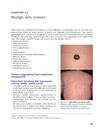
This chapter classifies various benign skin tumors and discusses their characteristics, treatment indications, and potential for recurrence, but reports no new clinical findings.
 8 citations
,
September 2004 in “Contact dermatitis”
8 citations
,
September 2004 in “Contact dermatitis” Avoiding dyed wigs and clothing improved severe allergic reactions in a woman treated with diphencyprone.
 16 citations
,
July 2021 in “Histopathology”
16 citations
,
July 2021 in “Histopathology” This review discusses recent findings on molecular changes in cutaneous adnexal tumours and reports novel markers and pathways involved, highlighting the diverse oncogenic drivers and tumour suppressor alterations.
 7 citations
,
March 2017 in “Journal of dermatology”
7 citations
,
March 2017 in “Journal of dermatology” This review outlines the clinical and histopathological features that aid in classifying tumors arising from the folliculosebaceous apparatus and reports no new research results.
 51 citations
,
October 2002 in “British Journal of Dermatology”
51 citations
,
October 2002 in “British Journal of Dermatology” Finasteride increases hair density in female androgenetic alopecia, but individual results may vary.
Personalized care and evidence-based treatments are crucial for managing skin and hair conditions.

Custom skincare can be made based on genes, fewer cats in Lublin have FeLV/FIV than national average, and studies also looked at small water bodies, river pollution, guppy growth, toxins in biochars, palm oil issues, and pumpkin seed oil for hair strength.
 2 citations
,
March 2023 in “JAAD case reports”
2 citations
,
March 2023 in “JAAD case reports” This case report describes the unexpected hair repigmentation surrounding a scalp tumor in a 74-year-old man, suggesting a potential link between the carcinoma and changes in hair pigmentation.
36 citations
,
January 1994 in “Cell and Tissue Research”  May 2020 in “Research Square (Research Square)”
 This study suggested that non-colony dissociated hiPSCs can be effectively differentiated into functional RPE cells, and hiPSC-RPE cell spheroids showed promise for use in subretinal transplantation in animal models of retinal degeneration.
 146 citations
,
June 2012 in “PLoS ONE”
146 citations
,
June 2012 in “PLoS ONE” This study observed that quiescent label-retaining cells in the intestine, identified by Paneth cell markers, can switch to a proliferative state and activate Bmi1 expression during tissue injury, contributing to tissue regeneration.
 68 citations
,
December 2011 in “Journal of Investigative Dermatology”
68 citations
,
December 2011 in “Journal of Investigative Dermatology” This study reported that a three-dimensional hydrogel culture system supports the growth and maintenance of distinct dermal papilla cell types, crucial for skin reconstitution assays in neonatal mice.
June 2020 in “bioRxiv (Cold Spring Harbor Laboratory)” This study reported that distinct stem/progenitor populations in the ocular surface epithelium have different cell division frequencies and respond differently to injury, with specific spatial compartmentalization and migration behaviors.
December 2004 in “Reproduction Fertility and Development” This study used porcine models to isolate and culture stem cells from brain and hair follicles, shedding light on differentiation processes and potential markers for stem cell compartments under lab conditions.
 November 2024 in “Experimental Dermatology”
 In this pilot study, researchers isolated skin-derived precursor-like cells from human-induced pluripotent stem cell-derived skin organoids, revealing their potential for future hair regenerative applications by exhibiting self-renewal and key marker expression.
 28 citations
,
March 2010 in “Histochemistry and cell biology”
28 citations
,
March 2010 in “Histochemistry and cell biology” Skin cells can help create early hair-like structures in lab cultures.
January 1997 in “The Showa University Journal of Medical Sciences” This study found that dihydrotestosterone significantly reduced the growth rate of perifollicular sheath cells but had no effect on nonfollicular fibroblasts or dermal papilla cells.
 41 citations
,
June 2010 in “Journal of Investigative Dermatology”
41 citations
,
June 2010 in “Journal of Investigative Dermatology” This study suggests that new cells are incorporated into the dermal papilla during the early anagen phase of the hair cycle, which may influence hair growth consistency and follicle size changes.
October 2014 in “Microscopy” This study found that using ionic liquid for specimen preparation allowed for observation of dermal papilla cells and their cilia in near-living conditions, reducing damage typically caused by conventional preparation methods.
75 citations
,
September 2016 in “EMBO journal” This study found that PRC2 plays a crucial role in maintaining intestinal homeostasis by supporting progenitor cell proliferation and limiting secretory lineage differentiation.
2 citations
,
June 2020 in “bioRxiv (Cold Spring Harbor Laboratory)” This study demonstrates that in vivo live imaging reveals how distinct stem cell activities in the limbal niche coordinate corneal regeneration.
56 citations
,
November 1958 in “The Journal of Cell Biology” This study used electron microscopy to identify a distinct dendritic cell in the human epidermis, similar to the melanocyte, with unique structural features and variable melanin content.

This study successfully established a functionally stable immortalized sheep granulosa cell line (GCs-SV40T-GFP) that can passaged up to 50 generations, maintaining morphological stability and estradiol secretion, offering a valuable model for research into animal reproductive function and hormone regulation.
46 citations
,
November 2004 in “Lipids” This study suggests PPAR isotypes play distinct roles in skin, influencing epidermal barrier formation, sebocyte differentiation, and lipid production, with potential implications for treating skin disorders.
 November 2022 in “Journal of Investigative Dermatology”
 This study demonstrated that hiPSC-derived hair-bearing skin organoids lacked sufficient type VII collagen at the epidermal-dermal junction, indicating a need for further maturation to model certain forms of epidermolysis bullosa effectively.
4 citations
,
February 2023 in “Stem Cell Research & Therapy” This study found that papillary dermal fibroblast progenitors in newborn mouse skin can be isolated and cultured to generate male germline cell precursors, demonstrating their potential through differentiation into cells with meiotic capability.