5 citations
,
April 2022 in “The journal of investigative dermatology/Journal of investigative dermatology” This article discusses junctional epidermolysis bullosa caused by COL17 deficiency, noting a lack of experimental therapies and the impact of nonsense mutations, but it reports no new clinical results.
 4 citations
,
December 2020 in “Mammalian genome”
4 citations
,
December 2020 in “Mammalian genome” This study found that pelage abnormalities in Harlequin mutant mice are linked to severe AIF deficiency and associated with altered expression of genes related to hair structure.
 4 citations
,
January 2014 in “International Journal of Trichology”
4 citations
,
January 2014 in “International Journal of Trichology” This report presents a 12-year-old male with symptoms indicative of Marie-Unna type hereditary hypotrichosis, characterized by a specific pattern of hair loss evolving with age.
 3 citations
,
February 2018 in “Human Reproduction”
3 citations
,
February 2018 in “Human Reproduction” This study reports that a young man with severe testotoxicosis maintained spontaneous fertility despite suppressed FSH levels, underscoring the importance of high intratesticular testosterone levels for spermatogenesis.
2 citations
,
May 2020 in “The journal of investigative dermatology/Journal of investigative dermatology” This study describes a family where a TP63 mutation was linked with prominent alopecia and mild ectodermal dysplasia features.
September 2025 in “Indian Journal of Dermatology” In this case report, researchers detailed a 22-year-old Turkish woman diagnosed with autosomal recessive woolly hair/hypotrichosis (ARWH/H), linked to a mutation in the LIPH gene, resulting in sparse, poorly growing, curly hair, highlighting the need for genetic consideration in similar hair conditions.
August 2025 in “Biomedicines” In this case report, half-siblings with bullous congenital ichthyosiform erythroderma were found to have a susceptibility to Trichophyton rubrum infection, successfully treated with oral terbinafine.
 January 2025 in “Clinical and Medical Engineering Live”
 This study discusses the potential health risks associated with occupational radiation exposure, including genetic mutations, cancers, and other diseases, and outlines strategies for prevention and occupational health safety.
 September 2024 in “Journal of Medicine and Life”
 In this study, researchers identified a recurrent nonsense mutation, c.409C>T (p.Arg137*), in the COL7A1 gene through whole exome sequencing in a family with autosomal recessive dystrophic epidermolysis bullosa, demonstrating the importance of this method for diagnosing genetically complex conditions.
 July 2024 in “Journal of Dermatological Treatment”
 In this case report, a 6-year-old boy with hidrotic ectodermal dysplasia 2 caused by GJB6 mutations showed no significant hair improvement with age, despite treatment with botanical extracts and Minoxidil.
 September 2023 in “Cutis”
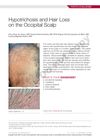
 This study presents a case of a 6-month-old infant girl with hypotrichosis and an alopecic plaque in the occipital region, characterized by broken and dystrophic hairs with follicular papules and perifollicular hyperkeratosis, suggesting a diagnostic consideration.
 November 2022 in “Journal of Investigative Dermatology”
 In this study, analysis of over 800 Iranian patients with epidermolysis bullosa identified 15 with pathogenic PLEC variants, highlighting a correlation between variant locations and phenotypic manifestations of plectinopathies.
 September 2020 in “Acta Scientific Cancer Biology”
 This case report describes how personalized treatment based on Encyclopedic Tumor Analysis successfully led to durable regression in a woman with advanced pilomatrical carcinoma, unresponsive to standard care.
May 2017 in “The journal of immunology/The Journal of immunology” This study reported that patients with specific Foxn1 mutations exhibited severe T-cell lymphopenia without the hair and nail abnormalities usually associated with these mutations.
 December 2016 in “British Journal of Dermatology”
 The meeting highlighted the importance of genetic testing and multidisciplinary approaches in pediatric dermatology.
 November 2008 in “Medical & surgical dermatology”
 This study reports that a prototype device may accurately measure changes in hair quantity, diameter, and density in patients with balding by assessing the cross-sectional area of hair bundles.
 4 citations
,
October 2018 in “Cell Stem Cell”
4 citations
,
October 2018 in “Cell Stem Cell” This study shows that differences in Hoxc gene expression in hair follicle mesenchyme along the body axis contribute to regional variations in mammalian hair growth.
107 citations
,
March 2014 in “BoneKEy Reports” This abstract reviews hereditary vitamin D-resistant rickets, a rare genetic condition causing severe early childhood rickets, and reports no new results; effective treatment typically requires high doses of calcium to address hypocalcemia and secondary hyperparathyroidism.
85 citations
,
March 2008 in “Journal of Cell Science” This study created transgenic mouse models with the LMNA gene mutation common in Hutchinson-Gilford progeria syndrome, revealing skin and teeth abnormalities related to transgene expression levels.
 39 citations
,
January 2019 in “Cells”
39 citations
,
January 2019 in “Cells” This review discusses the molecular mechanisms of Hutchinson-Gilford progeria syndrome and evaluates current research trends, available mouse models, and prospects for developing therapies, but reports no new clinical findings.
19 citations
,
May 2016 in “Biology Direct” This study presents iSiMPRe, a method identifying protein regions enriched in mutations, revealing potential cancer-related genes and enhancing understanding of mutation effects across a wide range of cancer types.
 17 citations
,
March 2012 in “The Journal of Pathology”
17 citations
,
March 2012 in “The Journal of Pathology” This article argues that lineage labeling with genetic markers is the gold standard for identifying epithelial stem cells, contrary to the view that in vitro methods alone are sufficient.
12 citations
,
September 2017 in “JDR Clinical & Translational Research” In this study, researchers observed that the success of treating hereditary vitamin D–resistant rickets in children depends on the mutation location in the VDR gene, notably with favorable dental development outcomes for those with the p.R391S mutation, despite persistent alopecia.
8 citations
,
March 2011 in “Endocrine” In this study, researchers identified a novel p.R50X mutation in the vitamin D receptor gene, linked to hereditary vitamin D-resistant rickets in two siblings.
 4 citations
,
January 2017 in “Journal of pediatric endocrinology & metabolism/Journal of pediatric endocrinology and metabolism”
4 citations
,
January 2017 in “Journal of pediatric endocrinology & metabolism/Journal of pediatric endocrinology and metabolism” This study identified two distinct VDR gene mutations among Lebanese families with hereditary vitamin D-resistant rickets, noting varied treatment responses and promising outcomes despite severe phenotypes.
 223 citations
,
January 2014 in “International Journal of Molecular Sciences”
223 citations
,
January 2014 in “International Journal of Molecular Sciences” This article reviews the complex signaling pathways between epithelial and mesenchymal cells crucial for hair follicle morphogenesis, highlighting the Wnt pathway's role as a master regulator without reporting new experimental findings.
148 citations
,
May 2012 in “The American Journal of Human Genetics” This study identified heterozygous mutations in the ABCC9 gene as the genetic basis of Cantú syndrome, suggesting the syndrome as a new member of potassium channelopathies.
 103 citations
,
March 2011 in “PLoS Biology”
103 citations
,
March 2011 in “PLoS Biology” This study found that a mutation in the BMP12/GDF7 gene is associated with the Naked neck trait in chickens, reducing neck feathering due to altered signaling pathways.
 61 citations
,
January 2017 in “Human Reproduction Open”
61 citations
,
January 2017 in “Human Reproduction Open” This review discusses hormone replacement therapy for women with premature ovarian insufficiency, strongly recommending it for symptom relief and bone protection, but notes a lack of evidence on optimal types and doses.
 49 citations
,
October 2009 in “Cancer research”
49 citations
,
October 2009 in “Cancer research” This study found that disrupting Stat3 in keratinocyte stem cells of mice reduced skin tumor formation by approximately 80%, suggesting Stat3's role in tumor initiation survival mechanisms.