 March 2026 in “Journal of Pakistan Association of Dermatologists”
 This study found that androgenic alopecia is highly prevalent in women with PCOS, suggesting early dermatological screening could help identify related metabolic and psychosocial risks.
26 citations
,
August 2008 in “Clinical endocrinology” This paper summarizes proceedings from a PCOS Special Interest Group, reporting recent advances in the understanding of PCOS follicular abnormalities, associated cardiovascular risks, and dermatological issues, but does not present new clinical findings.
 January 2023 in “Indian dermatology online journal”
 This case report discusses a 15-year-old boy with pachyonychia congenita, identifying a keratin 17 gene mutation, and highlights the need for a national registry and more accessible genetic testing in India.
 June 2024 in “Kushtia Medical College Journal”
 This observational study conducted at Kushtia Medical College explored the socio-demographic and clinical profiles of 100 women with PCOS, highlighting that a significant number of these patients experienced infertility, dysmenorrhea, and metabolic abnormalities, suggesting a need for timely therapeutic interventions.
 60 citations
,
April 2003 in “Human Reproduction”
60 citations
,
April 2003 in “Human Reproduction” This study found that Czech women with polycystic ovary syndrome in their thirties had a significantly worse cardiovascular risk profile compared to a control group, independent of obesity.
April 2019 in “Faculty Opinions – Post-Publication Peer Review of the Biomedical Literature” This study identified three new genetic loci associated with PCOS and found a similar genetic structure across different diagnostic criteria, suggesting a genetic basis for shared metabolic traits and potential causal links to other conditions.
 December 2021 in “The Journal of clinical endocrinology and metabolism/Journal of clinical endocrinology & metabolism”
 Men can have genetic risks for PCOS-related traits like obesity and diabetes.
January 2010 in “Belarusian State Pedagogical University repository (Belarusian State Pedagogical University)” This question-based abstract lists potential survey questions regarding contraception, hormone therapy, and related health issues but presents no new research findings.
 4 citations
,
December 2013 in “The Journal of Dermatology”
4 citations
,
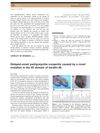
December 2013 in “The Journal of Dermatology” This letter to the editor discusses a case of delayed-onset pachyonychia congenita linked to a new mutation in keratin 6b but presents no new research findings.
 August 2018 in “Journal of The American Academy of Dermatology”
 A 5-year-old girl with a rare skin disorder was effectively treated with skin creams instead of oral medication.
 December 2025 in “Editora Pasteur eBooks”
 A combined medical and aesthetic approach is crucial for effectively managing PCOS and its skin-related issues.
 September 2023 in “Reproductive health of woman”
 This review examines the prevalence and symptoms of polycystic ovary syndrome (PCOS) across different ages, highlighting its varied dermatological and reproductive implications, but reports no new research findings.

The conclusion is that a more comprehensive and precise approach is needed for diagnosing PCOS to address its broader health risks.
46 citations
,
May 2013 in “The journal of investigative dermatology/Journal of investigative dermatology” This review discusses the state-of-the-art knowledge on pseudoxanthoma elasticum, summarizing recent advancements in genetics, pathomechanisms, and potential treatments but reports no new clinical findings.
This study introduced Cadd4, a peptide-based degrader developed using computer-aided drug design, which effectively reduced PCSK9 levels and increased LDL receptor expression, resulting in decreased plasma cholesterol and LDL-C levels in hypercholesterolemic mice, without liver toxicity.
 August 2025 in “Advances in Therapy”
 In this study, the researchers noted that physicians in China prioritize clinical hyperandrogenism when making PCOS treatment decisions, highlighting a need to align clinical practices with guidance recommendations and to clarify the role of biochemical hyperandrogenism in future guidelines.
179 citations
,
July 2005 in “Human Reproduction Update” This review discusses the genetic basis and familial patterns of polycystic ovary syndrome, noting a strong familial component but inconclusive genetic patterns; it reports no new empirical findings.
 September 2023 in “The Journal of clinical endocrinology and metabolism”
 This study found that genetic risk factors for PCOS are linked to increased body mass index and earlier developmental milestones in childhood, indicating that PCOS may affect both sexes from early life.
 January 1999 in “Journal of the European Academy of Dermatology and Venereology”
 RAPK is a rare skin disorder with pigmented spots, mainly on hands and feet, starting in youth.
 July 2026 in “Zenodo (CERN European Organization for Nuclear Research)”
 This review covers the diagnosis, complications, and management strategies for Polycystic Ovarian Disease, reporting no new clinical results and highlighting the potential of personalized medicine.
 January 2025 in “Iraqi Journal of Science”
 This study found that variations in the genes PDCD4, miR-21, and miR-449b may significantly influence breast cancer progression, with higher PDCD4 serum levels linked to increased breastfeeding.
 9 citations
,
July 2022 in “Dermatology and Therapy”
9 citations
,
July 2022 in “Dermatology and Therapy” In this study, long-pulsed 755-nm alexandrite laser treatment for keratosis pilaris significantly improved skin roughness and redness, as well as follicular plug reduction, with good safety and patient satisfaction compared to a moisturizing lotion alone.
 May 2026 in “Zenodo (CERN European Organization for Nuclear Research)”
 This review provides an educational resource on Polycystic Ovary Syndrome, detailing its pathophysiology and complications, and reports no new clinical results.
1 citations
,
January 2022 in “Pakistan BioMedical Journal” This study reported that a significant number of young women in Pakistan may unknowingly have PCOS, with many experiencing irregular periods, weight gain, and increased cravings potentially linked to dietary habits.
 September 2016 in “Journal of Dermatological Science”
 This study found that epidermal-specific deletion of aPKCλ in mice disrupted hair follicle stem cell quiescence and regeneration, leading to abnormal hair cycling and skin changes.
79 citations
,
October 2003 in “PubMed” In this study, PKCepsilon transgenic mice showed increased TNFalpha shedding during skin tumor promotion, which may contribute to the development of metastatic squamous cell carcinoma.
January 2026 in “Human Mutation” This study reports that a clinical prognostic model based on immune-related genes improved survival prediction for patients with clear cell renal cell carcinoma, also identifying potential drugs targeting the gene DOCK8.
 308 citations
,
December 2018 in “PLOS Genetics”
308 citations
,
December 2018 in “PLOS Genetics” This study identified three novel genetic loci associated with PCOS and found similar genetic architecture across different diagnostic criteria, with evidence suggesting genetic links between PCOS and various metabolic and psychological traits.
 April 2026 in “International Journal of Nursing Education and Research”
 This study found that a structured teaching program significantly improved adolescent girls' knowledge of polycystic ovary syndrome.
 2 citations
,
June 2022 in “Northern Clinics of Istanbul”
2 citations
,
June 2022 in “Northern Clinics of Istanbul” This study found no significant difference in the prevalence of PCOS between women with and without PSD, although some clinical and blood parameters did differ.