26 citations
,
May 2007 in “Differentiation” This study suggests that Foxn1 acts as a brake on PKC signaling in keratinocytes, thereby modulating the stages of differentiation by controlling PKC activity.
 21 citations
,
January 2018 in “PLoS Genetics”
21 citations
,
January 2018 in “PLoS Genetics” This study found that certain keratin gene mutations associated with pachyonychia congenita are linked to altered enamel structure and increased risk of dental caries.
101 citations
,
June 2003 in “The EMBO Journal” Phospholipase Cδ1 is crucial for normal skin and hair development.
 6 citations
,
January 2024 in “Annals of Dermatology”
6 citations
,
January 2024 in “Annals of Dermatology” In this study, treatment with recombinant DKK2 was shown to significantly stimulate hair progenitor cell growth and enhance hair shaft elongation in ex vivo human hair follicle cultures by activating the Wnt/ẞ-catenin signaling pathway, suggesting a potential role for DKK2 in promoting hair growth.
November 2022 in “Munich Personal RePEc Archive (Ludwig Maximilian University of Munich)” In this study, the pi4kβ1β2 double mutant in Arabidopsis thaliana exhibited altered root growth, increased susceptibility to Blumeria graminis, and a potential correlation between PI4K activity and auxin response and immunity due to changes in vesicular trafficking and actin filaments.
 December 2020 in “Innovation in aging”
 This study suggests that inhibiting PKC, similar to rapamycin treatment, can extend lifespan and reduce neurological symptoms and inflammation in mice with mitochondrial dysfunction, potentially involving the mTORC2 pathway.
 12 citations
,
June 2020 in “Frontiers in Cell and Developmental Biology”
12 citations
,
June 2020 in “Frontiers in Cell and Developmental Biology” This study found that the PP2A-B55α regulatory subunit is crucial for ectodermal development in mice, with knockout embryos displaying severe neural and epidermal defects and failing to survive to birth.
 31 citations
,
August 2005 in “The American Journal of Dermatopathology”
31 citations
,
August 2005 in “The American Journal of Dermatopathology” This study investigated the histopathology of ectodermal dysplasia/skin fragility syndrome, identifying specific skin and hair abnormalities associated with PKP1 gene mutations in two young female patients.
65 citations
,
February 2018 in “The Plant Journal” This study found that PLDζ2 and NPC4 enzymes play distinct roles in lipid remodeling and root hair growth in Arabidopsis under phosphate deficiency, influencing root hair density and length in a tissue- and time-specific manner.
 April 2023 in “Journal of Investigative Dermatology”
 In this study, topical inhibition of casein kinase 1 in mice was found to enhance melanocyte precursor migration and eumelanin production, suggesting potential applications for treating vitiligo and graying hair through KitL/c-Kit signaling pathway activation.
June 2025 in “Proceedings of the National Academy of Sciences” In this study, a mouse model with a PIK3CA gain-of-function mutation in Schwann cells revealed unique communication with neighboring cells and a glycolytic shift in peripheral nerves, and early alpelisib treatment significantly improved symptoms, though efficacy declined with delayed administration due to limited drug penetration.
14 citations
,
August 2014 in “The FASEB Journal” This study found that the catalytically inactive serine protease CAP1/Prss8 can still induce skin disorders in mice and is subject to inhibition by nexin-1, independent of its catalytic activity.
3 citations
,
February 2018 in “Experimental and Molecular Medicine/Experimental and molecular medicine” This study suggests that hair loss disorders like Marie Unna hereditary hypotrichosis may result from mutations that disrupt post-transcriptional regulation of HR protein expression by PCPB2 interacting with Hr mRNA.
 4 citations
,
December 2013 in “The Journal of Dermatology”
4 citations
,
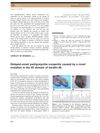
December 2013 in “The Journal of Dermatology” This letter to the editor discusses a case of delayed-onset pachyonychia congenita linked to a new mutation in keratin 6b but presents no new research findings.
 1 citations
,
April 2018 in “Journal of Investigative Dermatology”
1 citations
,
April 2018 in “Journal of Investigative Dermatology” This study found that Polycomb repressive complex 1 is crucial for skin development and stem cell specification, influencing gene activity beyond its known repressor functions.
 June 2025 in “International Journal of Nephrology and Renovascular Disease”
 This study suggests that PLA2R1 overexpression in PMN affects the podocyte cycle and may involve an additional immune response, which could provide new directions for PMN treatment development.
28 citations
,
January 2015 in “Journal of Cell Science” In this study, PINCH-1 gene loss in mouse epidermis led to detachment from the basement membrane, thickened skin, and hair loss, with findings suggesting PINCH-1 plays a role in keratinocyte adhesion through both ILK and EPLIN pathways.
 60 citations
,
January 2004 in “The journal of investigative dermatology/Journal of investigative dermatology”
60 citations
,
January 2004 in “The journal of investigative dermatology/Journal of investigative dermatology” This study found that inhibiting PKC-β activity with bisindolylmaleimide reduces pigmentation in the skin and hair of guinea pigs and mice by preventing tyrosinase activation.
 87 citations
,
July 2018 in “Biochimica et Biophysica Acta (BBA) - Molecular Cell Research”
87 citations
,
July 2018 in “Biochimica et Biophysica Acta (BBA) - Molecular Cell Research” This review discusses the essential roles and complex regulation of PP2A in various physiological processes and reports no clinical results; the authors highlight the need for further mouse model research to explore PP2A's therapeutic potential.
25 citations
,
February 2021 in “Diabetes” This study found that Dock5 plays a crucial role in keratinocyte function and wound healing, with its expression reduced in diabetic models but improving healing when restored.
 April 2017 in “Journal of Investigative Dermatology”
 This study found that sulfated CCK octapeptide reduces psoriasis-like skin inflammation in mice, suggesting a new pathophysiological role for CCK in regulating epidermal inflammation.
November 2022 in “Journal of Investigative Dermatology” This study reported that an HS-associated NCSTN mutation in iPSC-derived skin organoids led to altered hair follicle stem cell differentiation and increased expression of proteins linked to HS inflammation.
 21 citations
,
October 2019 in “The journal of investigative dermatology/Journal of investigative dermatology”
21 citations
,
October 2019 in “The journal of investigative dermatology/Journal of investigative dermatology” This study identified specific germline and somatic mutations in the Phospholipase C Delta 1 gene as high-risk factors for developing hereditary trichilemmal cysts, involving a monoallelic two-hit mechanism.
10 citations
,
April 1999 in “British journal of dermatology/British journal of dermatology, Supplement” This study found that anthralin and sodium dodecyl sulfate accelerated hair growth in mice, potentially involving different skin protein kinase C isoform responses.
24 citations
,
May 2009 in “The FASEB Journal” This study found that Akt2 and SGK3 are crucial for postnatal hair follicle development in mice, as their combined absence led to severe hair growth defects due to disrupted β-catenin-dependent transcriptional processes.
 July 2024 in “New Phytologist”
 This study suggests that the transcription factor PDF2 in Arabidopsis may link lipid sensing with growth responses to phosphate starvation by acting as a sensor for lyso-PCs through its START domain.
 July 2024 in “PLANT PHYSIOLOGY”
 In this study on Arabidopsis, the researchers identified CIPK13 and CIPK18 as crucial genes for root hair growth, finding that deficiencies in these genes resulted in shorter root hairs and reduced growth rates due to altered calcium oscillations.
October 2025 in “Cell Death and Disease” In this study, researchers developed two novel mouse models to investigate how CD271 deletion in keratinocytes affects skin homeostasis, finding that it leads to changes resembling dysplastic skin conditions with immune cell recruitment and inflammatory cytokine release.
 April 2017 in “Journal of Investigative Dermatology”
 This study found that PRC1 plays crucial roles in skin epithelial stem cell regulation, with catalytic and non-catalytic functions impacting epidermal integrity, hair development, and Merkel cell dynamics in murine models.
September 2019 in “The journal of investigative dermatology/Journal of investigative dermatology” This study identifies two previously unreported pathogenic RIPK4 gene variants, suggesting a functional link with cell adhesion molecules in ectodermal dysplasias.