 January 2021 in “International journal of dermatology, venereology and leprosy sciences”
 This study found that, among 100 patients with alopecia areata, the most prevalent subtype was patchy alopecia areata, with characteristic trichoscopic features including black dots, yellow dots, and empty hair follicles.
56 citations
,
January 1970 in “Cell and Tissue Research”  19 citations
,
February 2016 in “Journal of The American Academy of Dermatology”
19 citations
,
February 2016 in “Journal of The American Academy of Dermatology” This study found that the presence of CD3(+) T-cells within empty follicular fibrous tracts is a reliable indicator for diagnosing diffuse alopecia areata instead of pattern hair loss.
January 2026 in “Dermatologic Therapy” This review discusses female pattern hair loss as an early marker of hormonal imbalance and evaluates hormonal and lifestyle interventions, but reports no new clinical results.
22 citations
,
February 2008 in “Biochemical and Biophysical Research Communications” Androgen effects on hair follicles vary by skin area.
 4 citations
,
January 2020 in “Skin appendage disorders”
4 citations
,
January 2020 in “Skin appendage disorders” This case report describes a unique presentation of frontal fibrosing alopecia characterized by a hair loss pattern that resembles the Greek letter upsilon, supported by trichoscopic and histological findings.
 April 2016 in “Actas Dermo-Sifiliográficas”
 The document concludes that a unique target-like hair regrowth pattern in alopecia areata may be more common than thought and should be properly identified.
This abstract provides contact information for Dr. Ban Kamoona at the Medical University – Sofia and contains no research findings.
14 citations
,
August 2004 in “Veterinary Dermatology” In this study, a thoroughbred mare exhibited a unique case of alopecia areata with lymphocytic infiltration at both the bulbar and isthmic levels of hair follicles.
 14 citations
,
January 2015 in “Current problems in dermatology”
14 citations
,
January 2015 in “Current problems in dermatology” This review addresses treatment approaches for female pattern hair loss, highlighting that combining different therapies may be more effective than single treatments, but no new results are reported.
 10 citations
,
January 2014 in “Genetics and Molecular Research”
10 citations
,
January 2014 in “Genetics and Molecular Research” This study observed that primary hair follicles in Liaoning Cashmere goats had broader hair bulb widths compared to secondary follicles, with the difference diminishing during the anagen phase of hair follicle development.
2 citations
,
December 2018 This study found that dermatoscopy can quickly and non-invasively detect facial vellus hair involvement in patients with alopecia frontal fibrosante, occurring frequently and associated with specific facial lesions.
1 citations
,
August 2021 in “Journal of Cosmetic Dermatology” In this study, female pattern hair loss was prevalent in 28.6% of secondary school girls, with higher rates in rural areas and associations with family history, irregular menses, thyroid disease, and hirsutism.
27 citations
,
September 1988 in “PubMed” In this study, researchers used three-dimensional reconstruction to show that the shape of the hair follicle determines the hair's form, with variations observed among different racial groups.
July 2025 in “Cell & Bioscience” Specific immune cells and pathways contribute to hair follicle inflammation and hair loss, suggesting potential treatments for lichen planopilaris.
 23 citations
,
April 2006 in “Skin Research and Technology”
23 citations
,
April 2006 in “Skin Research and Technology” This study observed that hair density and growth rates vary by location and age, and the presence of thin hairs predominates in younger women with mild patterned hair loss.
 September 2021 in “International Journal of Epidemiology”
 This study found that the main causes of diffuse hair loss in adult women were female pattern hair loss, telogen effluvium, chronic telogen effluvium, and a combination of female pattern hair loss with telogen effluvium.
55 citations
,
November 2010 in “Development” This study observed that in frizzled 6 null mice, initially uncorrelated hair follicle orientations develop into highly ordered patterns over time, suggesting possible mechanisms for biological structure patterning.
 December 2025 in “Russian Journal of Skin and Venereal Diseases”
 This study found that in patients with non-cicatricial alopecia, hair follicles and their sheaths were thinner compared to controls, especially in cases of alopecia areata and telogen effluvium, with notable thinning beginning in the subcutaneous fat tissue.
 5 citations
,
June 2012 in “Journal of Cosmetic Dermatology”
5 citations
,
June 2012 in “Journal of Cosmetic Dermatology” This review discusses female pattern hair loss as distinct from androgenetic alopecia and suggests that clinicians use tools like dermoscopy and histopathology for more accurate diagnosis, without reporting new findings.
 125 citations
,
May 2007 in “Journal of The American Academy of Dermatology”
125 citations
,
May 2007 in “Journal of The American Academy of Dermatology” This study describes the development of the BASP classification system, providing a universal and systematic approach for classifying pattern hair loss in both men and women.
 January 2023 in “Skinmed”
 This chapter reviews management strategies for female pattern hair loss and provides guidance on treatment options, but it reports no new clinical findings.

Lichen planopilaris and frontal fibrosing alopecia are likely the same disease with different clinical appearances.
 September 2025 in “Dermatology Online Journal”
 In this case study, a 24-year-old woman with frontal alopecia resembling frontal fibrosing alopecia was ultimately diagnosed with primary cutaneous follicle center lymphoma, highlighting the critical role of biopsy in identifying atypical alopecia presentations.
1 citations
,
February 2023 in “American Journal of Dermatopathology” Microscarring is found in both alopecia areata and pattern hair loss, suggesting a shared cause.
 February 2026 in “Clinical Cosmetic and Investigational Dermatology”
 This study found that a family history of androgenetic alopecia and specific trichoscopic signs are strong predictors of female pattern hair loss, leading to a nomogram model for risk prediction.
January 2020 in “Revista Dermatológica Centro Uraga” This article describes how recognizing distinct trichoscopic features aids in diagnosing various dermatological conditions and hair loss, but it reports no new clinical findings.
 1 citations
,
September 2021 in “CRC Press eBooks”
1 citations
,
September 2021 in “CRC Press eBooks” This chapter reviews trichoscopic-pathologic correlations in Frontal Fibrosing Alopecia and reports no new clinical results; the authors discuss genetics, clinical patterns, and unusual variants associated with this condition.
 October 2024 in “Experimental Dermatology”
 This study examined hair follicles from 14 Caucasian males and found that catagen-phase follicles were more prevalent (7.5%) than previously reported, challenging the established view that telogen-phase follicles are more common.
 63 citations
,
October 2011 in “Archives of Dermatology”
63 citations
,
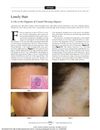
October 2011 in “Archives of Dermatology” Isolated long hairs at the original hairline can help diagnose Frontal Fibrosing Alopecia.