2 citations
,
February 2013 in “Journal of the Saudi Society for Dermatology & Dermatologic Surgery” This case study describes an acquired localized form of trichorrhexis nodosa resulting from physical-chemical trauma.
 8 citations
,
March 2011 in “Archives of Dermatology”
8 citations
,
March 2011 in “Archives of Dermatology” This study suggests that corkscrew hair could serve as a new diagnostic marker for tinea capitis and that dermoscopy might help diagnose atypical cases swiftly.
2 citations
,
February 1945 in “Archives of Dermatology and Syphilology” This case report describes a woman with an unusual presentation of tinea capitis, noting diagnostic challenges as initial examinations found no mycelium or spores.
1 citations
,
February 1938 in “Archives of Dermatology” This piece presents a case study of a woman with diffuse alopecia, suggesting a potential link to a chronic focus of infection rather than acute fever.
51 citations
,
July 2003 in “Annals of the Rheumatic Diseases” This case study reports a successful use of co-trimoxazole in treating a 13-year-old girl with symptoms suggestive of autoimmune disorders and relapsing polychondritis.
15 citations
,
July 2015 in “Developmental Dynamics” This study highlights the role of Orai1 in ameloblast differentiation and maturation, showing that its down-regulation affects cell proliferation and enamel formation during tooth development.
3 citations
,
October 2021 in “The Application of Clinical Genetics” This study found that certain genetic variations in the OPN gene may be linked to atopic dermatitis and a higher prevalence of asthma in Caucasians.
24 citations
,
July 2009 in “Mycoses” This case report describes an adult patient with tinea capitis due to Microsporum canis who experienced complete hair regrowth following treatment with fluconazole and ketoconazole shampoo.
2 citations
,
January 2016 in “İzmir Dr.Behçet Uz çocuk hastanesi dergisi” This case report describes a ten-year-old boy with kerion celsi caused by Trichosporon asteroides, successfully treated with systemic fluconazole over eight weeks, marking the first documentation of this cause in the literature.
 2 citations
,
April 2015 in “Dermatology practical & conceptual”
2 citations
,
April 2015 in “Dermatology practical & conceptual” This case report suggests that regular use of antifungal shampoo might obscure clinical indicators of Trichophyton tonsurans tinea capitis in healthy adults, necessitating detailed diagnostic approaches like histopathology and dermoscopy.
27 citations
,
April 2012 in “Pediatrics in review” This article reviews approaches to diagnosing and treating dermatophytosis and pityriasis versicolor, noting a significant change in the epidemiology of tinea capitis and highlighting the limitations of certain diagnostic techniques.
6 citations
,
March 2005 in “Clinical and Experimental Dermatology” This report documents the first known association of alopecia areata with idiopathic primary hypophysitis, suggesting a shared autoimmune basis.
 1 citations
,
August 2025 in “Journal of Ayurveda and Holistic medicine.”
1 citations
,
August 2025 in “Journal of Ayurveda and Holistic medicine.” In this study, a 63-year-old woman with tinea capitis experienced promising improvements in symptoms such as pain, itching, and mild hair loss after undergoing Ayurvedic treatments, including rakta mokshana and shamana aushadi, over a period of 35 days.
 October 2023 in “Indian dermatology online journal”
 This report describes a case study of a 23-year-old female exhibiting multiple trichodiscomas, a type of benign tumor of the hair follicular discs common in familial cases and potentially linked to Birt-Hogg-Dube syndrome, though genetic testing was not performed due to financial constraints.
 13 citations
,
June 2012 in “Journal of Dermatological Case Reports”
13 citations
,
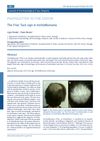
June 2012 in “Journal of Dermatological Case Reports” This report describes an 8-year-old male with trichotillomania, confirmed by trichoscopy showing characteristic hair damage and patterns.
 1 citations
,
July 2024 in “Indian Journal of Case Reports”
1 citations
,
July 2024 in “Indian Journal of Case Reports” This article presents a case study of a 16-year-old male with GAPO syndrome, characterized by growth retardation, alopecia, pseudoanodontia, and optic atrophy, who sought dental treatment for missing teeth.
 1 citations
,
October 2022 in “Asian journal of medical sciences”
1 citations
,
October 2022 in “Asian journal of medical sciences” This study found trichoscopy to be a highly sensitive, non-invasive method for diagnosing tinea capitis in children, which could be valuable in resource-limited settings lacking mycological culture facilities.
 January 2024 in “The Indian Veterinary Journal”
 In this case study involving a two-month-old crossbred kid, severe skin conditions characterized by alopecia and pruritic lesions were linked to Malassezia yeast and bacteria, and successful treatment was observed with ketoconazole and supportive care.
 41 citations
,
January 2011 in “Nippon Ishinkin Gakkai Zasshi”
41 citations
,
January 2011 in “Nippon Ishinkin Gakkai Zasshi” This study identified the clinical aspects and dermatophyte types involved in tinea incognito in Iran, with Trichophyton verrucosum being the most frequently isolated species among affected patients.
1 citations
,
July 2024 in “Australasian Journal of Ultrasound in Medicine” In this study, researchers reported that cutaneous ultrasound may be a valuable tool in diagnosing and assessing inflammatory activity in tinea capitis, potentially guiding treatment decisions, especially in severe cases not apparent through clinical symptoms alone.
 October 2023 in “Clinical case reports”
 This case study reports the first Palestinian case of an ovarian steroid cell tumor with virilization in a young female, highlighting the challenges in diagnosis and varied chemotherapeutic responses.
 38 citations
,
July 2010 in “Clinical, cosmetic and investigational dermatology”
38 citations
,
July 2010 in “Clinical, cosmetic and investigational dermatology” This review discusses systemic antifungal treatments for tinea capitis in children, noting that newer agents like terbinafine and itraconazole require shorter courses than the traditional griseofulvin, but may be more costly.
31 citations
,
September 1999 in “Molecular Carcinogenesis” This study in a transgenic mouse model found that repressing overexpression of ornithine decarboxylase reduced papilloma development, indicating its role in tumor promotion sensitivity.
13 citations
,
July 1973 in “Archives of dermatology” This letter to the editor raises concerns about the possibility of cornrowing leading to dermatologic problems such as traction alopecia, paralleling issues seen with other cosmetic fads.
 March 2012 in “Journal of The American Academy of Dermatology”
 Hand-foot-mouth disease may cause nail loss in children.
 January 2025 in “JCEM Case Reports”
 Among postmenopausal women, this case study observed that a rare ovarian tumor called thecoma, found via MRI, was associated with high testosterone levels and symptoms of mild virilization such as hirsutism, indicating surgery as the primary treatment.
July 2024 in “Indian Dermatology Online Journal” In this case study, a 45-year-old immunocompetent woman with tinea capitis exhibited an unusual presentation of the infection with a scaly plaque and hair loss, which responded well to treatment with itraconazole.
8 citations
,
July 2003 in “Annals of the Rheumatic Diseases” This case study describes the successful treatment of a 13-year-old girl with relapsing polychondritis and autoimmune symptoms using co-trimoxazole, highlighting its potential role in managing autoimmune diseases.
 June 2021 in “Nepalese Journal of Ophthalmology”
 This case report presents the first known instance of a nodular eyelid mass associated with demodex infestation, suggesting the need to consider this parasite in differential diagnoses.
3 citations
,
January 2021 in “International journal of general medicine” This case report describes an 8-year-old boy with impetigenic scabies on his scalp, which responded well to treatment with topical permethrin, oral antihistamines, and antibiotics.