December 2021 in “OPAL (Open@LaTrobe) (La Trobe University)” This study found that knocking out the Hars2 gene in mouse cochlear hair cells led to mitochondrial dysfunction and ROS stress, resulting in progressive hearing loss and differential effects on inner and outer hair cells.
This case study reports a 60-year-old woman's clinical findings related to hypothyroidism and elevated prolactin levels but does not present new research results.
July 2023 in “Zenodo (CERN European Organization for Nuclear Research)” This case report describes a 6-year-old boy with a scalp infection caused by Candida parapsilosis, which was successfully treated with 2% ketoconazole ointment after other treatments failed; antifungal susceptibility testing showed variable drug resistance.
2 citations
,
October 1931 in “Archives of Dermatology and Syphilology” This report describes a rare case of scalp kerion due to microsporosis in a Portuguese child, noting the unusual combination with other microsporid features and treatment details.
This study highlights the complexity of diagnosing scalp fungal infections, emphasizing how clinical evaluation, trichoscopy, and cultural samples are essential in distinguishing tinea capitis from similar conditions like piedra, seborrheic dermatitis, and psoriasis, due to overlapping symptoms like scaling and hair changes.
July 2025 in “Actas Dermo-Sifiliográficas” This study outlines trichodynia, a painful scalp condition often linked with various types of alopecia and psychiatric disorders, noting the absence of specific treatments and highlighting the need for further research on therapeutic options.
 14 citations
,
October 1977 in “The Lancet” 27 citations
,
February 2006 in “International Journal of Dermatology”
14 citations
,
October 1977 in “The Lancet” 27 citations
,
February 2006 in “International Journal of Dermatology” This study concluded that isolated trichotillomania of the eyebrows and eyelashes, identified by specific hair characteristics, may be linked to underlying obsessive-compulsive disorders in affected patients.
October 2025 in “PLoS ONE” In this study, researchers investigated age-related hearing loss in advanced-age CBA/CaJ mice and found combined cochlear damage from chronic sound exposure and metabolic changes linked to oxidative stress, which may require addressing both etiologies for prevention and treatment.
 18 citations
,
January 2011 in “International journal of trichology”
18 citations
,
January 2011 in “International journal of trichology” This case report describes a 9-year-old girl with pseudonits and highlights frequent challenges in correctly diagnosing this condition.
13 citations
,
June 2011 in “PubMed” This case report describes a man with Touraine-Solente-Golé syndrome who achieved substantial improvement of tufted hair folliculitis after treatment with amoxicillin, clavulanic acid, and topical nadifloxacin.
9 citations
,
January 2014 in “Molecular Genetics and Metabolism Reports” This study discovered that a specific G to C mutation in the ornithine aminotransferase gene is linked to the retarded hair growth phenotype in mice and may serve as a model for human gyrate atrophy.
6 citations
,
May 2012 in “The Journal of Dermatology” This letter reports on a case of intractable ophiasis-type alopecia areata that was presumably improved by fexofenadine, but no new clinical results are presented.
 65 citations
,
January 2005 in “American journal of clinical dermatology”
65 citations
,
January 2005 in “American journal of clinical dermatology” This article reviews the diagnosis and treatment of tinea capitis in children, noting that newer antifungal agents can offer effective systemic therapy alongside supportive topical treatments; it reports no new clinical findings.
 9 citations
,
January 2013 in “Acta dermato-venereologica”
9 citations
,
January 2013 in “Acta dermato-venereologica” The conclusion is that "trichoknesis" should be recognized as a separate condition from trichodynia, characterized by itching instead of pain.
1 citations
,
November 2005 in “PubMed” This study found that continuous itraconazole therapy was more effective than pulse therapy for treating tinea capitis caused by Microsporum ferrugineum, with a higher cumulative cure rate and no significant adverse effects.
 October 2023 in “Journal of the Endocrine Society”
 This case report details a 73-year-old woman with significant hirsutism and hair loss linked to a rare ovarian Leydig cell tumor, which was resolved by bilateral salpingo-oophorectomy, normalizing her testosterone levels and addressing her symptoms.
 November 2015 in “韓方眼耳鼻咽喉皮膚科學會誌 = The journal of Korean Medicine Ophthalmology & Otolaryngology & Dermatology”
 This review analyzed research trends in alopecia treatments, noting that Western studies focus on combination therapies and safety, while integrative medicine and overall health considerations are emphasized in Korean and traditional Chinese medicine.
 7 citations
,
January 2014 in “Case reports in pediatrics”
7 citations
,
January 2014 in “Case reports in pediatrics” This report discusses a case of hair toe tourniquet syndrome in an infant and emphasizes the importance of early diagnosis and treatment to prevent severe complications.
January 2005 in “한방재활의학과학회지” In this study, the most common types of alopecia observed in patients visiting an oriental medicine clinic were androgenetic alopecia, alopecia areata, and telogen effluvium.

This study offers a bibliometric overview of research into the connection between subjective idiopathic tinnitus and anxiety disorders, highlighting key contributors and identifying core research hotspots such as the association's prevalence and severity, aiding future studies aimed at understanding shared mechanisms and interventions.
 108 citations
,
March 2011 in “Archives of Dermatology”
108 citations
,
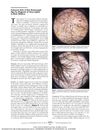
March 2011 in “Archives of Dermatology” Corkscrew hair may be a new sign for quickly diagnosing scalp fungus in black children.
6 citations
,
August 2024 in “The Journal of Dermatology” In this study, ozenoxacin was found to inhibit sebum production in insulin- and 5α-DHT-differentiated hamster sebocytes in a dose-dependent manner, suggesting potential benefits in acne management by combining antimicrobial activity against C. acnes with reduced sebum production.
October 2021 in “Operative techniques in otolaryngology--head and neck surgery” This article reviews various surgical techniques to improve ocular and cosmetic outcomes in patients with facial paralysis but reports no new clinical results; it emphasizes tailored long-term management strategies.
 1 citations
,
July 2018 in “Elsevier eBooks”
1 citations
,
July 2018 in “Elsevier eBooks” This review discusses various infections and conditions of the hair and scalp and provides diagnostic and management guidance, but reports no new clinical findings.
 37 citations
,
August 1991 in “International Journal of Dermatology”
37 citations
,
August 1991 in “International Journal of Dermatology” This study reported a predominance of adult patients, mostly women, with Trichophyton violaceum tinea capitis in southern Taiwan, noting a bimodal age distribution and questioning whether this represents a new trend.
 April 2024 in “Vestnik oftalʹmologii”
 In this case report, a 31-year-old male using topical minoxidil for androgenic alopecia developed diplopia and increased intraocular pressure, which improved after stopping minoxidil and using prostaglandin analogues, although a carbonic anhydrase inhibitor caused IOP to rise again during follow-up.
 3 citations
,
April 2021 in “Berkala ilmu kedokteran/Journal of the medical sciences”
3 citations
,
April 2021 in “Berkala ilmu kedokteran/Journal of the medical sciences” This report describes a case of tinea capitis caused by Epidermophyton floccosum, highlighting its unusual ability to perforate hair and act as an etiological agent for the condition.
 August 2026 in “Dermatology and Therapy”
 In this study, researchers identified elongated corkscrew hairs as a new trichoscopic pattern in immunosuppressed adults with chronic endothrix tinea capitis, which may help in earlier diagnosis and targeted mycological investigation.