 3 citations
,
January 2010 in “Actas Dermo-Sifiliográficas”
3 citations
,
January 2010 in “Actas Dermo-Sifiliográficas” This study found that a history of immunization and throat carriage of bacterial pathogens, including Streptococcus pyogenes, were associated with increased risk of developing alopecia areata.
71 citations
,
February 2012 in “The American Journal of Human Genetics” This study found that a heterozygous missense mutation in ATR is associated with a hereditary cancer syndrome, manifested by oropharyngeal cancer and other anomalies, in an autosomal-dominant inheritance pattern across a five-generation family.
May 2026 in “Genetics and Molecular Research” This study reported significant differences in adverse drug reactions among five chemotherapeutic regimens for oropharyngeal cancer, highlighting nausea/vomiting, alopecia, mucositis, myelosuppression, constitutional symptoms, and dermatological toxicities across different treatments.
July 2024 in “Journal of Investigative Dermatology” Patients with cutaneous lupus erythematosus have a higher risk of skin cancer and other cancers.
 17 citations
,
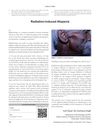
January 2010 in “International journal of trichology”
17 citations
,
January 2010 in “International journal of trichology” This case report highlights the occurrence of radiation-induced alopecia in a patient undergoing radiotherapy for oropharyngeal carcinoma, emphasizing awareness of this potential side effect.
3 citations
,
October 2001 in “British Journal of Ophthalmology” This case report suggests that intralesional cidofovir successfully treated SCC without systemic toxicity, making it a potential alternative to consider alongside surgical excision.
57 citations
,
September 2006 in “Cancer Nursing” This descriptive study reported that adults undergoing chemotherapy or radiation therapy experienced severe symptoms like fatigue and constipation, with nutrition changes being a common self-care strategy.
 32 citations
,
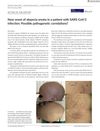
March 2021 in “Journal of cosmetic dermatology (Print)”
32 citations
,
March 2021 in “Journal of cosmetic dermatology (Print)” This letter to the editor discusses a potential link between new onset alopecia areata and SARS-CoV-2 infection, but reports no new clinical results.
 86 citations
,
May 2005 in “Seminars in Arthritis and Rheumatism”
86 citations
,
May 2005 in “Seminars in Arthritis and Rheumatism” This review identified distinguishing features of adult Kawasaki Disease compared to pediatric cases, noting more favorable prognosis in adults with fewer cardiovascular complications and no fatalities, although it remains a rare and often unrecognized condition.
 53 citations
,
May 2001 in “The American journal of the medical sciences”
53 citations
,
May 2001 in “The American journal of the medical sciences” This article reviews common skin eruptions in chemotherapy patients and discusses how recognizing these patterns can help avoid unnecessary changes to cancer treatment; it reports no new clinical results.
 17 citations
,
January 2001 in “Clinical and Experimental Dermatology”
17 citations
,
January 2001 in “Clinical and Experimental Dermatology” Early treatment with immunoglobulin and aspirin reduces heart complications in children with Kawasaki disease.
 4 citations
,
January 2018 in “Cancer treatment and research”
4 citations
,
January 2018 in “Cancer treatment and research” This review discusses current strategies for head and neck cancer treatment, highlighting the effectiveness of cisplatin in combination therapies, and notes increased toxicity with multimodal treatments but no overall survival advantage for doublet regimens; it reports no new clinical results.
 February 2024 in “Curēus”
 In this report, a rare case of hair tourniquet syndrome was described in a six-month-old girl, involving the uvula and requiring surgical intervention to remove the constricting hair.
 July 2019 in “Mayo Clinic proceedings”
 This case study concluded that weight loss is the initial recommended approach for treating secondary hypogonadism, as shown by improvements in testosterone levels and symptoms in an obese 37-year-old patient.
 44 citations
,
April 2011 in “Critical reviews in analytical chemistry”
44 citations
,
April 2011 in “Critical reviews in analytical chemistry” This review discusses the pharmacological properties and analytical methods for determining fluconazole but reports no new experimental findings.
 30 citations
,
August 2010 in “American Journal of Clinical Dermatology”
30 citations
,
August 2010 in “American Journal of Clinical Dermatology” This article reviews eyelash elongation as a side effect of EGFR inhibitors in cancer treatment, finding that the condition is typically not severe and may be managed by trimming.
 13 citations
,
October 2020 in “Journal of Neural Transmission”
13 citations
,
October 2020 in “Journal of Neural Transmission” In this study, CD34-positive progenitor cells in irradiated salivary glands were observed to potentially aid in blood vessel formation and remodeling, suggesting their role in tissue healing after radiotherapy.
 10 citations
,
October 2015 in “Medicina Clínica (english Edition)”
10 citations
,
October 2015 in “Medicina Clínica (english Edition)” This review discusses the therapeutic potential and safety of bioidentical recombinant human epidermal growth factor (rhEGF) for various skin and mucosa conditions and reports no new clinical results.
 8 citations
,
July 2011 in “Critical reviews in analytical chemistry”
8 citations
,
July 2011 in “Critical reviews in analytical chemistry” This article discusses fluconazole's pharmacological and physicochemical properties and methods for its analysis, but reports no new clinical results.
 1 citations
,
January 2017 in “Japanese Journal of Oral & Maxillofacial Surgery”
1 citations
,
January 2017 in “Japanese Journal of Oral & Maxillofacial Surgery” In this case study, a woman with secondary syphilis showed significant improvement following treatment with benzyl penicillin potassium, as evidenced by a 3.7-fold decrease in rapid plasma reagin levels.
 January 2025 in “Medical Research Archives”
 In this review, researchers reported that anorexia nervosa leads to widespread medical complications across all body systems, particularly at low body weights, and these complications are primarily treated through nutritional rehabilitation with a multidisciplinary team approach.
 273 citations
,
May 2017 in “The Lancet”
273 citations
,
May 2017 in “The Lancet” This review discusses the diagnosis and management of severe cutaneous adverse reactions to drugs and provides guidance for physicians to improve patient outcomes, but it reports no new clinical results.

research Acne
231 citations
,
April 2005 in “The New England Journal of Medicine” This article discusses the treatment considerations for a 17-year-old boy with a six-month history of acne but reports no new research findings.
 185 citations
,
August 2020 in “Mayo Clinic Proceedings”
185 citations
,
August 2020 in “Mayo Clinic Proceedings” This review discusses biological sex differences in COVID-19 outcomes and reports no new clinical results; it identifies a need for studies to clarify how sex influences disease progression.
 176 citations
,
August 1981 in “JAMA”
176 citations
,
August 1981 in “JAMA” This study reported that toxic shock syndrome, originally noted in children, is now predominantly associated with menstruating women, with some experiencing recurrence and complications like vocal cord paralysis and impaired finger sensation.
 86 citations
,
October 2017 in “Clinics in Dermatology”
86 citations
,
October 2017 in “Clinics in Dermatology” This review discusses the incidence, prevalence, and risk factors for epidermal cancer and premalignant epidermal neoplasia, and it reports no new clinical findings.
 78 citations
,
March 2004 in “Annals of Oncology”
78 citations
,
March 2004 in “Annals of Oncology” This study found that the combination of docetaxel, cisplatin, and 5-fluorouracil is active and feasible for treating squamous cell carcinoma of the head and neck, with dose level I recommended for further testing.
 74 citations
,
September 1980 in “Medical Clinics of North America”
74 citations
,
September 1980 in “Medical Clinics of North America” This article discusses toxic epidermal necrolysis, highlighting its high mortality rate despite aggressive treatment, and notes controversy over using high-dose systemic corticosteroids as therapy.
 52 citations
,
October 1999 in “Developmental Dynamics”
52 citations
,
October 1999 in “Developmental Dynamics” This study found that the hairless gene in mice has a more extensive role in development than previously thought, as indicated by its expression in various tissues and associated abnormalities in hr/hr mutants.
 48 citations
,
November 1992 in “International Journal of Dermatology”
48 citations
,
November 1992 in “International Journal of Dermatology” This article discusses the history and terminology of toxic epidermal necrolysis but reports no new clinical results.