 70 citations
,
January 2000 in “Drug Development Research”
70 citations
,
January 2000 in “Drug Development Research” The researchers reported that a novel family of butyric acid prodrugs, including AN-9 and AN-10, showed potential for anticancer activity, hemoglobin expression induction, and hair follicle protection, with AN-9 in phase II trials.
 April 2024 in “Clinical, cosmetic and investigational dermatology”
 This study found that salvianolic acid B significantly enhanced hair growth and delayed hair follicle cycle progression in mice and human hair models, suggesting potential as a treatment for hair loss.
July 2026 in “Scientific Reports” This study found that wool felting in Ukrainian Carpathian Mountain sheep is linked to significant changes in fatty acid composition, particularly highlighting a decrease in 18-methyleicosanoic acid in bound lipids, suggesting it as a potential marker for cuticle lipid layer damage during felting.
February 2026 in “Endokrynologia Polska” This report presents two cases of Berardinelli–Seip syndrome, emphasizing the role of genetic analysis and comprehensive care in managing the variability and complications of this rare condition.
 1 citations
,
March 2025 in “Journal of Investigative Dermatology”
1 citations
,
March 2025 in “Journal of Investigative Dermatology” Metabolic issues may trigger lymphocytic cicatricial alopecia, and treatments targeting these issues could help.
 2 citations
,
April 2017 in “Asian Journal of Psychiatry”
2 citations
,
April 2017 in “Asian Journal of Psychiatry” This review discusses the role of histone deacetylases in hearing loss, proposing potential pharmacological interventions, but reports no new clinical results.
 April 2025 in “Jurnal Inovasi Bahan Lokal dan Pemberdayaan Masyarakat”
 This study found that variations in propylene glycol concentration in wax apple leaf extract hair tonic affected pH, specific gravity, and viscosity, aligning with SNI requirements.
73 citations
,
January 1980 in “Annals of Neurology” This case report describes a child developing pancreatitis directly linked to valproic acid therapy.
5 citations
,
March 2025 in “Phytomedicine” Deoxyshikonin from Arnebiae Radix helps hair grow by activating a specific cell pathway.
September 2019 in “Journal of Investigative Dermatology” This study observed that PCE-DP may improve skin pigmentation by increasing epidermal turnover and inhibiting melanin uptake and inflammation in human epidermal keratinocytes.
 1 citations
,
January 2024 in “Journal of Cutaneous and Aesthetic Surgery”
1 citations
,
January 2024 in “Journal of Cutaneous and Aesthetic Surgery” This study found that treating patchy alopecia areata with fractional CO2 laser and topical triamcinolone acetonide was more effective and safer than intralesional triamcinolone, despite higher initial discomfort, as it resulted in greater patient satisfaction and fewer adverse effects like skin atrophy.
 January 2024 in “Journal of Applied Pharmaceutical Science”
 This study identified procyanidin B2 and leucopelargonidin from Saraca asoca as potential inhibitors in PCOS by showing high binding energy scores against key enzymes involved in estrogen and testosterone biosynthesis.
 37 citations
,
March 2018 in “Trends in Plant Science”
37 citations
,
March 2018 in “Trends in Plant Science” This review discusses the role of reactive oxygen species in regulating oscillating apoplastic pH gradients and growth in plant root hairs and pollen tubes, reporting no new experimental results.
 5 citations
,
March 2019 in “Journal of lipid research”
5 citations
,
March 2019 in “Journal of lipid research” This study reports new fluorogenic ceramidase substrates and highlights RBM14C24:1 as an efficient substrate for neutral ceramidase, while RBM15C18:1 is the best probe for measuring ACER1 and ACER2 activities, potentially aiding high-throughput screening for ceramidase inhibitors.
44 citations
,
June 2015 in “British Journal of Pharmacology” This study found that betulinic acid inhibits hepatitis C virus replication by suppressing the NF-κB- and ERK1/2-mediated COX-2 pathway, suggesting its potential as a therapeutic supplement.
 December 2023 in “Biological & pharmaceutical bulletin”
 This study found that combining lecithin reverse wormlike micelles with isopropyl myristate enhanced the skin permeability of a model hydrophilic drug, facilitated by interactions with sebum in hair follicles.
 3 citations
,
March 2014 in “Journal of Industrial Microbiology & Biotechnology”
3 citations
,
March 2014 in “Journal of Industrial Microbiology & Biotechnology” This study identified a cytochrome P450 enzyme, CYP-pa1 from Pseudonocardia autotrophica, as responsible for the specific hydroxylation of cyclosporin A at the 9th N-methyl leucine, suggesting potential for biotechnological applications.
 December 2024 in “Media Farmasi Jurnal Ilmu Farmasi”
 In this study, the researchers developed an optimum liquid shampoo formula using chia plant components and found it to meet specific physical characteristics and stability requirements, with viscosity and foam height tested within acceptable ranges.
 32 citations
,
December 2003 in “Planta”
32 citations
,
December 2003 in “Planta” This study found that hypaphorine alters cytoskeletal organization in Eucalyptus globulus root hairs, contributing to reduced root hair elongation by possibly disrupting vesicle delivery needed for growth.
 5 citations
,
June 2015 in “British Journal of Dermatology”
5 citations
,
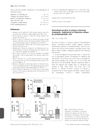
June 2015 in “British Journal of Dermatology” This article discusses the role of lysophosphatidic acid-induced histamine release in generalized pruritus among patients with primary sclerosing cholangitis and reports no new clinical results.

This study identified compounds like hexadecanoic acid, alphaspinasterol, and squalene in Cucurbita pepo roots, which may offer new pharmacological approaches for developing therapies for various conditions.
 22 citations
,
April 2006 in “Journal of Dermatological Science”
22 citations
,
April 2006 in “Journal of Dermatological Science” This study reports that versican expression plays a crucial role in maintaining the anagen phase and hair inductive properties, as shown in a transgenic mouse model and hair growth assays.
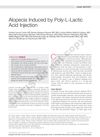
This case study reports that a 35-year-old woman developed nonscarring alopecia following the cosmetic use of poly-L-lactic acid on her face and hairline.
 1 citations
,
July 2022 in “Clinical and Experimental Dermatology”
1 citations
,
July 2022 in “Clinical and Experimental Dermatology” This study suggests that arginine and cysteine deficiency is not present in women with chronic telogen effluvium, indicating that amino acid supplementation may be unnecessary in nutrient-replete populations.
20 citations
,
December 2010 in “Journal of Morphology” In this study, researchers found that alpha-keratin homologs similar to those in mammalian hair are present in the claws of the lizard Anolis carolinensis, suggesting a structural role during claw formation.
11 citations
,
April 2018 in “Epilepsy research” This study indicated that administering letrozole to Swiss albino mice may have anticonvulsant effects against kainic acid-induced seizures by inhibiting testosterone aromatization to 17β-estradiol and increasing anticonvulsant metabolites in the hippocampus.
3 citations
,
January 2018 in “Journal of probiotics & health” 9 citations
,
January 2013 in “BioMed research international” This article suggests targeting the water activity within pilosebaceous follicles using biocompatible solutes like xylose and sucrose as a new potential topical treatment for acne.
January 2007 in “Leather Science and Engineering” 3 citations
,
August 2010 in “Letters in Drug Design & Discovery”