 November 2020 in “Journal of The American Academy of Dermatology”
 This study examined dermoscopic features in African-American women with different types of alopecia and found that a perifollicular pink blush, potentially indicating inflammation, was common, particularly resolved with anti-inflammatory treatment, suggesting dermoscopy could aid in management.
1 citations
,
October 2023 in “European Journal of Dermatology” This study found that combining hair transplantation with platelet-rich plasma treatment significantly improved hair regeneration, reduced hair loss, and minimized skin lesion areas in patients with androgenic alopecia compared to hair transplantation alone, suggesting enhanced treatment efficacy.
1 citations
,
April 2025 in “Skin Health and Disease” This study is collecting real-world data to evaluate abrocitinib and conventional systemic treatments in moderate-to-severe atopic dermatitis across five European registers over a three-year period.
This meta-analysis reports that ritlecitinib significantly improved hair growth in alopecia areata patients compared to placebo, although its potential requires further clinical exploration.
7 citations
,
December 2022 in “Skin Appendage Disorders” This study found that among anti-TNF-α agents, certolizumab is the least likely to cause paradoxical reactions such as psoriatic alopecia and appears to be an effective and safe option for managing psoriasis and PsA while minimizing these risks.
7 citations
,
September 2024 in “The Journal of Dermatology” This study evaluated the effectiveness and safety of ritlecitinib in patients aged 12 or older with alopecia totalis or universalis, finding higher hair regrowth response rates compared to placebo at 24 weeks, with continued improvement and acceptable safety through 48 weeks.
13 citations
,
June 2023 in “Frontiers in Pharmacology” This meta-analysis reports that trastuzumab deruxtecan is effective and has an acceptable safety profile for treating HER2-low or positive advanced breast cancer, although further research is recommended to support individualized treatment strategies.
3 citations
,
November 2023 in “Journal of Investigative Dermatology” Over 45% of patients with alopecia areata benefit from ritlecitinib, mostly within a year.
 20 citations
,
July 2024 in “Archives of Dermatological Research”
20 citations
,
July 2024 in “Archives of Dermatological Research” This study observed that dupilumab led to significant hair regrowth and was well-tolerated in children with both alopecia areata and atopic dermatitis, showing promise as a safe treatment option for pediatric patients with associated atopy.
2 citations
,
September 2022 in “Annals of Oncology” This study observed that MIRV improved gastrointestinal symptoms and other quality of life measures in patients with platinum-resistant ovarian cancer compared to chemotherapy.
 November 2024 in “SKIN The Journal of Cutaneous Medicine”
 This study found that ritlecitinib, taken daily, led to scalp, eyebrow, and eyelash hair regrowth in patients aged 12 and older with severe and very severe alopecia areata over a 24-month period.
 April 2023 in “Journal of Investigative Dermatology”
 This case study reports an unusual presentation of primary cutaneous diffuse large B-cell lymphoma–leg type occurring on the upper lip of an 81-year-old woman, highlighting the need for timely recognition of atypical manifestations.
 11 citations
,
September 1999 in “Journal of the European Academy of Dermatology and Venereology”
11 citations
,
September 1999 in “Journal of the European Academy of Dermatology and Venereology” This review examines various immunomodulatory therapies for cutaneous lymphoma and notes that they are most effective in the disease's early stages.
January 1975 in “NJEA Review” This Phase II study found that BAY 43-9006, given at 400 mg orally twice daily, led to stable disease in 30% and tumor reduction in 40% of renal cell carcinoma patients.
 March 2026 in “American Journal of Clinical Dermatology”
 In this study, ritlecitinib 50 mg produced clinically meaningful improvements in scalp hair regrowth over three years for patients aged 12 and older with severe alopecia areata, with 65.1% showing substantial hair regrowth and 31.2% achieving complete regrowth, while also maintaining a consistent safety profile.
March 2026 in “SKIN The Journal of Cutaneous Medicine” This study found that ritlecitinib was well tolerated in children aged 6 to under 12 years with severe alopecia areata, with ongoing trials examining its efficacy and safety over a 24-week period and in long-term use up to 36 months.
 August 2022 in “Nature Biotechnology”
 This report highlights Amvuttra's approval for hATTR amyloidosis as a more convenient RNAi therapy, and Olumiant's attention as the first systemic drug for hair loss among recent developments.
5 citations
,
July 2024 in “Pediatric Dermatology” This study reports that dupilumab significantly reduced alopecia areata severity in pediatric patients with atopic dermatitis, indicating potential as an effective treatment option, though further research on long-term safety and optimal use is needed.
9 citations
,
October 1947 in “The Lancet” 1 citations
,
November 1947 in “The Lancet”  9 citations
,
July 2018 in “European Journal of Dermatology”
9 citations
,
July 2018 in “European Journal of Dermatology” Brodalumab effectively treated a man's severe hand and foot psoriasis.
June 2026 in “UNC Libraries” This case study reported a 49-year-old woman with metastatic adrenocortical carcinoma who experienced an abscopal effect after pulse electric field ablation, leading to the resolution of three untreated liver lesions, suggesting potential benefits of this treatment combined with immunotherapy.
 June 2022 in “C&EN global enterprise”
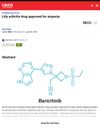
 This source notes that Olumiant (baricitinib), a rheumatoid arthritis drug by Eli Lilly and Company, has been approved as the first systemic treatment for severe alopecia areata.
13 citations
,
April 2024 in “JAAD Case Reports” This review discusses current treatments for discoid lupus erythematosus and highlights anifrolumab as a promising option for difficult cases, but no new clinical results are reported.
June 2025 in “International Journal of Dermatology” In this case series conducted in Austrian dermatology clinics, tralokinumab was found to be a well-tolerated and effective long-term treatment for adults with moderate-to-severe atopic dermatitis, with improvements in eczema severity and symptom suppression maintained over up to three years.
April 2026 in “UNC Libraries” This case report describes a 49-year-old woman with metastatic adrenocortical carcinoma in the liver who experienced an abscopal effect after pulse electric field ablation, with PET/CT imaging showing complete resolution of three untreated lesions two months post-treatment.
 April 2020 in “Rheumatology”
 This case report describes successful and sustained treatment of alopecia universalis with rituximab in a patient also diagnosed with dermatomyositis, suggesting a potential role for B cells in its pathogenesis.
May 2026 in “Dermatology and Therapy” This study reports that among adults with severe alopecia areata taking ritlecitinib, 49% saw hair regrowth within 3 months, increasing to 82% after more than 6 months; treatment satisfaction also rose with longer duration, indicating sustained efficacy and improved quality of life over time.
1 citations
,
June 2016 in “Annals of the rheumatic diseases” In this study, researchers found that retinoids might improve lupus nephritis resistant to conventional treatments, but the sample size was too small for significant results, and side effects were noted.
July 2025 in “Zenodo (CERN European Organization for Nuclear Research)” Ritlecitinib helps regrow hair in alopecia areata and is safe for long-term use.