Search
for
Sort by
Research
90-120 / 1000+ resultsresearch Long-Term Efficacy of Ritlecitinib up to Month 24 From the ALLEGRO Phase 2b/3 and Long-Term Phase 3 Clinical Studies in Alopecia Areata
In this ongoing phase 3 study, ritlecitinib demonstrated sustained efficacy up to 24 months in patients aged 12 or older with alopecia areata, showing increased response rates with or without an initial loading dose and supporting its long-term use.
research Nerve growth factor regulates the proliferation of cashmere goat outer root sheath cells through the activation of cAMP-binding protein
This study suggests that the NGF/TrkA/CREB system plays a crucial role in promoting outer root sheath cell proliferation in cashmere goats, which may aid in marker-assisted breeding.
research Real-World Ritlecitinib Treatment of Severe Alopecia Areata in the United States: Patient Characteristics and Physician Satisfaction According to a Secondary Database Analysis
This study reports that among adults with severe alopecia areata taking ritlecitinib, 49% saw hair regrowth within 3 months, increasing to 82% after more than 6 months; treatment satisfaction also rose with longer duration, indicating sustained efficacy and improved quality of life over time.
research 42004 Scalp, eyebrow, and eyelash hair regrowth with continued ritlecitinib treatment among patients with alopecia areata without target efficacy response at Week 24: post hoc analysis of the ALLEGRO phase 2b/3 study
In this study, patients with alopecia areata who didn't initially respond to ritlecitinib at Week 24 showed improved response rates by Week 48, with up to 34% achieving better hair regrowth outcomes.

research The features of onychomatrimas on in vivo reflectance confocal microscopy
Reflectance confocal microscopy can noninvasively diagnose onychomatricoma by showing unique features different from healthy nails or nail fungus.
research Scalp, eyebrow, and eyelash hair regrowth with continued ritlecitinib treatment among patients with alopecia areata without target efficacy response at Week 24: post hoc analysis of the ALLEGRO phase 2b/3 study
This study found that some patients with alopecia areata who did not respond to ritlecitinib treatment by Week 24 achieved a positive response with continued therapy by Week 48, with tolerable side effects.
research Efficacy and safety of a novel anti‐HER2 therapeutic antibody RC48 in patients with HER2‐overexpressing, locally advanced or metastatic gastric or gastroesophageal junction cancer: a single‐arm phase II study
This study found that the novel anti-HER2 antibody RC48 demonstrated promising activity and manageable safety in patients with HER2-overexpressing, advanced gastric or gastroesophageal junction cancer after at least two prior chemotherapy lines.
research A second KRT71 allele in curly coated dogs
This study suggests that a newly identified KRT 71 gene variant may be responsible for curly hair in Curly Coated Retrievers and potentially contributes to follicular dysplasia.

research Autologous Cell Therapy for Aged Human Skin: A Randomized, Placebo-Controlled, Phase-I Study
This study found that RCS-01 cell therapy for aged skin was well tolerated and associated with increased gene expression related to extracellular matrix homeostasis, suggesting potential skin improvement.
research Updated Integrated Safety Analysis of Ritlecitinib up to ~5 Years in Adolescents With Alopecia Areata From the ALLEGRO Clinical Trials
This study evaluated the long-term safety of ritlecitinib in adolescents with alopecia areata and found it to be well-tolerated without new safety concerns over approximately five years, with common adverse events including positive SARS-CoV-2 tests, acne, headache, and nasopharyngitis.
research CCN2 modulates hair follicle cycling in mice
This study found that the protein CCN2 in dermal papilla cells is a physiologically relevant suppressor of hair follicle formation by destabilizing β-catenin, which may help maintain stem cell quiescence.
research Retinoids for Chemoprophylaxis of Nonmelanoma Skin Cancer
This entry contains only a placeholder abstract with no research findings described or summarized.
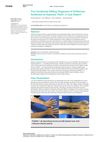
research Two Incidental Sibling Diagnoses of Netherton Syndrome in Separate Visits: A Case Report
This study presents a rare instance of Netherton syndrome diagnosed incidentally in siblings of consanguineous parents, initially misdiagnosed as other skin conditions, emphasizing the need for careful evaluation in chronic skin cases to prevent misdiagnosis.
research Prostate Cancer Early Detection, Version 2.2015
This review summarizes NCCN guidelines for prostate cancer early detection, focusing on strategies to maximize detection of potentially curable cases while minimizing unnecessary procedures, but it reports no new clinical findings.
research 42005 Sustained scalp, eyebrow, and eyelash hair regrowth with ritlecitinib through Week 48 in patients with alopecia areata: post hoc analysis of the ALLEGRO phase 2b/3 study
This study reported that most patients with alopecia areata who responded to ritlecitinib treatment by achieving a SALT score ≤20, SALT score ≤10, or improvements in eyebrow and eyelash assessments at Week 24 maintained their responses through Week 48.
research An engineered ferritin nanocage co-delivery system for targeted hair cells protection and hearing loss attenuation
This study developed a novel ferritin-based delivery system (LR@Fn) that effectively co-delivers RG108 and LLY283 for hearing loss treatment in animal models, reducing hair cell loss and synaptic damage more effectively than dexamethasone.
research How useful is ritlecitinib in alopecia areata?
Ritlecitinib helps regrow hair in alopecia areata and is safe for long-term use.

research Responses to Tetanus and Meningococcal Vaccines in Patients with Alopecia Areata Treated with Ritlecitinib
This study found that patients with alopecia areata receiving ritlecitinib showed immune responses to meningococcal and tetanus vaccines, achieving significant antibody levels after vaccination, and no vaccine-related adverse events or disease exacerbations were reported despite a small sample size.
research How useful is ritlecitinib in alopecia areata?
Ritlecitinib helps regrow hair in alopecia areata and is safe for long-term use.
research Topical RT1640 treatment effectively reverses gray hair and stem cell loss in a mouse model of radiation‐induced canities
In this study, RT1640 was found to promote hair pigment system regeneration and expand melanocyte stem cell pools in a mouse model, suggesting potential applications for aging-related hair disorders.
research NFIC promotes the vitality and osteogenic differentiation of rat dental follicle cells
This study found that upregulation of NFIC may enhance proliferation and osteogenic/cementogenic differentiation in rat dental follicle cells.
research 41551 Feasibility of using an integrated RCM-OCT device to identify thin Basal Cell Carcinomas amenable to ablative therapy with a Er:YAG laser: A Prospective Observational Study
research 046 Analysing the mechanistic basis of Ritlecitinib’s therapeutic effects in Alopecia Areata
Ritlecitinib effectively treats severe Alopecia Areata by reducing harmful immune activity in the skin.
research Beyond Hair Regrowth: Interpreting the Psychosocial Impact of Ritlecitinib in Alopecia Areata
In this study, researchers reported that treating alopecia areata patients with ritlecitinib led to progressive improvements in emotional symptoms and activity limitations over 48 weeks, though the post hoc analysis and trial setting suggest caution in interpreting the findings for broader populations.

research Evolution of Ritlecitinib Population Pharmacokinetic Models During Clinical Drug Development
This research discusses the parallel clinical development of ritlecitinib, an oral Janus kinase 3/tyrosine kinase inhibitor, for treating conditions such as alopecia areata, vitiligo, ulcerative colitis, Crohn's disease, and rheumatoid arthritis. Results are not reported in the abstract.

research Characters of KRT80 and its roles in neoplasms diseases
This review reports that KRT80 is overexpressed in various cancers, enhancing cancer cell proliferation, invasiveness, and migration, suggesting it as a potential therapeutic target, though more clinical studies are needed to fully understand its role in cancer prognosis.
research Radiofrequency Currents Modulate Inflammatory Processes in Keratinocytes
This study found that subthermal CRET treatment increased keratinocyte proliferation and modulated cytokine production, affecting the inflammatory response in human keratinocytes through EGFR and ERK1/2/NF-κB pathways.
research Correction to ‘Long‐term safety and efficacy of ritlecitinib in adults and adolescents with alopecia areata and at least 25% scalp hair loss: Results from the ALLEGRO‐LT phase 3, open‐label study’
This study reports no new findings but provides corrected figures for the long-term safety and efficacy of ritlecitinib in treating alopecia areata from the ALLEGRO-LT phase 3 study.
research Poster presentationsSG11 KRT14 pathogenic or likely pathogenic variants beyond epidermolysis bullosa: dermatopathia pigmentosa reticularis
This article presents a family case study of dermatopathia pigmentosa reticularis linked to a specific KRT14 gene variant, detailing symptoms and stressing the importance of molecular diagnosis for management.