4 citations
,
July 2024 in “Radiotherapy and Oncology” This study highlights that variations in clinical outcome reporting can undermine the validation of NTCP models for RIA, stressing the need for a standardized and objective scoring system.
23 citations
,
December 2013 in “Molecular cancer therapeutics” This study found that AR-positive breast cancer cell lines are more sensitive to the dual PI3K/mTOR inhibitor NVP-BEZ235 compared to AR-negative cells.
33 citations
,
May 2017 in “Journal of Clinical Oncology” This phase I study reported that ETC-159, targeting Wnt signalling, showed tolerable safety profiles at doses that inhibit its pathway, though bone turnover markers increased, warranting early and regular monitoring. No tumor responses were observed, but two patients achieved stable disease for several cycles.
 27 citations
,
September 1999 in “Journal of Investigative Dermatology”
27 citations
,
September 1999 in “Journal of Investigative Dermatology” This study found that protease nexin-1 mRNA is expressed in human dermal papilla cells and is downregulated by dihydrotestosterone in balding scalp, suggesting a role in male-pattern baldness progression.
 53 citations
,
January 2011 in “Diabetes”
53 citations
,
January 2011 in “Diabetes” The study found that severe insulin resistance and premature diabetes are common in patients with PCNT genetic defects, primarily affecting those over four years old, while not impacting early insulin signaling in adipocytes.
December 2004 in “Annales d Urologie” This article examines the PCPT study on whether daily finasteride can reduce prostate cancer incidence, describing its methodology and findings but reporting no new clinical results.
September 2016 in “Journal of Dermatological Science” Polarizing light microscopy can easily and reliably diagnose congenital keratinizing disorders like Netherton syndrome.
189 citations
,
May 1999 in “Microscopy Research and Technique” This review discusses the multifaceted roles of neurotrophins, especially nerve growth factor (NGF), in the development and function of nociceptors and reports no new clinical results.
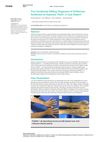
This study presents a rare instance of Netherton syndrome diagnosed incidentally in siblings of consanguineous parents, initially misdiagnosed as other skin conditions, emphasizing the need for careful evaluation in chronic skin cases to prevent misdiagnosis.
 September 2023 in “bioRxiv (Cold Spring Harbor Laboratory)”
 In this study, FOL-026, a peptide based on osteopontin, was shown to promote angiogenesis and stimulate vascular cell proliferation and migration through neuropilin-1, similar to VEGF, suggesting potential therapeutic applications in vascular repair and angiogenesis-related conditions.
November 2024 in “Journal of Investigative Dermatology” This study identified PTEN as a key regulator in non-healing venous leg ulcers, suppressing immune responses and lymphangiogenesis, suggesting its potential as a therapeutic target for promoting VLU healing.
5 citations
,
January 2021 in “Indian Journal of Pharmacology” This case study reports generalized keratosis pilaris as a rare cutaneous side effect of nilotinib in a 40-year-old woman with chronic myeloid leukemia, highlighting the need for awareness among physicians.
10 citations
,
May 2020 in “Advances in Polymer Technology” This study found that melatonin-loaded nanoparticles improved antidepressant effects and HPA axis regulation in pinealectomized rats, compared to free melatonin, through controlled-release properties.
14 citations
,
February 2014 in “Nutrition in Clinical Practice” This A.S.P.E.N. document offers guidance for managing parenteral nutrition shortages, emphasizing alternative routes and careful allocation to prevent deficiencies.
5 citations
,
June 2024 in “Pharmacological Research” This study identified neuropilin-1 as the receptor for FOL-026 and showed that it stimulates angiogenesis and cell growth, suggesting potential for vascular repair and enhanced angiogenesis therapies.
 2 citations
,
March 2019 in “Journal of Histochemistry and Cytochemistry”
2 citations
,
March 2019 in “Journal of Histochemistry and Cytochemistry” This study found that NNAT is localized in both undifferentiated and differentiated cells across various rat tissues and has cell-specific intracellular localization, suggesting distinct functional roles.
14 citations
,
August 2014 in “The FASEB Journal” This study found that the catalytically inactive serine protease CAP1/Prss8 can still induce skin disorders in mice and is subject to inhibition by nexin-1, independent of its catalytic activity.
5 citations
,
June 2008 in “British Journal of Dermatology” 
This study found that proretinal nanoparticles, applied topically, are safe and effective for penetration into hair follicles, enhancing retinoid biological activity in the skin while reducing irritation compared to conventional retinal formulations.
 January 2023 in “Skin appendage disorders”
 This article describes two cases of plica neuropathica, a rare hair condition involving severe matting, and discusses possible contributing factors and diagnosis methods while reporting no new scientific results.
April 2026 in “Expert Opinion on Biological Therapy” This review discusses prurigo nodularis and reports no new results, emphasizing the need for further research into its pathophysiology and treatment options.
 January 2023 in “Dermatologic Therapy”
 In this randomized controlled trial, the nutritional supplement PPT5 α was associated with increased terminal hair percentages and improved self-assessed hair parameters in women with early-stage androgenetic alopecia.
 August 2026 in “Clinical Cosmetic and Investigational Dermatology”
 In this study, combining Polynucleotides High Purification Technology with hyaluronic acid significantly reduced atrophic post-acne scar areas and improved Goodman-Baron scores in a majority of treated patients over six months, reaffirming the approach's beneficial effects in a real-world outpatient setting.
 August 2019 in “bioRxiv (Cold Spring Harbor Laboratory)”
 This study developed the CATNIP computational model, which uses biological and chemical information to successfully identify drug repurposing opportunities for various conditions, including Parkinson’s disease and Type 2 Diabetes.
January 2026 in “Journal of Aesthetic Nursing” This review discusses the regenerative potential of polynucleotides and polydeoxyribonucleotides in aesthetic medicine, noting their benefits for skin texture, hydration, and patient satisfaction despite limited high-quality evidence.
14 citations
,
March 2019 in “European journal of pharmaceutics and biopharmaceutics” This study observed that proretinal nanoparticles delivered significantly higher concentrations of retinal to the stratum corneum and hair follicles compared to non-particulate forms, potentially improving topical retinoid therapy.
 51 citations
,
January 2024 in “Nanoscale”
51 citations
,
January 2024 in “Nanoscale” This review highlights recent advancements in using nanotechnology to improve the function and delivery of PROTAC drugs, despite existing challenges like low solubility and poor permeability, aiming to enhance their potential in disease treatment.
 18 citations
,
January 2008 in “Journal of The American Academy of Dermatology”
18 citations
,
January 2008 in “Journal of The American Academy of Dermatology” This study found that the proteins GDNF, NTN, GFRα-1, GFRα-2, and c-Ret are differentially expressed during various stages of the human hair follicle cycle, with potential implications for hair biology.
 March 2024 in “Tissue engineering. Part A”
 In this study, researchers observed that applying negative pressure to nude mice led to a significant increase in hair follicle growth and angiogenesis, suggesting potential for hair regeneration through mechanisms involving SOX-9, LHX-2, and β-catenin mediation.
6 citations
,
June 2025 in “Nano Biomedicine and Engineering” This source reports on advances in stimulus-responsive nanoparticle-based PROTACs (nano-PROTACs), which aim to overcome existing challenges like poor cell permeability and systemic off-target effects by enabling controlled protein degradation through endogenous or exogenous stimuli, potentially enhancing therapeutic efficacy and reducing toxicity.