 November 2022 in “The journal of investigative dermatology/Journal of investigative dermatology”
 This study found that skin organoids derived from iPSCs with an HS-associated NCSTN mutation showed defects in hair follicle stem cell differentiation and increased expression of inflammatory proteins related to hidradenitis suppurativa.
8 citations
,
March 2007 in “The journal of investigative dermatology/Journal of investigative dermatology” This study reports that the near-naked hairless mutation in mice is not an allele of the Hairless gene but may involve a mutation in a linked gene or a regulatory mutation.
 2 citations
,
January 2014 in “Elsevier eBooks”
2 citations
,
January 2014 in “Elsevier eBooks” This review discusses drug-induced hypersensitivity syndrome and drug reaction with eosinophilia and systemic symptoms, highlighting clinical features, potential viral reactivations, and treatment, but reports no new clinical findings.
13 citations
,
June 2006 in “Fertility and Sterility” This research identified nonclassic 21-hydroxylase deficiency as the most common genetic autosomal recessive disorder in humans, particularly among certain ethnic groups, and found that treatment effectively reverses symptoms within months.
 December 2025 in “Molecules”
 This study found that the 15-PGDH inhibitor DPP improved endothelial function in hair-related cells exposed to DHT by reducing oxidative stress and enhancing angiogenic capacity.
January 2018 in “bioRxiv (Cold Spring Harbor Laboratory)” This study found that the mutant hairless rhino bald protein in mice interacts with the vitamin D receptor but cannot repress its transactivation and shows abnormal cellular localization.
11 citations
,
July 2010 in “European Journal of Dermatology” In this study, researchers confirmed linkage of a form of hair-nail ectodermal dysplasia to chromosome 12 in a Pakistani family, suggesting a possible non-coding mutation in KRTHB5 or a mutation in an unknown gene.
1 citations
,
November 2023 in “Journal of Investigative Dermatology” Farudodstat may effectively treat alopecia areata without harming hair follicles.

This study explores the expression and function of 11β-HSD1 in human hair follicles and its potential regulation of glucocorticoid effects on dermal papilla cells, but reports no definitive findings on 11β-HSD1's role.
1 citations
,
September 2024 in “Journal of the American Academy of Dermatology” Farudodstat may effectively treat alopecia areata without harmful side effects.
37 citations
,
August 2011 in “Journal of Bone and Mineral Research” This study reported a case of hereditary vitamin D–resistant rickets caused by a single heterozygous missense mutation in the VDR gene, showing dominant-negative effects and reduced response to 1,25-dihydroxyvitamin D3.
 4 citations
,
January 2018 in “International Journal of Trichology”
4 citations
,
January 2018 in “International Journal of Trichology” This case report describes a 4-year-old girl with hypotrichosis and juvenile macular dystrophy, linked to mutations in the cadherin 3 gene affecting P-cadherin expression.
47 citations
,
October 2021 in “Journal of Nanobiotechnology” This study found that hollow polydopamine nanoparticles enhanced the regenerative potency of the peptide RL-QN15, suggesting potential for improved therapeutic approaches in skin wound healing.
 March 2005 in “Journal of The American Academy of Dermatology”
 Diphencyprone treatment protocols could be simplified as no harm occurred despite not fully following them.
13 citations
,
February 2012 in “International Journal of Dermatology” This case report identifies a novel nonsense mutation in the CDH3 gene associated with hypotrichosis and juvenile macular dystrophy.
3 citations
,
March 2016 in “Experimental Dermatology” This study found that a hypomorphic mutation in the Hr gene contributes to the development of diet-induced pruritic atopic skin in mice, particularly when combined with dietary deficiencies of polyunsaturated fatty acids and starch.
 February 2026 in “Orphanet Journal of Rare Diseases”
 This study identified pathogenic or likely pathogenic gene variants in 70.1% of Russian families affected by hypohidrotic ectodermal dysplasia, expanding knowledge of causative mutations.
 1 citations
,
March 2023 in “Frontiers in Cardiovascular Medicine”
1 citations
,
March 2023 in “Frontiers in Cardiovascular Medicine” A specific gene variant is linked to heart disease, increased heart muscle, curly hair, and thick skin on palms and soles.
 8 citations
,
September 2004 in “Contact dermatitis”
8 citations
,
September 2004 in “Contact dermatitis” Avoiding dyed wigs and clothing improved severe allergic reactions in a woman treated with diphencyprone.
11 citations
,
December 2013 in “Clinical and experimental dermatology” This study reports a case of a child with congenital skin fragility, alopecia, and cardiomyopathy due to compound heterozygous mutations in the DSP gene causing desmoplakin deficiency.
 March 2007 in “The FASEB Journal”
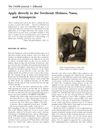
 This observational study reports a striking correlation between the use of henna hair dye and a specific pattern of hair loss, termed "hennapecia," but calls for experimental research to determine causality.
 3 citations
,
January 2021 in “Hair transplant forum international”
3 citations
,
January 2021 in “Hair transplant forum international” This study found that visual hair density is better correlated with hair count and shaft diameter, leading to the development of the Hair Diameter Index used in planning hair restoration procedures.
2 citations
,
June 2018 in “International Journal of Pharmacological Research” This article reviews treatments for progeria, including aspirin, hydrotherapy, and farnesyl transferase inhibitors, but reports no new clinical results.
May 2025 in “Biomedicine & Pharmacotherapy” This study found that HPD is a potent activator of hair follicle regeneration, surpassing the efficacy of conventional minoxidil treatment by modulating Wnt/β-catenin signaling and enhancing follicular proliferation, indicating its potential as a non-invasive hair restoration therapy.
 42 citations
,
October 2009 in “The journal of investigative dermatology/Journal of investigative dermatology”
42 citations
,
October 2009 in “The journal of investigative dermatology/Journal of investigative dermatology” In this study, researchers identified two distinct homozygous mutations in the KRT85 gene among consanguineous Pakistani families with pure hair and nail ectodermal dysplasia, highlighting variations in severity and potential impacts on the K85 protein function.
 35 citations
,
April 2014 in “American Journal of Medical Genetics”
35 citations
,
April 2014 in “American Journal of Medical Genetics” The study reported a significant genotype–phenotype correlation in prepubescent males with XLHED, particularly in the severity of skin and hair manifestations between those with different EDA mutations.
November 2016 in “Pediatric dermatology” This article describes the development of a patient handout database by the SPD to provide reliable medical information for use by various healthcare providers; it reports no new clinical results.
1 citations
,
August 2023 in “Journal of Investigative Dermatology” Farudodstat may help treat alopecia areata by protecting hair follicles.
September 2026 in “British Journal of Dermatology” This study identified 11 genes associated with non-syndromic hereditary hypotrichosis in a Chinese cohort and proposed a preliminary framework for phenotype-driven candidate-gene prioritization to aid clinical evaluation.
 6 citations
,
December 2021 in “Scientific Reports”
6 citations
,
December 2021 in “Scientific Reports” This study found that inhibiting class I histone deacetylases in postnatal mouse dermal cells preserved their ability to induce hair follicles during culture by increasing specific gene expressions and activating the Wnt signaling pathway.