June 2025 in “British Journal of Dermatology” In this case study, nail changes and skin lesions helped diagnose a 60-year-old man with advanced cardiac amyloidosis, highlighting the importance of considering amyloidosis in differential diagnoses for similar nail abnormalities and assessing for systemic involvement.
January 2007 in “Journal of Southwest University” This study identified that the ND1 gene sequence of the Asian black bear's Sichuan subspecies shares high similarity with those of other bear species, raccoons, and Ailurus fulgens.
2 citations
,
September 2017 in “Journal of Investigative Dermatology” This study found that notch1 signaling is severely impaired in hidradenitis suppurativa patients with or without NCSTN or other gamma-secretase gene mutations, highlighting a canonical defect at the lesional tissue level.
 November 2022 in “Nihon Nyuusankin Gakkaishi/Nihon Nyūsankin Gakkaishi”
 In a non-blinded study with 12 Japanese participants, applying a lotion containing Lactiplantibacillus plantarum N793 to the scalp for 24 weeks significantly increased hair density and reduced hair loss, with participants reporting improvements in hair thickness and volume, and the treatment deemed safe.
 4 citations
,
June 2025 in “Medeniyet Medical Journal”
4 citations
,
June 2025 in “Medeniyet Medical Journal” This review explores the role of the TMPRSS2 gene in facilitating SARS-CoV-2 infection and its potential as a therapeutic target in COVID-19 and other respiratory infections, highlighting challenges in developing selective inhibitors.
 January 2026 in “Nature Communications”
 This study presented a new wearable textile-based device with near-infrared OLEDs that significantly reduced cell aging markers and improved cell migration in vitro, suggesting it as a promising, non-invasive phototherapy option for hair follicle treatment and hair-loss management.
 November 2023 in “Research Square (Research Square)”
 In this study, researchers used NIR-II fluorescence imaging to track the survival and migration of EPI-NCSCs in rat models, finding that these stem cells aided in repairing facial nerve defects when applied via acellular nerve allografts.
 December 2025 in “Aesthetic Plastic Surgery”
 This study reported that the new near-infrared LED device showed significant improvements in skin rejuvenation and a slight increase in hair growth, with further research recommended for broader validation.
 December 2020 in “Lasers in Surgery and Medicine”
 In this study, using a 1064 nm picosecond Nd:YAG laser effectively removed undesirable scalp micropigmentation in four patients within 1–3 treatment sessions, with no unexpected adverse events reported.
 January 2025 in “Clinical Dermatology Review”
 In this case report, a 16-year-old female with Netherton syndrome, a rare genetic disorder, exhibited symptoms such as skin issues, hair abnormalities, and elevated serum IgE levels. The diagnosis was supported by skin biopsy, and treatment included topical therapies, NB-UVB, and infliximab.
 November 2023 in “ACS Nano”
 In a mouse model of deep skin burns, this study found that a neuro-inspired biomimetic microreactor, when delivered through a hydrogel and activated by near-infrared light, significantly promoted functional skin regeneration, sensory recovery, and hair follicle formation.
2 citations
,
July 2021 in “UNC Libraries” This study suggests that residues Val-889 and Arg-752 in the androgen receptor's steroid binding domain are crucial for NH2-/carboxyl-terminal interaction, affecting receptor stability and function.
This article reviews the history and characteristics of the rare nude phenotype SCID, primarily distinguished by severe T cell immunodeficiency and notable skin and hair abnormalities, but reports no new clinical findings.
January 2026 in “Journal of Materials Chemistry B” This study concluded that the KNPs@M/G microneedle system offers a promising strategy for treating radiation-induced skin injury by promoting antioxidative, anti-inflammatory, and regenerative effects.
28 citations
,
September 2021 in “JAAD Case Reports” This study reports that the Pfizer-BioNTech COVID-19 vaccine showed 52% protection against COVID-19 after the first dose and 95% after the second in phase 3 trials.
 10 citations
,
January 2024 in “Polymer Chemistry”
10 citations
,
January 2024 in “Polymer Chemistry” This review discusses the design and advances of lipid–polymer hybrid nanoparticles as promising delivery systems for genome editing strategies, highlighting their potential in biomedical applications.
2 citations
,
April 2012 in “American Journal of Dermatopathology” This report describes two cases of nevus lipomatosus superficialis with the unusual feature of dilated hair follicles, emphasizing the need for precise histopathological diagnosis to differentiate from similar conditions.
 October 2025 in “Advanced Materials”
 In this study, researchers developed ionizable coenzyme Q10-engineered lipid/fiber microplexes that restored mitochondrial-ribosomal function and enhanced mRNA translation in senescent cells, leading to increased hair follicle density and bone formation in mouse models compared to conventional lipid nanoparticles.
5 citations
,
January 2011 in “Archives de Pédiatrie” This study illustrates the severe neonatal clinical presentation of Netherton syndrome, which can be fatal despite intensive care, highlighting a specific homozygous mutation (c.1431-12G > A) associated with lethal cases.
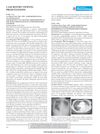 May 2025 in “The Journal of Rheumatology”
 In this case report, two patients with coexisting systemic lupus erythematous and neuromyelitis optica spectrum disorder achieved remission of SLE activity using an anti-CD19 monoclonal antibody.
2 citations
,
January 2025 in “Naunyn-Schmiedeberg s Archives of Pharmacology” Nanostructured lipid carriers can improve alopecia treatment by enhancing drug delivery and promoting hair growth.
 10 citations
,
June 2018 in “Aaps Pharmscitech”
10 citations
,
June 2018 in “Aaps Pharmscitech” The flutamide-loaded hydrogel is a promising, skin-friendly treatment for acne and hair loss, potentially requiring less frequent application.
32 citations
,
March 2018 in “Neoplasia” This study suggests that nephronectin (NPNT) could serve as a novel prognostic marker for poor prognosis in a subgroup of breast cancer patients, associated with specific NPNT staining patterns.
August 2026 in “Ebers Papyrus” This study concluded that allele-specific PCR (AS-PCR) is more reliable than tetra-primer ARMS-PCR for genotyping the SNP rs1998076 due to better stability and interpretability.
 May 2017 in “Journal of The American Academy of Dermatology”
 595 nm pulsed dye laser is a cost-effective treatment for nonmelanoma skin cancer with a low recurrence rate.
 21 citations
,
November 2017 in “Livestock science”
21 citations
,
November 2017 in “Livestock science” This study confirms the presence of large structural variations in the genome of Nellore cattle, which may contribute to their environmental adaptation to tropical regions.
 48 citations
,
January 2003 in “Fertility and Sterility”
48 citations
,
January 2003 in “Fertility and Sterility” In this study, researchers found no significant association between the D19S884 marker near the insulin receptor gene and polycystic ovary syndrome in women from Spain and Italy.
 November 2024 in “NeoReviews”
 Pallister-Killian Syndrome is a complex genetic disorder requiring coordinated care and genetic counseling.
May 2017 in “The journal of immunology/The Journal of immunology” This study reported that patients with specific Foxn1 mutations exhibited severe T-cell lymphopenia without the hair and nail abnormalities usually associated with these mutations.
January 2020 in “ScholarWorks (Central Washington University)” This study suggests that NAG-1 overexpression may prevent some metabolic dysfunctions linked to polycystic ovary syndrome in a mouse model.