1 citations
,
April 2025 in “American Journal of Medical Genetics Part C Seminars in Medical Genetics” The researchers reported that repurposing the drug eflornithine may offer a treatment option for Bachmann-Bupp Syndrome, highlighting a potential model for other rare diseases.
January 2024 in “Kafkas Universitesi Veteriner Fakultesi Dergisi” In this study, researchers found that oar-miR-377 regulates secondary hair follicle development in sheep by downregulating the SLC24A2 gene, and a specific SNP in oar-miR-377 is significantly associated with wool fiber diameter variation in Chinese Merino sheep.
9 citations
,
November 2022 in “Biology” This study identified key genes and pathways related to wool follicle development in coarse wool lambs, suggesting epigenetic factors may influence wool sheep domestication and breeding.
22 citations
,
July 2016 in “PLoS ONE” This study identified specific microRNAs and genes associated with the differing wave patterns in Hu sheep hair follicles, which may help understand the molecular mechanisms behind wool quality.
16 citations
,
June 1983 in “Journal of Neurochemistry” This study found that copper injections increased dopamine-β-hydroxylase activity in the brains of mottled mice, an animal model for Menkes' syndrome.
125 citations
,
August 2003 in “Development” In this study, mice engineered to express human EGFR showed tissue-specific growth defects and neurodegeneration rescue, but developed severe heart issues and accelerated bone cell differentiation.
 1 citations
,
July 2024 in “Indian Journal of Case Reports”
1 citations
,
July 2024 in “Indian Journal of Case Reports” This article presents a case study of a 16-year-old male with GAPO syndrome, characterized by growth retardation, alopecia, pseudoanodontia, and optic atrophy, who sought dental treatment for missing teeth.
 16 citations
,
April 1978 in “Genetics Research”
16 citations
,
April 1978 in “Genetics Research” This study found that asebic mice exhibit abnormal sebaceous gland differentiation and insufficient sebum production due to defective regulation of cell processes, despite possessing normally developing sebaceous glands initially.
 6 citations
,
July 2007 in “Developmental Dynamics”
6 citations
,
July 2007 in “Developmental Dynamics” This study reports that Wise is expressed in specific patterns during the morphogenesis of chick embryos, particularly in regions associated with known signaling molecules like Wnt, Bmp, and Shh.
 4 citations
,
January 2014 in “Indian dermatology online journal”
4 citations
,
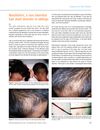
January 2014 in “Indian dermatology online journal” This article discusses the genetic hair disorder monilethrix, characterized by beaded, fragile hair due to defective keratin genes, and reports no effective treatment currently available; variability in severity was noted among affected siblings.
26 citations
,
October 1998 in “Experimental Dermatology” This study describes a co-dominant E410D mutation in keratin hHb6 associated with severe hair loss and extensive papules in homozygous individuals, with variable expression in heterozygous family members.
 6 citations
,
December 2004 in “Anais Brasileiros de Dermatologia”
6 citations
,
December 2004 in “Anais Brasileiros de Dermatologia” This study describes a family with loose anagen hair syndrome associated with macular dystrophy, suggesting this combination may represent a new disease entity among ectodermal dysplasias.
1 citations
,
November 2024 in “eLife” This study in mice found that MEIS2 expression in mesenchymal dermal cells is crucial for the formation of whiskers and the initial steps of epithelial placode development, independently of sensory nerve innervation or Foxd1 expression.
October 2022 in “bioRxiv (Cold Spring Harbor Laboratory)” This study reports that fly blood progenitors in a long-term organ culture model undergo symmetric cell divisions influenced by cell size and orientation, with infection triggering changes in cell differentiation kinetics.
 July 2022 in “Research Square (Research Square)”
 This study found that miR-23b and miR-133 significantly reduce mRNA and protein levels of specific target genes involved in Merino sheep hair follicle development, providing insight into molecular breeding for fine wool production.
 52 citations
,
October 1999 in “Developmental Dynamics”
52 citations
,
October 1999 in “Developmental Dynamics” This study found that the hairless gene in mice has a more extensive role in development than previously thought, as indicated by its expression in various tissues and associated abnormalities in hr/hr mutants.
2 citations
,
January 2022 in “The Application of Clinical Genetics” This case report presents the first Russian patient with Meier-Gorlin syndrome 5, expanding clinical understanding through the identification of two novel CDC6 gene variants.
 June 2021 in “bioRxiv (Cold Spring Harbor Laboratory)”
 This study discovered that the gene Tfap2b identifies a melanocyte stem cell population in zebrafish, essential for regenerating melanocytes with multi-fate potential into adult pigment cells.
101 citations
,
April 2013 in “Science” This study describes how feather pigmentation in birds is regulated by melanocyte distribution, differentiation, and patterned agouti expression, contributing to diverse and adaptive color patterns.

This study suggests that Tenebrio molitor larvae extract may promote hair growth and prevent hair loss by enhancing cell proliferation and protecting against cytotoxicity in laboratory settings.
 June 2020 in “bioRxiv (Cold Spring Harbor Laboratory)”
 This study found that the HoxC gene cluster is crucial for the development of hair and nails in mice, with key regulation by two mammalian-specific enhancers.
2 citations
,
August 2021 in “bioRxiv (Cold Spring Harbor Laboratory)” This study observed that distinct subsets of Hoxd genes in murine vibrissae and chicken feather primordia are regulated by different lineage-specific enhancers, indicating evolutionary changes in chromatin topology contribute to transcriptional robustness.
21 citations
,
June 2009 in “Mammalian genome” This study describes a mouse model for Marie Unna Hereditary Hypotrichosis, identifying mutations in the hairless gene that result in sparse or absent hair and cyst-like hair follicles.
 May 2026 in “Nature Communications”
 This study observed that the loss of H3K9me3, via the ablation of Suv39h1, Suv39h2, and Setdb1 in embryonic mouse epidermis, disrupts skin development processes such as keratinocyte differentiation and hair follicle formation, highlighting H3K9me3's crucial role in epidermal morphogenesis.
April 2026 in “Human Genome Variation” This study identified a specific hemizygous intronic variant in the MBTPS2 gene associated with IFAP syndrome in a patient, revealing exon skipping and reduced normal transcript expression through long-read RNA sequencing.
 January 2024 in “Biochemical genetics”
 This study investigated the gene and protein expression differences in early and late feathering chickens, identifying several pathways, like JAK-STAT and WNT, potentially involved in non-Mendelian feather growth regulation.
 86 citations
,
December 2001 in “Experimental dermatology”
86 citations
,
December 2001 in “Experimental dermatology” This review classifies mutant mice with hair abnormalities into six categories, providing an annotated table that serves as a reference for understanding the molecular controls of hair growth.
 February 2026 in “BMC Genomics”
 This study found that MEG3-miRNAs are key regulators of the age-dependent crimped wool trait in Tan sheep, likely influencing primary follicle development and degeneration through immune-inflammatory pathways.
7 citations
,
April 2000 in “Mammalian Genome” This study identified a new mutation in SELH/Bc mice causing distinctive whisker and body hair abnormalities, mapped near the type I keratin cluster on chromosome 11.
24 citations
,
July 2014 in “British Journal of Anaesthesia” Long surgeries can cause temporary hair loss due to pressure on the scalp.