July 2005 in “The American Journal of Human Genetics” The AR gene is linked to male-pattern baldness, TNFSF4 to heart disease, SLC19A3 to BBGD, MCT8 to a syndrome, and segmental duplications to genetic variation.
 November 2024 in “Communities in ADDI (University of the Basque Country)”
 Antisense oligonucleotides show promise for treating Myotonic Dystrophy type I.
May 2018 in “Journal of Clinical Oncology” This study observed that a combination of low-dose cyclophosphamide and vinorelbine appears safe and has promising antitumor activity in patients with metastatic breast cancer resistant to anthracyclines and taxanes, achieving a 44% objective response rate at 6 months with manageable toxicity levels.
 153 citations
,
November 2004 in “Current Medicinal Chemistry”
153 citations
,
November 2004 in “Current Medicinal Chemistry” This article updates a prior work on pharmacophore modeling and highlights the advances in 3D database searching technologies for drug design, without presenting new research findings.
65 citations
,
August 2013 in “Acta Biomaterialia” This study suggests that a novel micropatterned dermal–epidermal matrix (μDERM) enhances keratinocyte function and epidermal morphology, offering potential improvements in skin substitute design for wound healing applications.
23 citations
,
November 2018 in “International Journal of Molecular Sciences” This study found that deoxyshikonin promoted wound healing in diabetic mice, suggesting it may contribute to wound repair in patients with diabetes.
 10 citations
,
October 1993 in “Archives of dermatological research”
10 citations
,
October 1993 in “Archives of dermatological research” The researchers reported that the antipsoriatic compounds 1,25-dihydroxy-vitamin D3 and calcipotriol thinned the living cell compartment in organotypic ORS cultures by accelerating the differentiation pathway rather than affecting proliferation.
 431 citations
,
October 2008 in “Current Medicinal Chemistry”
431 citations
,
October 2008 in “Current Medicinal Chemistry” This review focuses on coumarin analogs with potential antibreast cancer activities but reports no new clinical results, highlighting their mechanisms of action and structure-activity relationships.
 130 citations
,
January 2017 in “International journal of nanomedicine”
130 citations
,
January 2017 in “International journal of nanomedicine” This study found that Na CMC hydrogel loaded with PEG-coated silver nanoparticles demonstrated superior antibacterial and wound-healing efficacy compared to commercial silver sulfadiazine cream in a wound-healing model.
 84 citations
,
June 2013 in “Stem Cells Translational Medicine”
84 citations
,
June 2013 in “Stem Cells Translational Medicine” This review discusses strategies for regenerating cutaneous nerve function in burn patients and highlights the potential role of autologous skin-derived adult stem cells in improving sensory recovery, but reports no new experimental findings.
65 citations
,
April 1999 in “Journal of Parasitology” This study found that all lesions in mice treated with a new topical formulation, WR 279,396, healed completely without relapse, outperforming other formulations and showing no toxicity.
 51 citations
,
March 2006 in “Bioorganic & Medicinal Chemistry”
51 citations
,
March 2006 in “Bioorganic & Medicinal Chemistry” This study screened synthesized pyridinecarboxamides for antitumor properties and found that many, particularly 5c and 7a, showed moderate in vitro activity against various human tumor cell lines.
45 citations
,
January 2016 in “Journal of Nanomaterials” In this study, silver nanoparticles derived from Ziziphus nummularia leaf extract showed enhanced antibacterial, antifungal, antioxidant, and hair growth properties compared to the leaf extract itself.
41 citations
,
October 2019 in “Biomolecules” This review highlights the role of all-trans retinoic acid in regulating stem and progenitor cell proliferation and differentiation, suggesting its potential to enhance treatments in regenerative medicine and cancer.
 24 citations
,
April 2017 in “Oncology Reports”
24 citations
,
April 2017 in “Oncology Reports” In this study, full-size KRT81 was expressed in both normal breast epithelial and breast cancer cells, and contributed to the migration and invasion abilities of breast cancer cells.
 23 citations
,
June 2010 in “Journal of Investigative Dermatology”
23 citations
,
June 2010 in “Journal of Investigative Dermatology” This study found that the hair interior defect in AKR/J mice is linked to a mutation in the Soat1 gene, which disrupts SOAT1 protein expression and affects lipid metabolism critical for normal hair formation.
 21 citations
,
March 2019 in “Critical Reviews in Clinical Laboratory Sciences”
21 citations
,
March 2019 in “Critical Reviews in Clinical Laboratory Sciences” This review discusses the role of the androgen receptor in breast cancer diagnosis and treatment, and notes a lack of new research results on its therapeutic potential.
18 citations
,
December 2016 in “European journal of pharmacology” In this study, 12-Chloracetyl-PPD showed anti-cancer activity by inhibiting cancer cell viability and inducing apoptosis through reactive oxygen species production without harming normal cells.
 13 citations
,
September 2011 in “Archives of dermatology”
13 citations
,
September 2011 in “Archives of dermatology” This case report describes a 3-year-old male with X-linked ichthyosis and associated neurologic abnormalities, identifying an unusual cortical development malformation and suggesting that abnormal hair banding may assist diagnosis.
 7 citations
,
January 2015 in “Case reports in genetics”
7 citations
,
January 2015 in “Case reports in genetics” This case report illustrates how SNP array testing helped identify a DCAF17 mutation linked to Woodhouse-Sakati syndrome in consanguineous Qatari siblings with shared features including alopecia and hypogonadotropic hypogonadism.
 2 citations
,
January 2024 in “Pakistan Journal of Life and Social Sciences (PJLSS)”
2 citations
,
January 2024 in “Pakistan Journal of Life and Social Sciences (PJLSS)” This study found that hair treatment materials commonly used in Iraq and from international sources had radon, radium, and uranium concentration levels below international safety limits, suggesting they are safe for use.
 1 citations
,
October 2024 in “Journal of King Saud University - Science”
1 citations
,
October 2024 in “Journal of King Saud University - Science” In this in vitro study, extracts from Tridax procumbens demonstrated potential antioxidant and anticancer activity against various human cancer cell lines, with notable efficacy in specific fractions.
1 citations
,
October 2022 in “Surface Engineering and Applied Electrochemistry” This study reported that zinc nanoparticles synthesized from Monotheca buxifolia leaf extract demonstrated significant antimicrobial, antioxidant, and moderate hair growth-promoting activities, with potential use as a bacterial biosensor.
1 citations
,
June 2016 in “DOAJ (DOAJ: Directory of Open Access Journals)” This study found that an Enterobacter isolate demonstrated high resistance to selenate and effective sorption capacity, suggesting potential for bioremediation of selenium-contaminated environments.
June 2026 in “Annals of Clinical Pathology” This review discusses how glucagon-like peptide-1 receptor agonists, used for type 2 diabetes and obesity, may cause skin aging and hair loss, and explores methylene blue as a potential protective treatment.
 January 2025 in “Nanoscale”
 This study reports that a new boron/nitrogen-doped carbon nano-onion-based delivery system for doxorubicin enhanced its uptake and anticancer effects in specific cancer cell types, while reducing cardiotoxicity in human heart cells.
 December 2024 in “Kırıkkale Üniversitesi Tıp Fakültesi Dergisi”
 This study found that chromosomal microarray analysis identified copy number variations in 12% of patients with dysmorphic features and congenital anomalies, demonstrating its potential as a diagnostic tool, especially for rare CNVs and immune deficiency linked to the deletion of CTLA4.
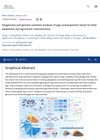
This research developed a pig graph pangenome assembly of 27 genomes, revealing the importance of structural variations in adaptation and breed-specific traits, with BTF3 identified as a key gene influencing intramuscular fat and meat quality.
 May 2015 in “Journal of Dermatological Science”
 Researchers found a new area on chromosome 2 linked to a genetic hair loss condition.
 December 2013 in “Appetite”
 This study identified a nonfunctional Itpr3 gene in BTBR mice, attributed to a 12-bp deletion, which likely causes their simultaneous hair loss and taste perception deficits.