 46 citations
,
March 2019 in “Journal of Pineal Research”
46 citations
,
March 2019 in “Journal of Pineal Research” The study found that melatonin treatment in early postnatal cashmere goats increased both the quantity and quality of cashmere by promoting secondary hair follicle development and enhancing antioxidant enzyme activities.
 July 2012 in “European journal of cancer”
 This study demonstrated that switching aE-catenin to aT-catenin in murine skin substantially rescued hyperproliferative and pre-cancerous conditions, but led to partial baldness, indicating potential functional discrepancies.
70 citations
,
April 2011 in “British journal of dermatology/British journal of dermatology, Supplement” This retrospective study found that methotrexate had variable efficacy in treating severe alopecia areata in children, with successful hair regrowth observed in five out of thirteen assessable cases.
15 citations
,
August 2013 in “Gene” This study found that the MTHFR gene C677T mutation appears to be a susceptibility factor for alopecia areata in the Turkish population.

This study found that oral minoxidil is associated with a higher proportional reporting of several cardiovascular adverse events compared to topical minoxidil in spontaneous FDA reports, but these signals should be interpreted as hypothesis-generating rather than evidence of clinical safety.
 September 2023 in “International Journal of Dermatology”
 In this study, FAPD was characterized in a Chinese population by perifollicular mast cell infiltration, suggesting young individuals may be at higher risk than previously thought.
20 citations
,
July 2005 in “Experimental dermatology” This study found that the fuzzy mutation in mice is linked to both structural hair defects and accelerated hair follicle cycling, influencing the regulation of hair cycle phases such as catagen and anagen.
 6 citations
,
October 2012 in “PubMed”
6 citations
,
October 2012 in “PubMed” This study found that while the combination therapy of 3% minoxidil and 0.1% finasteride lotion showed greater improvement in global photographic assessments for androgenetic alopecia, hair counts did not differ significantly from minoxidil alone.
 4 citations
,
December 1992 in “The American Journal of Cosmetic Surgery”
4 citations
,
December 1992 in “The American Journal of Cosmetic Surgery” The modified S pattern for scalp reduction is effective for removing more bald scalp and hiding scars in hair restoration.
 December 2025 in “International Journal of Research in Dermatology”
 In this survey, dermatologists in India reported preferring alcohol-free minoxidil combined with procapil and finasteride over traditional alcohol-based formulations for managing androgenetic alopecia, citing better tolerance and patient adherence.
February 2006 in “PubMed” In this study, docetaxel combined with prednisone significantly extended survival by about 2.5 months in men with hormone-resistant metastatic prostate cancer compared to mitoxantrone plus prednisone, despite the potential for severe adverse effects.
August 2018 in “Analysis of the application of various variants of bone plasty in victims with intraarticular fractures (Transplantology)” In this study, follicular microautotransplantation was found to be an effective outpatient surgical treatment for scarring alopecia, with transplanted follicles showing an average engraftment rate of 93.8% and providing a good cosmetic outcome that improves patients' quality of life.
 May 2011 in “Dermatología argentina”
 In this case report, a female patient with frontal fibrosing alopecia and lichen scleroatrophicus vulvae experienced excellent results from hair microtransplants combined with finasteride and topical minoxidil, maintained over six years.
 1 citations
,
August 2025 in “Journal of Ayurveda and Holistic medicine.”
1 citations
,
August 2025 in “Journal of Ayurveda and Holistic medicine.” In this study, a 63-year-old woman with tinea capitis experienced promising improvements in symptoms such as pain, itching, and mild hair loss after undergoing Ayurvedic treatments, including rakta mokshana and shamana aushadi, over a period of 35 days.
 July 2025 in “SKIN The Journal of Cutaneous Medicine”
 In this case study, a 64-year-old female with breast cancer undergoing ADC therapy experienced significant hair regrowth using oral minoxidil, suggesting its potential as a treatment for ADC-induced alopecia.
 9 citations
,
January 2018 in “Journal of the European Academy of Dermatology and Venereology”
9 citations
,
January 2018 in “Journal of the European Academy of Dermatology and Venereology” A male patient developed frontal fibrosing alopecia after antiandrogen therapy for prostate cancer.

This study reviewed the efficacy of hair intradermotherapy for treating androgenetic alopecia, finding that the technique, whether used alone or with other interventions, can increase hair density, reduce hair loss, and improve patient self-esteem, although professional supervision is recommended to minimize adverse effects.
9 citations
,
April 2006 in “International Journal of Dermatology” This article reviews the potential for α-difluoromethylornithine to help control hair growth and prevent cancer, but it does not present new clinical results.
June 2020 in “International Journal of Women’s Dermatology” This case report highlights the importance of considering frontal fibrosing alopecia in young women, emphasizing early diagnosis to preserve hair and limit inflammation.
 March 2026 in “BMC Veterinary Research”
 This case report describes the successful use of bovine amniotic membrane preserved in propolis for promoting rapid wound healing and hair regrowth in a cat with extensive skin necrosis.
November 2024 in “Advances in Pharmacology and Pharmacy” This study validated a UV-spectrophotometric method for accurately detecting Minoxidil and Tofacitinib citrate concentrations in bulk and gel formulations for alopecia areata, showing high recovery rates and indicating the method's suitability for routine analysis.
 April 2023 in “Tropical Animal Health and Production”
 Giving melatonin to sheep before the non-breeding season can improve their chances of reproducing in northwest Mexico.
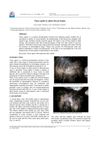
This report presents the first known case of tinea capitis caused by Microsporum canis in an adult female in the authors' locality, responsive to oral fluconazole treatment.
 104 citations
,
October 2016 in “PLoS ONE”
104 citations
,
October 2016 in “PLoS ONE” This study found that CRISPR/Cas9-mediated disruption of the FGF5 gene in goats increased hair follicle numbers and fiber length, suggesting more cashmere production could be achieved.
 January 2025 in “Revista del Centro Dermatológico Pascua”
 Early diagnosis and treatment can help manage fibrosing alopecia in older women.
This study found that the protein Formin 2 helps regulate cell-to-cell transport in thale cress by stabilizing actin filaments at plasmodesmata, with its absence leading to increased permeability and vulnerability to viral infections.
 11 citations
,
September 2014 in “International Journal of Molecular Sciences”
11 citations
,
September 2014 in “International Journal of Molecular Sciences” This study found that mycophenolate may stabilize β-catenin and counteract interferon-γ-induced catagen changes in human dermal papilla cells, which could promote hair growth.
 1 citations
,
October 2017 in “Animal science journal”
1 citations
,
October 2017 in “Animal science journal” This study found that cyclophosphamide treatment in cashmere goats significantly increased cashmere yield by inducing shedding without affecting fiber length, with a 20 mg/kg body weight dose being optimal for hair removal and regrowth.
23 citations
,
December 2021 in “International Journal of Environmental Research and Public Health” This study found that advanced platelet-rich fibrin (A-PRF) reduced postoperative complications like pain, trismus, and edema following mandibular wisdom teeth removal.