 April 2023 in “Journal of Investigative Dermatology”
 This case study reports an unusual presentation of primary cutaneous diffuse large B-cell lymphoma–leg type occurring on the upper lip of an 81-year-old woman, highlighting the need for timely recognition of atypical manifestations.
 January 2017 in “Clinical approaches and procedures in cosmetic dermatology”
 This review explores clinical studies on low-level laser therapy (LLLT) for alopecia and suggests it may benefit patients unresponsive to conventional treatments, but larger studies are needed to confirm efficacy.
26 citations
,
December 1999 in “Journal of the American Academy of Dermatology” This study found that normal-mode ruby laser treatment significantly improved facial hirsutism and maintained results for at least 48 weeks, with repeated treatments enhancing clinical effects.
 18 citations
,
February 2010 in “Odontology”
18 citations
,
February 2010 in “Odontology” This report describes Rabson-Mendenhall syndrome cases in two siblings and briefly reviews the literature, highlighting insulin receptor gene mutations as the underlying cause.
September 1997 in “International Society of Hair Restoration Surgery” This announcement from Redfield Corporation introduces the first disposable linear slot punches for hair restoration surgery, with sharpness guaranteed for up to 500 recipient sites.
 9 citations
,
January 2018 in “Plastic and Reconstructive Surgery – Global Open”
9 citations
,
January 2018 in “Plastic and Reconstructive Surgery – Global Open” Using PDRN injections and RF treatments improved revision nose surgery results without major side effects.
37 citations
,
August 2011 in “Journal of Bone and Mineral Research” This study reported a case of hereditary vitamin D–resistant rickets caused by a single heterozygous missense mutation in the VDR gene, showing dominant-negative effects and reduced response to 1,25-dihydroxyvitamin D3.
 3 citations
,
May 2020 in “bioRxiv (Cold Spring Harbor Laboratory)”
3 citations
,
May 2020 in “bioRxiv (Cold Spring Harbor Laboratory)” In this study, researchers identified loss of function variants in the HR gene as likely causes of the distinct roaning hair coat seen in lykoi cats.
June 2022 in “Zenodo (CERN European Organization for Nuclear Research)” This promotional content discusses Locerin as a hair growth supplement but reports no research findings; readers are encouraged to explore their own conclusions.
10 citations
,
July 2014 in “Annals of Saudi Medicine” This case report describes a rare concurrence of Morbihan disease with eyelid edema and extrafacial lupus miliaris disseminatus faciei in a patient, noting improvement of truncal lesions with roxithromycin and resolution of eyelid edema following surgical treatment.
November 2014 in “International Society of Hair Restoration Surgery” This announcement explains the Fellow designation for hair restoration surgeons meeting specific educational criteria, without reporting new research findings.
 10 citations
,
June 2019 in “Case reports in dermatology”
10 citations
,
June 2019 in “Case reports in dermatology” This paper presents a case of a young male with linear and annular lupus panniculitis of the scalp, detailing trichoscopic findings and their correlation with histopathological features, but reports no new generalizable results.

This study explored a mother and daughter with loose anagen hair syndrome linked to wooly hair, identifying an intronic variant in the KRT71 gene that affects hair keratin splicing, thus broadening the spectrum of KRT71-related disorders.
 6 citations
,
November 2015 in “Equine Veterinary Education”
6 citations
,
November 2015 in “Equine Veterinary Education” This report describes the successful treatment of multiple extrapulmonary disorders from Rhodococcus equi pneumonia in a foal, emphasizing the importance of thorough diagnosis and targeted treatment.

This case study reports that a 35-year-old woman developed nonscarring alopecia following the cosmetic use of poly-L-lactic acid on her face and hairline.
5 citations
,
September 2021 in “Clinical case reports” This case report documents the first known instance of Graham‐Little Piccardi Lassueur Syndrome in Saudi Arabia, observed in an adult dark-skinned male.
November 2020 in “Journal of the American Academy of Dermatology” Intense pulsed light with radiofrequency showed mixed results in improving quality of life for hidradenitis suppurativa patients, with no clinical improvements.
 3 citations
,
September 2024 in “BMC Oral Health”
3 citations
,
September 2024 in “BMC Oral Health” This study found that low-level laser therapy effectively reduced relapse rates, while functional appliances did not; combining them offered no additional benefits.
 September 2016 in “Journal of Dermatological Science”
 This study identified that in Japanese patients with autosomal recessive woolly hair/hypotrichosis, the c.736T > A LIPH mutation is associated with a mild phenotype, while the c.742C > A mutation may lead to severe baldness.
January 2026 in “Forum Dermatologicum” This study reviewed cases of Graham–Little-Piccardi–Lassueur syndrome and found that topical treatments were generally ineffective, while systemic therapies like prednisone, hydroxychloroquine, and isotretinoin led to partial hair regrowth and disease stabilization, highlighting the importance of early diagnosis and systemic therapy to improve outcomes.
 72 citations
,
October 2009 in “The FASEB journal”
72 citations
,
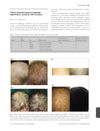
October 2009 in “The FASEB journal” This study found that thyrotropin-releasing hormone (TRH) acts as a potent stimulator of hair growth in human scalp hair follicles, promoting elongation and prolonging the anagen phase.
 7 citations
,
March 2015 in “British Journal of Dermatology”
7 citations
,
March 2015 in “British Journal of Dermatology” Applying minoxidil can help improve hair growth in people with hair loss caused by LIPH gene mutations.
4 citations
,
August 2015 in “JEADV. Journal of the European Academy of Dermatology and Venereology/Journal of the European Academy of Dermatology and Venereology” This study concluded that both low and incremental radiant exposures of diode lasers produced similar hair reduction and patient satisfaction, but low radiant exposure was less painful and better tolerated.
26 citations
,
September 1999 in “Canadian Journal of Botany” This study found that a recessive mutation in the RHD4 gene of Arabidopsis thaliana leads to slower and more variable tip growth in seedling root hairs, resulting in shorter and wider hairs than in wild-type plants.
 8 citations
,
August 2013 in “Pediatric Dermatology”
8 citations
,
August 2013 in “Pediatric Dermatology” This article reviews loose anagen hair syndrome, an inheritable hair disorder affecting children and sometimes adults, but does not report any new clinical results.
 37 citations
,
March 2010 in “British Journal of Dermatology”
37 citations
,
March 2010 in “British Journal of Dermatology” Oestrogen and thyrotropin-releasing hormone affect prolactin and its receptor in human skin and hair, suggesting new treatment options for related conditions.
July 2015 in “International Society of Hair Restoration Surgery” This project by the International Society of Hair Restoration Surgery reviews best practices in hair restoration surgery and reports no new research findings.
 March 2026 in “Revista Ibero-Americana de Humanidades, Ciências e Educação”
 In this study, L-PRF was associated with successful osseointegration and tissue healing when used with biomaterial for dental implants in a patient with an atretic bone ridge.
 1 citations
,
June 2022 in “Experimental dermatology”
1 citations
,
June 2022 in “Experimental dermatology” This study found that SHJH hr mice, with a Hairless gene mutation, exhibit accelerated skin aging potentially due to poor antioxidative protection, highlighting the Hr gene's role in skin aging.
 12 citations
,
June 2009 in “Journal of Cosmetic Dermatology”
12 citations
,
June 2009 in “Journal of Cosmetic Dermatology” This study reports the first cases of loose anagen hair syndrome in dark-skinned children from Upper Egypt, noting it may be under-diagnosed and primarily causes cosmetic concerns without affecting general health.