 November 2020 in “International journal of contemporary pediatrics”
 This study reports two siblings with severe combined immunodeficiency due to a mutation in the FOXN1 gene, characterized by T-cell immunodeficiency, alopecia totalis, and nail dystrophy.
8 citations
,
July 2015 in “International Journal of Dermatology” This study reports that a homozygous A1103G mutation in DSG 4 is responsible for localized autosomal recessive hypotrichosis in a 2-year-old Chinese girl, resulting in reduced DSG 4 expression and hair defects.
85 citations
,
March 2008 in “Journal of Cell Science” This study created transgenic mouse models with the LMNA gene mutation common in Hutchinson-Gilford progeria syndrome, revealing skin and teeth abnormalities related to transgene expression levels.
13 citations
,
February 2012 in “International Journal of Dermatology” This case report identifies a novel nonsense mutation in the CDH3 gene associated with hypotrichosis and juvenile macular dystrophy.
11 citations
,
November 2019 in “The FASEB Journal” In this study, a missense mutation in the MAP2 gene was found to be associated with reduced hair follicle density, leading to the hairless phenotype in pigs.
 165 citations
,
September 2001 in “Genes & development”
165 citations
,
September 2001 in “Genes & development” This study found that Cutl1 mutant mice experienced retarded lung differentiation and abnormal hair follicle morphogenesis, indicating the vital role of CDP in lung development and hair follicle cell-lineage specification.
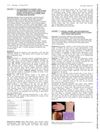
This case report details a child with a specific TNFAIP3 mutation manifesting as a severe SLE/SS phenotype, expanding the known phenotype for this genetic variant.
3 citations
,
January 2011 in “生物医学研究杂志:英文版” In this study, a novel heterozygous transition mutation in the KRT86 gene was identified, which may be pathogenic for monilethrix in a Chinese family.
21 citations
,
March 2003 in “Clinical and Experimental Dermatology” This study found two recurrent missense mutations in the hHb6 gene associated with monilethrix in families from Russia and Colombia, supporting their role in this hair disorder worldwide.
 June 2023 in “British Journal of Dermatology”
 In this case report, researchers described a female child with total alopecia due to a mutation in the SNRPE gene, emphasizing the need for updated genetic testing as knowledge advances to avoid diagnostic delays in hereditary nonsyndromic hypotrichosis.
26 citations
,
October 1998 in “Experimental Dermatology” This study describes a co-dominant E410D mutation in keratin hHb6 associated with severe hair loss and extensive papules in homozygous individuals, with variable expression in heterozygous family members.
May 2018 in “The journal of immunology/The Journal of immunology” This study identified that patients with compound heterozygous mutations in FOXN1 exhibited severe T-cell lymphopenia but retained normal hair and nail development, indicating a distinct clinical phenotype from classic FOXN1 cases.
130 citations
,
April 2001 in “Journal of Investigative Dermatology” This study reports the first keratin gene mutation affecting the tail domain, leading to a unique cytoskeletal abnormality and severe epidermal hyperkeratosis, highlighting the tail domain's critical role in keratin organization.
 June 2026 in “Frontiers in Cell and Developmental Biology”
 This review synthesizes the diverse roles of the transcription factor LHX2 in development, tissue maintenance, and injury repair across various organ systems, highlighting its potential therapeutic applications and significance in regenerative medicine, particularly in developmental disorders and tissue regeneration.
 28 citations
,
October 2004 in “Differentiation”
28 citations
,
October 2004 in “Differentiation” This study identified a large deletion in the desmoglein 4 gene as the genetic basis of the Iffa Credo "hairless" rat's skin phenotype, linking it to lanceolate hair mutations.
11 citations
,
February 2011 in “The Journal of Dermatology” This study observed four consanguineous families with congenital atrichia with papular lesions and identified three novel mutations in the hairless gene, which may contribute to the disorder.
May 2009 in “OPAL (Open@LaTrobe) (La Trobe University)” In this study, a transgenic mouse model suggested that suppressing the expression of the HGPS mutation may reverse disease symptoms, including skin abnormalities, supporting the potential for treatment development.
175 citations
,
August 1997 in “Nature Genetics” March 2011 in “Open Archive (Karolinska Institutet)” This study explored the effects of a common Hutchinson-Gilford progeria syndrome mutation in an inducible mouse model, revealing skin abnormalities similar to those in affected patients.
September 2019 in “The journal of investigative dermatology/Journal of investigative dermatology” This study identified a novel G207E STING mutation causing a distinct phenotype involving alopecia, photosensitivity, and thyroid dysfunction, and suggests that common polymorphisms in TMEM173 and IFIH1 may influence disease presentation.
3 citations
,
January 2021 in “Veterinary dermatology” This study describes a rare form of congenital alopecia in domestic short hair cats, characterized by hair shaft defects and follicular dystrophy similar to those seen in certain mutant mouse strains.
 6 citations
,
May 2012 in “Archives of Dermatological Research”
6 citations
,
May 2012 in “Archives of Dermatological Research” This study reports a novel missense mutation in the HR gene in a 68-year-old Hungarian woman with alopecia universalis and limb deformities, suggesting a need for further research on its role in these conditions.
1 citations
,
December 2016 in “Revista română de medicină de laborator” This study reported the first case of a NIPAL4 c.527C>A mutation in Romanian patients with autosomal recessive congenital ichthyosis, finding that NIPAL4 mutations are more common than TGM1 mutations in this population.
26 citations
,
October 2002 in “Journal of Investigative Dermatology” This study identifies a mutation in the hairless gene that may impact thyroid receptor interaction, contributing to alopecia universalis congenita in an Arab Israeli patient.
15 citations
,
June 2012 in “British Journal of Dermatology” This study identified a novel KRT86 mutation associated with autosomal dominant monilethrix, expanding understanding of its genetic basis beyond known motifs.
 4 citations
,
January 2022 in “The journal of investigative dermatology/Journal of investigative dermatology”
4 citations
,
January 2022 in “The journal of investigative dermatology/Journal of investigative dermatology” In this study, researchers found that the KLHL24-ΔN28 protein variant disrupts hair follicle stem cells in a mouse model, leading to premature hair loss by degrading keratin 15.
4 citations
,
January 2011 in “European journal of dermatology/EJD. European journal of dermatology” This article provides an overview of lipedematous scalp, a rare condition characterized by a thickened scalp without hair loss, and emphasizes the need for further research due to limited case reports.
7 citations
,
August 2017 in “Genetic testing and molecular biomarkers” This report suggests that patients with primary spontaneous pneumothorax should be evaluated for FLCN mutations, as they may indicate Birt-Hogg-Dube syndrome and associated cancer risks.
 21 citations
,
October 2019 in “The journal of investigative dermatology/Journal of investigative dermatology”
21 citations
,
October 2019 in “The journal of investigative dermatology/Journal of investigative dermatology” This study identified specific germline and somatic mutations in the Phospholipase C Delta 1 gene as high-risk factors for developing hereditary trichilemmal cysts, involving a monoallelic two-hit mechanism.
 19 citations
,
May 2006 in “Clinical and Experimental Dermatology”
19 citations
,
May 2006 in “Clinical and Experimental Dermatology” This study identified a novel insertion mutation in the hairless gene that may contribute to the development of congenital atrichia with papular lesions in a Pakistani family.