 December 2023 in “Palestinian medical and pharmaceutical journal/Palestinian medical & pharmaceutical journal”
 The pilot study found that while women with habitual short sleep increased their sleep duration by an average of 40.7 minutes, there were no significant changes in insulin sensitivity, androgens, or leptin levels post-intervention, suggesting further research is needed.
 January 2023 in “International Journal of Indian Medicine”
 This review discusses Ayurvedic approaches to treating hair loss, known as Khalitya, but provides no new clinical findings, urging further exploration of traditional methods.
 April 2022 in “Journal of The American Academy of Dermatology”
 This article discusses scalp neuropathy in androgenetic alopecia and suggests that changes in tactile sensation due to Aβ fibers and increased nociception from circ-HTMR may be involved.
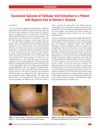
FUE successfully restored hair growth in a patient with alopecia from Hansen's disease.
January 2021 in “Deep Blue (University of Michigan)” This study found that LepRb neurons in the brain are important targets for androgen action and influence sex-specific differences in reproductive and metabolic regulation, implicating them in conditions such as polycystic ovary syndrome.
 April 2018 in “Journal of Investigative Dermatology”
 This study suggests that the Leptin receptor may serve as a novel cell surface marker for dermal papilla cells, potentially aiding future isolation and research efforts in hair follicle regeneration studies.
 September 2017 in “Asian Journal of Beauty and Cosmetology”
 This review discusses recent evidence on the Notch signaling pathway's role in regulating hair follicle development and stem cell differentiation, but provides no new research findings.
 January 2017 in “Open Journal of Endocrine and Metabolic Diseases”
 This case report identifies an adolescent with symptoms indicative of Dunnigan-type partial lipodystrophy, emphasizing the need for early diagnosis to manage associated metabolic complications and improve self-esteem.
 January 2015 in “Indian Journal of Medical Biochemistry”
 Men with early balding should be checked for metabolic syndrome, as there's a link between the two.
December 2006 in “Experimental Dermatology” This review discusses the role of adipose tissue as an endocrine organ affecting skin physiology and suggests a complex interaction between adipocytes and the skin as part of the broader endocrine system, but provides no new clinical results.
February 2023 in “Clinical, Cosmetic and Investigational Dermatology” This study found that male patients with Androgenetic alopecia have higher serum leptin, lower vitamin D levels, and an altered adiponectin/leptin ratio, which may contribute to the disease's pathogenesis.
 53 citations
,
June 2012 in “Annales d'Endocrinologie”
53 citations
,
June 2012 in “Annales d'Endocrinologie” This review discusses the range and causes of adipose tissue diseases, emphasizing genetic and acquired forms of lipodystrophy, but it reports no new clinical results.
 15 citations
,
September 1984 in “Veterinary Clinics of North America: Small Animal Practice”
15 citations
,
September 1984 in “Veterinary Clinics of North America: Small Animal Practice” The document explains various skin conditions in cats and how to diagnose and treat them.
1 citations
,
January 2019 in “International Research Journal of Ayurveda & Yoga” This case report demonstrates successful treatment of Indralupta using Prachhana karma, Shirolepa, and Bhringarajadi Rasayana in Ayurvedic practice.
 1 citations
,
April 2018 in “International journal of Ayurvedic medicine”
1 citations
,
April 2018 in “International journal of Ayurvedic medicine” This review discusses Ayurvedic approaches to premature greying of hair, focusing on detoxifying therapies like panchakarma and various rejuvenative treatments, but presents no new empirical findings.

This review discusses various syndromes of severe insulin resistance, their biochemical and clinical features, and potential therapeutic options, but it reports no new clinical results.
 February 2026 in “International Journal of Science and Research (IJSR)”
 This case report describes an 18-year-old female with alopecia areata who experienced hair regrowth within seven days following Prachana Vidhi treatment in an Ayurvedic setting, suggesting this approach may offer effective results for patchy hair loss.
 August 2024 in “Journal of Ayurveda and Integrated Medical Sciences”
 This review explores the effectiveness of Murdha Tailam methods, particularly in Panchakarma treatments, for illnesses related to the head and neck, highlighting the advantage of scalp drug absorption due to anatomical features that facilitate treatment outcomes.
 December 2023 in “Journal of ayurveda and integrated medical sciences”
 In this case study, a 17-year-old male with patchy hair loss (Indralupta) experienced significant symptom relief after treatment with Pracchanna Karma and Maricha Lepa, suggesting the therapy was effective and economical within a short duration.
January 2020 in “International Research Journal of Ayurveda & Yoga” In this study, Ayurvedic treatment including Pracchan karma, Siro lepa, and Samana chikista over four months resolved symptoms of Alopecia Areata in a woman who maintained improvement one year post-treatment.
 July 2013 in “British Journal of Dermatology”
 The document reviews key historical figures and discoveries in dermatology.
January 2026 in “Journal of Ayurveda Case Reports” In this study, a 21-year-old male with alopecia areata showed complete hair regrowth after following a 100-day holistic Ayurveda treatment, which included Pracchana karma, Gunja-Kalihari lepa application, and Ayurveda formulations, resulting in a SALT-2 score reduction from 66% to 0%.
 August 2024 in “International Journal For Multidisciplinary Research”
 This case study suggests that an Ayurvedic treatment regimen, involving Amlaki-Amrasthi lepa, Amalaki-Amrasthi kashay, and Avipattikar churna, may effectively manage hair loss symptoms without side effects in a 25-year-old woman.
 January 2021 in “Journal of Cutaneous and Aesthetic Surgery”
 Follicular unit extraction successfully restored hair growth in a leprosy patient without disease relapse.
 7 citations
,
January 1989 in “Leprosy Review”
7 citations
,
January 1989 in “Leprosy Review” This report describes a woman with borderline lepromatous leprosy who developed a serious skin reaction to dapsone; she recovered quickly after stopping dapsone and receiving corticosteroids.
10 citations
,
September 2015 in “BMC pharmacology & toxicology” This case report discusses a young man's severe febrile illness mimicking leptospirosis or dengue, ultimately suggesting Gloriosa superba poisoning after hair loss led to the correct diagnosis.
 March 2023 in “Здобутки клінічної і експериментальної медицини”
 This study found that in adolescents with excess weight and obesity, vitamin D levels are inversely correlated with leptin and positively correlated with adiponectin, influencing metabolic exchange criteria.
 June 2023 in “British Journal of Dermatology”
 This study reviews historical accounts suggesting several British monarchs suffered from various skin diseases, including leprosy, psoriasis, stasis dermatitis, systemic lupus erythematosus, and porphyria.
 2 citations
,
February 1981 in “Journal of the Royal Society of Medicine”
2 citations
,
February 1981 in “Journal of the Royal Society of Medicine” A three-year-old girl survived a rare serious infection caused by BCG vaccination, which improved after treatment with a leprosy drug.
 August 2025 in “Journal of the Pakistan Medical Association”
 This systematic review found significant associations between skin disorders like polycystic ovarian syndrome, dermatomyositis, atopic dermatitis, and leprosy with infertility, noting a lack of significant findings for systemic sclerosis.