2 citations
,
September 2024 in “Asian Journal of Andrology” In a retrospective cohort of patients with steroid 5 α-reductase 2 deficiency, this study identified seven novel genetic variants in the SRD5A2 gene, expanding the variant database and contributing to improved diagnostic and therapeutic approaches for the condition.
 7 citations
,
March 2020 in “Lasers in Medical Science”
7 citations
,
March 2020 in “Lasers in Medical Science” LLLT is a safe, promising hair loss treatment, but more research needed.
5 citations
,
June 2020 in “Medicine” This report discusses a 22-year-old patient with MELAS syndrome carrying the m.10158T>C mutation, and highlights the need for extensive genetic testing when initial hot-spot mutation tests are negative.
 3 citations
,
November 2020 in “Phyton-international Journal of Experimental Botany”
3 citations
,
November 2020 in “Phyton-international Journal of Experimental Botany” This review discusses the potential therapeutic applications of wedelolactone, a compound in Eclipta prostrata, for various chronic human diseases and reports no new clinical results.
June 2026 in “British Journal of Dermatology” This case study documented the first known instance of biopsy-confirmed lichen planopilaris occurring after hairline-lowering surgery in a patient without prior history, highlighting a potential complication where surgical trauma may trigger immune-mediated hair loss.
 November 2024 in “JAMA Dermatology”
 This consensus statement provides expert guidance on prescribing low-dose oral minoxidil for hair loss, noting a lack of representation of pediatric specialists and highlighting areas for future research.
 June 2011 in “CRC Press eBooks”
 Low-Level Laser Therapy can stimulate healing and cell function, potentially leading to wider medical use.
53 citations
,
November 2014 in “International Journal of Oncology” This study found that wedelolactone, a natural compound from plants, inhibited breast cancer-mediated osteoclast differentiation and activity in vitro, suggesting its potential as a therapy for bone destruction in breast cancer bone metastasis.
 2 citations
,
March 2021 in “Dermatologic Therapy”
2 citations
,
March 2021 in “Dermatologic Therapy” This study found that low-level laser therapy significantly increased hair counts in women with female pattern hair loss but not in those with telogen effluvium, without serious adverse events.
 September 2024 in “Archives of Dermatological Research”
 Both treatment combinations improved hair growth similarly and were safe.
July 2025 in “Dermatology Reports” This report presents a rare case of discoid lupus erythematosus in a Saudi woman, highlighting the need for dermatologists to recognize atypical presentations to prevent misdiagnosis and treatment delays.
1 citations
,
September 2020 in “Journal of dermatology” This study identified a novel mutation and confirmed a previous mutation in the LIPH gene in a woman with autosomal recessive woolly hair, expanding the mutation spectrum for this condition.
 9 citations
,
December 2018 in “JAAD case reports”
9 citations
,
December 2018 in “JAAD case reports” This study details the characteristics of lipedematous alopecia and lipedematous scalp, two rare scalp conditions, suggesting they may represent different stages of the same disorder, with lipedematous scalp lacking the hair loss seen in lipedematous alopecia.
 7 citations
,
June 2010 in “Journal of The American Academy of Dermatology”
7 citations
,
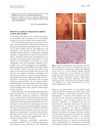
June 2010 in “Journal of The American Academy of Dermatology” This paper reports a single case of lichenoid cutaneous sarcoidosis that was unresponsive to standard treatments but showed marked improvement with the administration of oral tranilast.
31 citations
,
October 2010 in “BMB Reports” In this study, L-threonate was found to inhibit DHT-induced DKK-1 expression in cultured dermal papilla cells, suggesting it could help prevent androgen-driven balding.
October 2025 in “Dermatology Practical & Conceptual” In this study, UVFD and sUVRD techniques revealed distinctive characteristics of GD lesions, suggesting that GD might be more common in younger individuals and females than previously thought, possibly due to underdiagnosis. Incorporating dermatoscopy in exams may help improve GD detection and management.
 20 citations
,
March 2013 in “Journal of Lipid Research”
20 citations
,
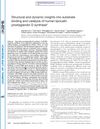
March 2013 in “Journal of Lipid Research” This study examined the structural and biochemical mechanisms of human lipocalin prostaglandin D synthase, detailing substrate and product binding processes at the catalytic site and suggesting potential for drug delivery targeting hydrophobic molecules.
October 2025 in “Coloration Technology” In this study, a new delipidisation method that removes over 97% of key lipids from wool rapidly and without yellowing was reported to improve wool processing and printing quality.
December 2017 in “PubMed” This review examines low-level laser therapy as a potential treatment for androgenetic alopecia, presenting current clinical findings, proposed mechanisms, and rare side effects, but does not report new results.
 15 citations
,
July 1991 in “International Journal of Dermatology”
15 citations
,
July 1991 in “International Journal of Dermatology” This article discusses the technique of laser Doppler velocimetry for measuring cutaneous blood flow and does not report new research findings.
15 citations
,
October 2012 in “Journal of child neurology” In this study, two unrelated Honduran patients with Sjögren-Larsson syndrome had the same genetic mutation but displayed different disease severities, suggesting that factors beyond the ALDH3A2 mutation influence clinical outcome.
 November 2024 in “Nanomaterials”
 This study formulated and characterized a dutasteride-loaded nanocrystalline suspension for long-acting parenteral delivery, finding that it provided sustained drug release in rats with a significant reduction in local inflammation over 28 days following intramuscular injection.
 37 citations
,
April 2011 in “Journal of Biological Chemistry”
37 citations
,
April 2011 in “Journal of Biological Chemistry” This study discovered a novel interaction between the vitamin D receptor and LEF1, essential for normal Wnt signaling in keratinocytes, which is crucial for regular hair cycling.
 16 citations
,
January 2010 in “American Journal of Neuroradiology”
16 citations
,
January 2010 in “American Journal of Neuroradiology” This case report describes a 3-year-old boy with trichothiodystrophy, highlighting specific MRI findings of diffuse dysmyelination and osteosclerosis that may be unique to the disorder.
January 2026 in “Forum Dermatologicum” This study reviewed cases of Graham–Little-Piccardi–Lassueur syndrome and found that topical treatments were generally ineffective, while systemic therapies like prednisone, hydroxychloroquine, and isotretinoin led to partial hair regrowth and disease stabilization, highlighting the importance of early diagnosis and systemic therapy to improve outcomes.
 April 2023 in “Journal of Investigative Dermatology”
 In this systematic review, researchers found that individuals with lichen sclerosus have a higher prevalence of comorbidities like vitiligo, alopecia areata, and cardiovascular diseases compared to non-affected controls, and suggest screening all LS patients for cardiovascular risk factors and other diseases.
 May 2014 in “Clinical and Experimental Dermatology”
 A 70-year-old woman with a rare skin condition improved after treatment with topical steroids and acitretin.
 81 citations
,
August 2014 in “Lasers in Surgery and Medicine”
81 citations
,
August 2014 in “Lasers in Surgery and Medicine” This study found that low-level laser therapy significantly increased hair growth in women with androgenic alopecia, achieving a 37% greater increase in hair counts compared to placebo.
68 citations
,
August 2009 in “American Journal of Medical Genetics Part A” This study systematically reviewed clinical findings in trichothiodystrophy patients and suggested a new clinico-genetic classification to help better understand the ichthyotic phenotype and its management.
1 citations
,
April 2001 in “Biological Rhythm Research” This study suggests that D2O increases hair length in nude mice by extending the hair cycle duration, particularly the hair-existing phase, which is associated with increased mast cell density.