1 citations
,
June 2023 in “Journal of Visualized Experiments” This study describes a new intravital microscopy method for observing intestinal regeneration by tracking crypt dynamics in living mice after laser-induced tissue damage, revealing events like crypt fission, fusion, and disappearance over multiple weeks.
July 2025 in “Journal of Investigative Dermatology” Laser treatment boosts hair growth by activating a key growth factor.

This study introduced a new laser-only method called EKA for acne treatment, which is reported to be safe, painless, and heat-free, showing promising results for both acne and scar repair in initial sessions without combining with LED light.
March 2026 in “IntechOpen eBooks” This chapter explores the promising use of low-power laser irradiation for post-hysterectomy reconstructive care, emphasizing enhancements like a flexible fiber optic module, to potentially improve genitourinary rehabilitation in cervical cancer patients.
69 citations
,
August 1995 in “Annals of Plastic Surgery” This study showed that ultrapulse carbon dioxide laser ablation can precisely remove rabbit skin without scarring, facilitating normal skin and hair restoration within one month.
 January 2017 in “Lasers in Surgery and Medicine”
 This article introduces a special issue of "Lasers in Surgery and Medicine" focused on dermatology and plastic surgery, but it presents no new research findings.
 15 citations
,
January 1996 in “Lasers in Surgery and Medicine”
15 citations
,
January 1996 in “Lasers in Surgery and Medicine” This letter discusses the state of laser hair transplantation as of its 1996 publication but reports no new findings or clinical results.
March 1996 in “The American Journal of Cosmetic Surgery” This article describes a surgical technique combining CO2 SilkTouch Laser and Calvitron Hair Transplant System that offers a natural-looking hairline with moderate session length and minimal bleeding, but reports no new clinical outcomes.
 24 citations
,
May 2017 in “Journal of Cosmetic and Laser Therapy”
24 citations
,
May 2017 in “Journal of Cosmetic and Laser Therapy” This study reported that a new laser scanner using 655 nm red and 808 nm infrared lasers significantly improved hair density in patients with androgenic alopecia compared to both a laser hat and no treatment, without observable adverse effects.
4 citations
,
April 2014 in “Lasers in Surgery and Medicine” This observational study reports that a TRASER device using specific wavelengths for vascular and follicular targets showed both clinical responses and histological changes, suggesting its potential as an effective vascular and hair removal tool.
 1 citations
,
December 1996 in “Journal of Clinical Laser Medicine & Surgery”
1 citations
,
December 1996 in “Journal of Clinical Laser Medicine & Surgery” This letter to the editor reports no new research findings.
 July 1998 in “Proceedings of SPIE”
 This study found that Low Power Laser therapy may be an effective complementary treatment for scalp alopecia and crural ulcers, showing quicker and potentially better results than conventional treatments.
2 citations
,
December 2012 in “Dermatologic Surgery”  17 citations
,
January 2021 in “Dermatology and Therapy”
17 citations
,
January 2021 in “Dermatology and Therapy” This review discusses laser-assisted drug delivery for enhancing topical treatment efficacy in various dermatological and medical applications but reports no new clinical results, emphasizing the need for further research to optimize its use.
 81 citations
,
July 2011 in “Lasers in Medical Science”
81 citations
,
July 2011 in “Lasers in Medical Science” This study found that using a low-level laser comb led to hair regrowth in a mouse model of alopecia areata, while sham-treated mice showed no hair regrowth.
31 citations
,
January 2019 in “Frontiers in Veterinary Science” This study found that low-level laser therapy at 8 J/cm2 improved cosmetic surgical scar healing in canines after thoraco-lumbar hemilaminectomy compared to controls.
September 1998 in “Journal of the European Academy of Dermatology and Venereology”  June 2011 in “CRC Press eBooks”
 Low-Level Laser Therapy can stimulate healing and cell function, potentially leading to wider medical use.
January 2026 in “SSRN Electronic Journal” 1 citations
,
September 2019 in “Hair transplant forum international” This article introduces a needleless microjet injector using laser pulse energy for tattoo pigments in scalp micropigmentation, highlighting an almost painless procedure without anesthesia.
 45 citations
,
December 2018 in “Lasers in Medical Science”
45 citations
,
December 2018 in “Lasers in Medical Science” In a 24-week randomized trial, this study found that the RAMACAP laser helmet significantly increased hair density and diameter in androgenetic alopecia patients compared to a sham device, although limitations included a small sample size and potential issues with the control used.
 43 citations
,
June 2012 in “Lasers in Medical Science”
43 citations
,
June 2012 in “Lasers in Medical Science” In a rat model of chemotherapy-induced alopecia, this study found that low-level laser treatment significantly accelerated hair regrowth without affecting the efficacy of chemotherapy.
 1 citations
,
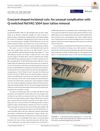
November 2020 in “Journal of Cosmetic Dermatology”
1 citations
,
November 2020 in “Journal of Cosmetic Dermatology” This letter to the editor discusses an unusual complication, crescent-shaped incisional cuts, observed with Q-switched Nd:YAG 1064 laser tattoo removal and reports no new clinical results.
1 citations
,
August 2024 in “Lasers in Surgery and Medicine” This study observed that calcium hydroxylapatite can be successfully incorporated and retained in the dermis for at least six weeks after fractional laser treatment, with new collagen forming around it.
 3 citations
,
October 2022 in “Clinical, Cosmetic and Investigational Dermatology”
3 citations
,
October 2022 in “Clinical, Cosmetic and Investigational Dermatology” This study found that repetitive 532 nm laser therapy significantly decreased scores for macules, pigmented, and vascular lesions on the facial area, regardless of skin phototype or age.
This abstract discusses the mechanism and effects of ablative carbon dioxide laser treatment for skin tightening, reporting no new clinical results but noting the need for involved postoperative management.
This study found that in a rat model of alopecia, combining low-level laser therapy with Neoptide treatment resulted in better hair regrowth compared to either treatment used alone.
 January 1998 in “Lasers in Surgery and Medicine”
 This study found that both 5-ALA and Photofrin can effectively destroy human microvascular endothelial cells in vitro and cause tissue necrosis in vivo, with Photofrin showing greater efficacy at lower concentrations or power densities.
8 citations
,
March 2023 in “BMC Research Notes” This pilot study explored a new method using laser-capture microdissection and 16S rRNA gene sequencing to analyze the human scalp hair follicle microbiome more accurately, revealing region-specific variations in microbial diversity and abundance.