 15 citations
,
May 2015 in “Photomedicine and Laser Surgery”
15 citations
,
May 2015 in “Photomedicine and Laser Surgery” This review assesses low-level laser therapy in plastic surgery and reports that it may improve flap survival and burn scars, but lacks efficacy for venous ulcers, alopecia, and skin aging.
47 citations
,
November 2000 in “Archives of dermatology” In this observational study, the effectiveness of a diode laser was evaluated for treating pseudofolliculitis barbae at the Laser and Skin Surgery Center of New York, but it reports no new clinical results.
 May 2005 in “Seminars in Plastic Surgery”
 This article shares the authors' experiences with the erbium YAG laser in hair restoration surgery, noting improved graft yield and reduced thermal damage compared to traditional methods.
 2 citations
,
January 2005 in “Journal of Cosmetic and Laser Therapy”
2 citations
,
January 2005 in “Journal of Cosmetic and Laser Therapy” New cosmetic treatments for acne, hair loss, cellulite, wrinkles, and skin resurfacing are effective.
 January 2025 in “Bright Sky Publications eBooks”
 This abstract does not report specific research findings but describes a book titled "Medical Physics and Laser Technology: Advancements and Applications in Modern Healthcare," authored by Zahraa Zuhair Ghafel Saeid and colleagues, which is available for purchase.
 4 citations
,
April 1999 in “Dermatologic Clinics”
4 citations
,
April 1999 in “Dermatologic Clinics” This study found that the long-pulsed ruby laser effectively delays hair growth and has the potential for permanent hair removal with minimal pain and side effects, offering an advantage over traditional hair removal methods.
 13 citations
,
December 2017 in “Journal of Cosmetic and Laser Therapy”
13 citations
,
December 2017 in “Journal of Cosmetic and Laser Therapy” This study evaluated the use of low-level laser therapy for treating androgenic alopecia in adults, finding it a promising and safe at-home option for stimulating hair growth compared to sham devices, though further research is needed to confirm its clinical effectiveness.
 July 2021 in “British Journal of Dermatology”
 Laser treatment for skin conditions VEN and ILVEN is effective and liked by patients.
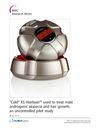 15 citations
,
February 2014 in “BMC Research Notes”
15 citations
,
February 2014 in “BMC Research Notes” This study found that male androgenic alopecia patients using the X5 hair laser device showed a statistically significant increase in hair growth over a 26-week period.
15 citations
,
January 2019 in “Lasers in surgery and medicine” This review reported that home-use laser and intense pulsed light devices effectively reduce hair with significant efficacy and safety, showing 80% hair reduction one year post-treatment, although results can vary for darker skin types and compared to professional devices.
9 citations
,
November 2021 in “PubMed” This study found that FDA-approved low-level light/laser therapy devices significantly increased hair density in individuals with pattern hair loss compared to sham devices.
 31 citations
,
October 2012 in “Archives of ophthalmology”
31 citations
,
October 2012 in “Archives of ophthalmology” Laser hair reduction near the eyebrows can cause serious eye injuries even with safety measures.
 September 2012 in “Dermatologic Surgery”
 This article reviews the use of laser and light technologies in hair treatments, highlighting their potential and challenges, but provides no new clinical findings.
This study found that low-level laser therapy (LLLT) may enhance hearing recovery after noise-induced hearing loss in rats.
 October 1997 in “Dermatologic Surgery”
 The Epilight Hair Removal System is effective for temporary hair removal with few side effects, but more research is needed to confirm its safety and long-term results.
May 2001 in “Hair transplant forum international” This article discusses the use of a high-magnification digital video microscope for diagnosing and treating androgenetic alopecia and reports no new clinical results.
3 citations
,
March 2013 in “QScience Connect” This study found that low power He:Ne laser and methylene blue successfully damaged hair follicles in mice while preserving the epidermis, suggesting a potential for improved long-term hair removal options.
26 citations
,
June 1993 in “Archives of Otolaryngology - Head and Neck Surgery” This study found that the endolaser technique using a small incision is as effective as standard forehead lifts for reducing glabellar frown lines and forehead creases with a shorter recovery time.
December 2023 in “Modern engineering and innovative technologies” This article explores the theoretical foundations of the ChromaLens Precision Mapping system for analyzing hair, but it does not present any new experimental findings.
64 citations
,
October 2020 in “Journal of lasers in medical sciences” This review discusses the benefits and drawbacks of low-level laser therapy for various non-surgical conditions based on existing literature, but reports no new clinical findings and suggests further research is needed.
1 citations
,
June 2020 in “Unisa Institutional Repository (University of South Africa)” This study found that low power red laser therapy, combined with antiretroviral drug efavirenz, significantly reduces HIV-1 infection in TZM-bl cells to undetectable levels.

In this study, collagen type I, skin fibroblasts, and macrophages did not show remarkable changes in androgenic alopecia patients' scalp tissues after treatment with 1550 nm fractional Er:Glass laser, despite improved hair regrowth.
 47 citations
,
August 2011 in “Journal of The European Academy of Dermatology and Venereology”
47 citations
,
August 2011 in “Journal of The European Academy of Dermatology and Venereology” This study found that treatment with a 1550 nm fractional erbium–glass laser increased hair density and thickness in women with female pattern hair loss, suggesting it may be an effective and safe option.
 2 citations
,
March 2019 in “Lasers in surgery and medicine”
2 citations
,
March 2019 in “Lasers in surgery and medicine” This study found that human hair follicles demonstrated a dose-dependent response to light in an ex vivo photoepilation model, which could predict the clinical efficacy and permanency of light-based hair removal devices.
 15 citations
,
June 2015 in “Lasers in Medical Science”
15 citations
,
June 2015 in “Lasers in Medical Science” This study found that low-level laser therapy with an 830-nm wavelength most significantly stimulated hair growth in rats, compared to other wavelengths tested.
 May 2023 in “Current Applied Science and Technology”
 In this animal study, researchers found that exposure to a CO2 laser at various power levels caused significant skin damage in rats, including severe burns, coagulation, and tissue obliteration, with higher laser doses resulting in more pronounced injuries.
September 2025 in “Acta Medica International” In this study, a triple wavelength laser was found to be highly effective and well-tolerated for reducing hair in Indian women with Fitzpatrick skin types III and IV, achieving an average hair count reduction of 86.5%, with only mild and transient adverse effects observed.
57 citations
,
December 2012 in “Journal of Biomedical Optics” This review discusses the application of confocal laser scanning microscopy for studying nanoparticle interactions with skin and highlights its potential for broad applications, but reports no new experimental findings.
 January 1989 in “Journal of The American Academy of Dermatology”
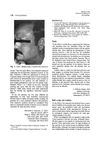
 Dr. Hanke acknowledges the success of CO₂ laser for less severe blast tattoos and suggests dermabrasion for more extensive injuries, while also discussing dermatology's media presence and issues with minoxidil research.
 2 citations
,
March 2021 in “Dermatologic Therapy”
2 citations
,
March 2021 in “Dermatologic Therapy” This study found that low-level laser therapy significantly increased hair counts in women with female pattern hair loss but not in those with telogen effluvium, without serious adverse events.