 January 2026 in “Frontiers in Pharmacology”
 This review highlights the potential of wedelolactone from the plant Wedelia Chinensis, summarizing its reported pharmacological effects, including anti-inflammatory, antiviral, antibacterial, antitumor, anti-osteoporosis activities, and organ protection based on existing in vitro and in vivo research findings.

This review found that antimalarial agents were more effective than steroids for Lichen planopilaris, while finasteride and dutasteride showed favorable impacts on frontal fibrosing alopecia, despite heterogeneous study quality.
 May 2026 in “Drug Delivery and Translational Research”
 Nanocarriers with spironolactone and 2-deoxy-D-ribose may improve hair loss treatment by targeting hair follicles directly.
1 citations
,
January 2000 in “PubMed” The treatment slightly increased hair growth and was safe for most women.
 38 citations
,
January 2002 in “Biological & Pharmaceutical Bulletin”
38 citations
,
January 2002 in “Biological & Pharmaceutical Bulletin” This study reported that the aqueous ethanol extract of Lygodii Spora demonstrated in vitro testosterone 5alpha-reductase inhibition and in vivo anti-androgenic activity, potentially due to oleic, linoleic, and palmitic acids.
 January 2010 in “Yearbook of Dermatology and Dermatologic Surgery”
 Topical latanoprost and bimatoprost ophthalmic solutions don't help eyelash growth in patients with alopecia areata.
18 citations
,
May 2024 in “Pharmaceutics” This review discusses advances in drug delivery systems to enhance oleanolic acid's bioavailability and therapeutic potential but reports no new clinical results.
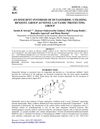 January 2017 in “Rasayan journal of Chemistry”
 This paper describes a new scalable synthesis method for Dutasteride, highlighting its potential for large-scale commercial production.
 2 citations
,
July 2022 in “Journal of the American Academy of Dermatology”
2 citations
,
July 2022 in “Journal of the American Academy of Dermatology” In this study, researchers aimed to evaluate the safety and tolerability of low-dose oral minoxidil in adolescents, as existing data on its use in this population are limited and there are no specific pediatric guidelines for prescribing it. Results are not reported.
 July 2026 in “International Journal of Drug Delivery Technology”
 This research reported that liposomal systems made from pig-derived skin lipids enhanced finasteride delivery to hair follicles for treating androgenetic alopecia, showing improved drug deposition, hair length, and growth compared to conventional finasteride forms in vitro.
February 2026 in “Toxicology Letters” This study used an in silico/in vitro approach to identify potential inhibitors of the enzyme SRD5A2, finding that the androgen receptor modulator MK-0773 is a moderate inhibitor, although it does not act as a covalent inhibitor like finasteride.
 August 2022 in “IntechOpen eBooks”
 This review discusses treatments for frontal fibrosing alopecia and lichen planopilaris, noting that systemic 5-alpha reductase inhibitors are most effective for stabilization and potential hair regrowth, but reports no new clinical results.
 20 citations
,
November 2009 in “European Journal of Dermatology”
20 citations
,
November 2009 in “European Journal of Dermatology” This study found that topical latanoprost was not effective in treating alopecia areata in eyebrows and eyelashes.
This chapter provides dermatology trainees with insights on managing lichen planopilaris, emphasizing treating active disease to prevent further hair loss and recommending a tapered course of oral steroids for disease stabilization.
1 citations
,
June 2023 in “Jordan Journal of Applied Science - Natural Science Series” This study found that both topical minoxidil and latanoprost effectively improved hair regrowth in patients with alopecia areata, but minoxidil showed higher efficacy.
December 2023 in “Reactions weekly” December 2023 in “Reactions weekly” September 2013 in “Reactions weekly” January 2014 in “Reactions Weekly” June 2014 in “Reactions Weekly” April 2015 in “Reactions Weekly” May 2013 in “Reactions Weekly” December 2012 in “Reactions Weekly” January 2009 in “Reactions Weekly” August 2011 in “Reactions Weekly” May 2026 in “Reactions Weekly” April 2026 in “Reactions Weekly” December 2024 in “Reactions Weekly” November 2014 in “Reactions Weekly” July 2014 in “Reactions Weekly”