 1 citations
,
April 2018 in “Lasers in Surgery and Medicine”
1 citations
,
April 2018 in “Lasers in Surgery and Medicine” This review summarizes late-breaking abstracts from the American Society for Laser Medicine and Surgery, 2018, and reports no new clinical findings.
 405 citations
,
May 2007 in “Journal of The American Academy of Dermatology”
405 citations
,
May 2007 in “Journal of The American Academy of Dermatology” This review discusses the profound impact of obesity on skin physiology and dermatologic conditions and reports no new experimental results, recommending awareness and treatment strategy development for obesity-associated dermatoses.
 19 citations
,
May 2021 in “Clinical epidemiology and global health”
19 citations
,
May 2021 in “Clinical epidemiology and global health” This study reports that increased knowledge of chemotherapy side effects is moderately associated with improved self-care practices among cancer patients.
August 2025 in “BMC Pharmacology and Toxicology” The LTF gene may help predict and manage nonspecific orbital inflammation.
December 2024 in “Food Bioscience” In a depilation mouse model, this study found that Limosilactobacillus fermentum MF10 promoted hair growth and increased follicle size by activating skin Wnt/β-catenin signaling and modulating gut microbiota, with effects comparable to the positive control finasteride.
2 citations
,
March 2019 in “PubMed” This report presents the early development of the Lupus Foundation of America's LFA-REAL™ patient-reported instrument, designed to enhance evaluation of lupus disease activity by combining patient and physician assessments.
This study found that home use of low-level light therapy reduced inflammation and symptoms like itching and burning in women with frontal fibrosing alopecia over six months.
 3 citations
,
September 2024 in “BMC Oral Health”
3 citations
,
September 2024 in “BMC Oral Health” This study found that low-level laser therapy effectively reduced relapse rates, while functional appliances did not; combining them offered no additional benefits.
 April 2023 in “The journal of investigative dermatology/Journal of investigative dermatology”
 This study revealed distinct cellular and transcriptomic differences among various subtypes of cutaneous T-cell lymphoma, particularly highlighting characteristics unique to folliculotropic mycosis fungoides.
This study demonstrated that Reverse Protein Engineering can decrease the size of Firefly Luciferase from 550 to less than 80 amino acids, but further research is needed to ensure these smaller peptides retain bioluminescent activity.
February 2026 in “Indian Dermatology Online Journal” This study reports that oral tofacitinib treatment in a patient with refractory lichen planus pigmentosus and frontal fibrosing alopecia resulted in near-complete resolution of hyperpigmentation and cessation of hairline recession over 18 months, and suggests it may be a promising therapy for these challenging conditions.
 1 citations
,
June 2024 in “British Journal of Dermatology”
1 citations
,
June 2024 in “British Journal of Dermatology” In this case study, a woman with frontal fibrosing alopecia and associated hyperpigmentation showed significant improvement in skin pigmentation and itch after 9 months of treatment with mycophenolate mofetil, highlighting its therapeutic potential for lichen planus pigmentosus linked to this condition.
 12 citations
,
March 2018 in “Anais brasileiros de dermatologia/Anais Brasileiros de Dermatologia”
12 citations
,
March 2018 in “Anais brasileiros de dermatologia/Anais Brasileiros de Dermatologia” This article describes a case of frontal fibrosing alopecia in a patient with chronic lichenoid lupus erythematosus and notes the lack of similar documented cases in existing literature.
 December 2024 in “Tropical Journal of Natural Product Research”
 This study aimed to enhance the skin penetration of brown algae fucoidan using a Nanostructured Lipid Carrier, achieving a formulation with good physical quality and stability.
1 citations
,
October 2023 in “BMC Genomics” This study identified miRNAs within the Dlk1-Gtl2 region on chromosome 18 as potential epigenetic regulators of lamb fur traits, with possible implications for the PI3K-AKT signaling pathway.
22 citations
,
April 2013 in “International Journal of Dermatology” Frontal fibrosing alopecia can occur with lichen planus pigmentosus, needing careful diagnosis and treatment.
 November 2022 in “CARDIOMETRY”
 This article discusses the potential benefits of GcMAF and oral MAF, developed by "Saisei Mirai", for cancer and other conditions, but reports no new clinical results.
January 2026 in “Biomacromolecules” This study reports that a novel nanolipogel with moderate rigidity (NLG-2.5) enhances transdermal delivery of fucosterol, displaying superior permeability, targeting hair follicles, and promoting hair growth in androgenetic alopecia model mice by inhibiting inflammation and androgen pathways and promoting angiogenesis.
 1 citations
,
October 2023 in “Journal of the Pakistan Medical Association”
1 citations
,
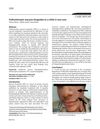
October 2023 in “Journal of the Pakistan Medical Association” This source describes a case of a 12-year-old male diagnosed with folliculotropic mycosis fungoides, presenting with an asymptomatic, erythematous plaque. Histology and immunohistochemistry confirmed FMF, which is typically rare in children and marked by follicular infiltration by CD4+ lymphocytes.
May 2025 in “Dermatology Reports” In this case study from King Fahad University Hospital, an 11-month-old Saudi boy with a history of short, non-growing hair was diagnosed with autosomal recessive woolly hair/hypotrichosis, attributed to a homozygous mutation in the LIPH gene.
 July 2023 in “Indian Journal of Animal Health”
 This study found that fibroblast growth factor 5 may enhance Cashmere goat hair growth by altering the expression of specific genes related to keratin and keratin-associated proteins.
 September 2024 in “Cermin Dunia Kedokteran”
 This article reviews Frambusia, a skin-contact-spread tropical infection, and stresses improving medical professionals' diagnostic and treatment skills to achieve the WHO's eradication target by 2030, without reporting new results.
5 citations
,
November 2023 in “The Journal of Dermatology” This study found that anifrolumab effectively reduced disease activity and allowed for corticosteroid tapering in patients with systemic lupus erythematosus at Kanazawa University Hospital.
 January 2020 in “Clinical Case Reports and Reviews”
 This study observed that the coexistence of Frontal Fibrosing Alopecia and lupus erythematosus in a patient may suggest a shared pathogenic background.
 October 2024 in “Cermin Dunia Kedokteran”
 This article discusses the surveillance and spread of hand, foot, and mouth disease in China, Singapore, and Indonesia, and reports no new results, emphasizing the need for improved prevention and management strategies.
 May 2025 in “The Journal of Rheumatology”
 This study highlights the efforts of the Oyemam Autoimmune Foundation in raising awareness and supporting lupus patients in Ghana, amid challenges like misdiagnosis and insufficient healthcare resources, revealing the impact of their advocacy and counseling initiatives on patients' lives.
10 citations
,
May 2020 in “Dermatologic therapy” In this study, a patient with recalcitrant lichen planopilaris and frontal fibrosing alopecia showed significant improvement after receiving four doses of the interleukin-23 monoclonal antibody tildrakizumab.
7 citations
,
March 2023 in “The Journal of Biochemistry” This study suggests that LONRF1 may play a vital role in linking oxidative damage responses and tissue remodeling during wound healing, with distinct mechanisms in senescent and non-senescent cells.
 January 2024 in “Dermatology practical & conceptual”
 In this publication, the authors explored whether there is a scientific basis for using lymecycline to treat frontal fibrosing alopecia, but the abstract does not provide study results or conclusions on its efficacy.
4 citations
,
May 2023 in “Cells” In this study, baricitinib treatment improved the differentiation of skin-derived precursors into adipocytes for diseases like Hutchinson-Gilford progeria syndrome, suggesting potential benefits when combined with lonafarnib.