 December 2012 in “Journal of dermatological science”
 This study reveals that hair follicles in mice and humans recruit epidermal Langerhans cells during skin inflammation via specific chemokine signaling pathways.
23 citations
,
April 2016 in “Journal of Visualized Experiments” This research details a robust method for isolating hair follicle stem cells and epidermal keratinocytes from mouse hair follicles using fluorescence activated cell-sorting technology.
This study found that Fructus Ligustri Lucidi water extract significantly increased proliferation in human hair dermal papilla cells, potentially promoting hair growth by activating ERK and Akt pathways.
6 citations
,
January 2014 in “Genetics and Molecular Research” This study constructed a hair follicle-specific expression vector for IGFBP-5 in Inner Mongolia Cashmere goat cells, allowing for future functional genetic analyses and potential use in nuclear transfer.
 11 citations
,
September 2012 in “The journal of investigative dermatology/Journal of investigative dermatology”
11 citations
,
September 2012 in “The journal of investigative dermatology/Journal of investigative dermatology” This study identified a missense mutation in the keratin 71 gene as the cause of autosomal dominant woolly hair/hypotrichosis in a Japanese family, marking the first human mutation in KRT71 linked to a hair disorder.
37 citations
,
June 2000 in “Experimental dermatology” This study investigated a spontaneous mutation in mice resulting in hair abnormalities and elevated IgE levels, which resembles human Netherton's syndrome and monilethrix.
 September 2024 in “Journal of Medicine and Life”
 In this study, researchers identified a recurrent nonsense mutation, c.409C>T (p.Arg137*), in the COL7A1 gene through whole exome sequencing in a family with autosomal recessive dystrophic epidermolysis bullosa, demonstrating the importance of this method for diagnosing genetically complex conditions.
 April 2024 in “Journal of pharmacy & pharmacognosy research”
 This study used in silico analysis to identify 4-[2-(4-nitrophenyl)ethylcarbamoyl]benzenesulfonyl as a potential inhibitor of the EGFR mutant associated with NSCLC, highlighting the need for further in vitro and in vivo validation.
57 citations
,
January 1987 in “Journal of Biological Chemistry” This study identified and sequenced several keratin cDNA clones showing distinct expression patterns in mouse epithelia, with in situ hybridization highlighting differences in keratin distribution between normal and hyperproliferative tissues.
June 2025 in “Journal of Ultrasound in Medicine” This study reports that high-frequency ultrasound can characterize frontal fibrosing alopecia by assessing dermal atrophy, hair follicle changes, and subclinical inflammation.
July 2019 in “Dermatologic Surgery” This abstract provides contact information for François Kuonen at the Lausanne University Hospital Center and reports no new research findings.
 9 citations
,
January 2011 in “EXPERIMENTAL ANIMALS”
9 citations
,
January 2011 in “EXPERIMENTAL ANIMALS” This study describes a novel hairless mutant rat strain, F344-Hr(krh), developed via ENU mutagenesis, which provides a model for skin disease and potentially focal glomerulosclerosis due to specific genetic mutations.
 89 citations
,
February 2002 in “Australasian journal of dermatology”
89 citations
,
February 2002 in “Australasian journal of dermatology” This case report describes the first known instance of fibrosing alopecia associated with cutaneous lichen planus, suggesting fibrosing alopecia may be a variant of lichen planopilaris.
 13 citations
,
June 2016 in “Journal of neurological surgery”
13 citations
,
June 2016 in “Journal of neurological surgery” This study suggests that leukocyte-platelet-rich fibrin membranes may aid postoperative healing in endoscopic skull base surgery, with some patients showing reduced crusting and low rates of cerebrospinal fluid leaks.
50 citations
,
July 2008 in “British Journal of Dermatology”  1 citations
,
February 2021 in “Scholars international journal of anatomy and physiology”
1 citations
,
February 2021 in “Scholars international journal of anatomy and physiology” In a laboratory setting, this study found that overexpression of the FGF5 short form in cultured keratinocytes increased hepatic growth factor gene expression, suggesting a potential role in hair growth.
 March 2026 in “Dermatology Reports”
 This study found that frontal fibrosing alopecia had higher long-term remission rates compared to lichen planopilaris, highlighting differences in their clinical presentations and outcomes.
 March 2022 in “Más dermatología”
 This report discusses the potential overlap between chronic cutaneous lupus and frontal fibrosing alopecia, noting ongoing debate over the significance of their association without presenting new clinical results.
11 citations
,
October 2014 in “Gene” In this study, researchers characterized the FGF5 gene in Chinese Merino sheep, identified a new mRNA splicing variant, FGF5S, and noted its restricted expression in the brain, spleen, and skin.
 October 2022 in “Hair Transplantation”
 This article discusses the ergonomic challenges in hair restoration surgeries, particularly FUT and FUE techniques, emphasizing the need to minimize pain and fatigue for patients and surgeons, but it reports no new clinical results.
19 citations
,
February 2016 in “Journal of Biological Chemistry” In this study, researchers observed that knocking out KCNQ3 in mice increased firing frequencies in response to stimuli, particularly at slow mechanical indentation velocities, indicating a role in mechanosensory neuron sensitivity.
94 citations
,
October 1994 in “The Journal of Cell Biology” This study demonstrates that overexpression of K16 in transgenic mice disrupts normal keratinization, leading to hyperkeratosis, acanthosis, and alterations in the skin's epithelial cells.
21 citations
,
December 2006 in “Archives of dermatology” This abstract contains no research findings and pertains only to website navigation and policies.
January 1982 in “Clinical Cosmetic and Investigational Dermatology” This case report describes a 54-year-old woman with familial dyskeratotic comedones who experienced slight improvement in her skin lesions after three months of treatment with topical retinoids and urea cream.
October 2012 in “Sax's Dangerous Properties of Industrial Materials” March 2025 in “Molecules” This study found that Kyoh®, a flavonol-rich extract from rocket leaves, may promote hair growth by enhancing the expression of hair growth-related genes in laboratory conditions.
3 citations
,
October 1994 in “Journal of Dermatological Science” This study developed a novel monoclonal antibody, TYHF-1, which specifically reacts with hair keratins but not with epidermal keratins or various other tissue cells.
 13 citations
,
February 2007 in “British Journal of Dermatology”
13 citations
,
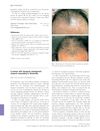
February 2007 in “British Journal of Dermatology” EF and PXE not closely related.
 November 2023 in “Deleted Journal”
 In this study, the researchers found no superiority of combining 308-nm excimer laser with intralesional corticosteroid over corticosteroid alone for treating frontal fibrosing alopecia, and reported side effects such as erythema and postinflammatory hyperpigmentation in both treatment groups.
 August 1995 in “Journal of The European Academy of Dermatology and Venereology”
 New therapy helps treat hair loss.