65 citations
,
March 2017 in “Experimental Dermatology” This review discusses the genetic and biological factors influencing hair curliness, revealing strong links to specific protein variations, and reports no new clinical results.
22 citations
,
October 1996 in “Dermatologic clinics” This review summarizes recent advances in understanding intermediate filament structure and their implications for pathological mutations and human diseases, but it reports no new experimental results.
17 citations
,
January 2015 in “Dermatology online journal” This report describes a patient experiencing hair repigmentation linked to adalimumab therapy, a TNF inhibitor, a phenomenon not previously associated with this class of drugs.
 6 citations
,
June 1981 in “PubMed”
6 citations
,
June 1981 in “PubMed” This article reviews previously reported cases of whisker hair in individuals who develop severe androgenic alopecia and offers a hypothesis concerning its eventual fate, without presenting new findings.
3 citations
,
January 2015 2 citations
,
January 2022 2 citations
,
January 1987 in “PubMed” This study reported three related cases of woolly hair syndrome transmitted as a dominant autosomal trait, characterized by fine, frizzy hair and general hair thinning.
1 citations
,
January 2020 1 citations
,
July 2017 in “Skin appendage disorders” A 9-year-old Hispanic girl has Uncombable Hair Syndrome, which may improve with age and biotin treatment.
June 2025 in “British Journal of Dermatology” This case study describes an uncommon variant of coudability hair in alopecia areata, where intermittent inflammatory processes result in alternating bands of lighter color and reduced hair shaft calibre.
April 2016 in “Journal of Investigative Dermatology” Mutations in the TSPEAR gene cause a new form of ectodermal dysplasia affecting hair and tooth development.
 January 2006 in “Seibutsu Butsuri”
 Curly and straight hair differ in how their internal fibers are arranged.
 44 citations
,
March 1991 in “International Journal of Dermatology”
44 citations
,
March 1991 in “International Journal of Dermatology” This article presents two cases of tinea capitis in postpubertal individuals highlighting the importance of early treatment to prevent scarring and permanent hair loss; it reports no new clinical results.
58 citations
,
November 1969 in “British Journal of Dermatology” This report describes two patients with ichthyosis linearis circumflexa exhibiting symptoms resembling Netherton's disease, noting multiple hair shaft defects and discussing a possible connection to aminoaciduria.
This study mapped the curly mutation in mice to a specific region on chromosome 11, identifying it as a candidate model for studying human genetic hair disorders.
1 citations
,
January 2025 in “International Journal of Cosmetic Science” In this study, researchers identified a three-step process underlying age-related curved hair from cyclical extension: surface lipid transfer, specific disulfide bond cleavage, and unraveling of α-helices into β-structures, which may inform care strategies to manage hair curvature.
38 citations
,
October 2001 in “British Journal of Dermatology” This study identified a new keratin, K6irs, as a potential histological marker for the inner root sheath of hair follicles in mice and humans, and as a candidate gene for hereditary hair defects.
27 citations
,
November 2007 in “Genomics” This study found that mutations in type I IRS keratin genes disrupt keratin protein complexes in mice, suggesting crucial roles for these genes in proper hair coat formation.
97 citations
,
March 2010 in “The American Journal of Human Genetics” A mutation in the KRT74 gene causes tightly curled hair.
 7 citations
,
February 1998 in “Polymer journal”
7 citations
,
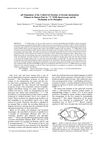
February 1998 in “Polymer journal” This study found that the stability of the coiled-coil structure in human hair keratin is maintained by ion-pairing and hydrophobic interactions, which are disrupted as pH approaches 7.0.
12 citations
,
October 2018 in “Biotechnology reports” In this study, researchers reported that the application of refolded human K31 keratin protein significantly improved diameter, mechanical strength, and smoothness of chemically damaged hair after a single treatment.
12 citations
,
March 2004 in “Journal of Investigative Dermatology”  40 citations
,
May 2016 in “Proceedings of the National Academy of Sciences of the United States of America”
40 citations
,
May 2016 in “Proceedings of the National Academy of Sciences of the United States of America” This study found that the mechanical stiffening of the human hair follicle along the first millimeter is linked to changes in the keratin network architecture and composition during keratinization.
2 citations
,
February 2021 in “FEBS open bio” In this study, transfection experiments showed that mutations in the K85 gene affect filament formation with K35, which may impact hair formation related to ectodermal dysplasia.
 1 citations
,
April 2020 in “Asian Journal of Medicine and Biomedicine”
1 citations
,
April 2020 in “Asian Journal of Medicine and Biomedicine” This article reports a case of hair tourniquet syndrome in a child's toe, successfully treated surgically, and emphasizes the need for healthcare providers to be aware for early detection and treatment.
2 citations
,
September 1996 in “Journal of Applied Polymer Science” This study found that treating hair with aqueous KCN converts disulfide bonds to monosulfide crosslinks, affecting the elasticity and crosslink distribution in hair microstructures.
 13 citations
,
April 2018 in “Scientific Reports”
13 citations
,
April 2018 in “Scientific Reports” In this study, genetic variants in the KRT25 and SP6 genes were found to be responsible for curly hair in horses, with the KRT25 variant also causing hypotrichosis due to an epistatic effect.
November 2001 in “PubMed” This research found that perming, combing, and stretching cause hair damage, leading to a significant reduction in keratin levels within a specific molecular weight range.
 September 2016 in “Journal of Dermatological Science”
 This study investigated the mechanism responsible for pili torti formation in Björnstad syndrome using a transmission electron microscope, but did not establish a definitive explanation.
46 citations
,
September 2007 in “Journal of Investigative Dermatology”