18 citations
,
January 2015 in “Experimental Dermatology” This study reports new monilethrix cases in Venezuela, the Netherlands, Belgium, and France, expanding the known mutational spectrum of the disorder with novel mutations in KRT81, KRT83, and KRT86 genes.
This study reports that melatonin influenced HaCaT cell proliferation, with high concentrations reducing DNA synthesis and low concentrations enhancing it after 24 hours.
 25 citations
,
May 1994 in “Journal of Investigative Dermatology”
25 citations
,
May 1994 in “Journal of Investigative Dermatology” This study identified a novel gene, hacl-1, that is specifically expressed in the hair follicles of ICR mouse skin and is associated with their active state.
11 citations
,
January 1977 in “Archives of dermatological research” Mouse tail skin has different keratinization near hair follicles and scales.
 2 citations
,
March 2019 in “Experimental Techniques in Urology & Nephrology”
2 citations
,
March 2019 in “Experimental Techniques in Urology & Nephrology” This article reviews the dermatologic conditions associated with hemodialysis, such as pruritus, xerosis cutis, and skin infections, and does not present new findings.
 10 citations
,
February 2013 in “British Journal of Dermatology”
10 citations
,
February 2013 in “British Journal of Dermatology” This study found that TRH modulates specific keratins in human scalp tissue, suggesting its potential influence on hair growth and the need for further exploration of neuroendocrine controls in keratin expression.
15 citations
,
June 2012 in “British Journal of Dermatology” This study identified a novel KRT86 mutation associated with autosomal dominant monilethrix, expanding understanding of its genetic basis beyond known motifs.
 6 citations
,
January 2014 in “Clinical hemorheology and microcirculation”
6 citations
,
January 2014 in “Clinical hemorheology and microcirculation” This report presents a case of hereditary elliptocytosis in a 37-year-old woman with iron deficiency anemia, identifying a high percentage of elliptocytes in her blood after treatment.
40 citations
,
September 2010 in “Journal of Biological Chemistry” This study found that keratin K80, structurally similar to hair keratins, is broadly expressed in various epithelial tissues and is involved in intermediate filament formation with multiple type I partners.
17 citations
,
November 1967 in “American Journal of Anatomy” This study observed that the catagen phase in hairless mice displayed a slower shortening of the mutant epithelial column, resulting in longer total follicle length and abnormalities in the connective tissue sheath and glassy membrane.
 36 citations
,
August 2011 in “Journal of dermatological science”
36 citations
,
August 2011 in “Journal of dermatological science” This article examines the role and composition of integral hair lipids in forming a protective barrier similar to the skin's epidermal lipid layer and reports no new findings about their effects.
441 citations
,
May 1996 in “Journal of Cell Science” This study found that keratin 19 may be a marker for skin stem cells, helping to characterize these cells in different conditions and potentially explaining variations in healing rates between children and adults.
24 citations
,
February 2002 in “The journal of investigative dermatology/Journal of investigative dermatology” In this study, researchers identified two new keratin-associated proteins, hKAP1.6 and hKAP1.7, in human hair follicles, contributing to understanding hair fiber differentiation.
October 2018 in “Deep Blue (University of Michigan)” This study found that matrix progenitor cell differentiation in hair growth has distinct early and late phases, and generated a mouse model to explore the hair follicle's role in harlequin ichthyosis.
 99 citations
,
July 2012 in “PLoS Genetics”
99 citations
,
July 2012 in “PLoS Genetics” This study identified a 69 bp deletion in the KRT75 gene as the cause of the frizzle feather trait in chickens, affecting feather curling.
19 citations
,
November 2016 in “Developmental Biology” 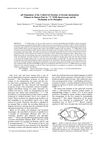 7 citations
,
February 1998 in “Polymer journal”
7 citations
,
February 1998 in “Polymer journal” This study found that the stability of the coiled-coil structure in human hair keratin is maintained by ion-pairing and hydrophobic interactions, which are disrupted as pH approaches 7.0.
 64 citations
,
January 2010 in “The FASEB Journal”
64 citations
,
January 2010 in “The FASEB Journal” This study found that prolactin is a key regulator of keratin expression in human hair follicles, enhancing specific keratin types and influencing epithelial stem cell-associated keratins.
 April 2023 in “Journal of Investigative Dermatology”
 In this study, topical inhibition of casein kinase 1 in mice was found to enhance melanocyte precursor migration and eumelanin production, suggesting potential applications for treating vitiligo and graying hair through KitL/c-Kit signaling pathway activation.
April 2009 in “The FASEB Journal” This study demonstrated that a keratin gel promotes nerve regeneration across critical defects in rabbit models, showing improved nerve conduction and muscle action potential compared to control treatments.
17 citations
,
September 2018 in “Matrix Biology” The researchers reported that mouse keratinocyte-specific deletion of laminin γ1 led to delayed coat pigmentation due to impaired melanocyte migration and differentiation, linked to altered laminin composition in the basement membrane.
63 citations
,
December 1998 in “Biochimica et Biophysica Acta (BBA) - Protein Structure and Molecular Enzymology” The study improved understanding of keratin fiber structure by showing consistent microfibril diameter but varying distances and electron density profiles.
 5 citations
,
October 2020 in “Experimental dermatology”
5 citations
,
October 2020 in “Experimental dermatology” This study reports that during late embryogenesis and early postnatal development, K79-expressing keratinocytes change and die independently of sebaceous glands to form the hair follicle opening, potentially influencing conditions like ingrown hairs or acne.
21 citations
,
January 1995 in “Molecular Biology Reports” This study identified a novel human type I hair keratin, hHa3-II, as an isoform of a previously described hHa3 keratin, with distinct sequence differences indicating separate gene encoding.
May 2026 in “Journal of Medicinal Food” This study found that orally administered hydrolyzed keratin peptide promoted hair growth and enhanced cellular proliferation and antioxidant capacity in mice and human cell models, suggesting its potential as a functional food ingredient for hair health.
1 citations
,
May 2025 in “Current Issues in Molecular Biology” This study found that Centipeda minima and brevilin A significantly reduced oxidative stress and inflammation in human dermal fibroblasts, suggesting their potential to protect against skin aging and inflammation.
7 citations
,
April 2004 in “International Journal of Dermatology” This report describes a case of epidermolytic hyperkeratosis in a newborn and her mother, both possessing a specific KRT1 gene mutation known to cause this skin disorder.

This study suggests that human hair keratin-based gradient hydrogels incorporating silver ions may serve as promising dermal templates for wound healing, demonstrating favorable mechanical properties, cell interaction, and antibacterial activity.
 3 citations
,
May 2019 in “Journal of Cosmetic Dermatology”
3 citations
,
May 2019 in “Journal of Cosmetic Dermatology” This study found that a 12-week supplementation with MePL, a solution of miliacin encapsulated within polar lipids, significantly reduced hair density in the telogen phase and improved scalp dryness and hair brightness in women with telogen effluvium.
 2 citations
,
December 2016 in “EMBO journal”
2 citations
,
December 2016 in “EMBO journal” This obituary honors Susan Lee Lindquist for her pioneering work in cellular protein folding and genetics, highlighting her significant contributions to science and mentorship in her nearly 40-year career.