March 2026 in “Pediatric Dermatology” This study observed that GPT-4o, a generative AI model, showed high concordance with human providers in automating image-based SALT scores for assessing alopecia areata, suggesting its potential in assisting clinical evaluations without additional training.
 January 2024 in “Applied Mathematics and Nonlinear Sciences”
 This study developed a mathematical model to explore the interactions between hair cycle dynamics and immune system activity in alopecia areata, providing insights into disease progression and potential targets for treatment by simulating immune response effects on hair follicles.
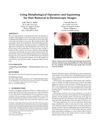
This study presents a new approach to automatically remove hair artifacts from dermoscopic images, which reportedly performed well compared to existing methods like DullRazor using the PH2 datasets.
5 citations
,
July 2014 in “Molecular Biology Reports”  4 citations
,
January 2015 in “Sen'i Gakkaishi”
4 citations
,
January 2015 in “Sen'i Gakkaishi” This study proposed a network model for the cross-linked structure of keratin-associated proteins in hair and wool fibers, suggesting notable differences between the two, potentially affecting hair fiber elasticity.
114 citations
,
July 2003 in “PubMed” This study found that KSR1 is necessary for v-Ha-ras-mediated skin tumor formation but not for MT-driven mammary cancer, indicating its potential as a therapeutic target in Ras/MAPK signaling-related tumors.
32 citations
,
October 1985 in “Annals of the New York Academy of Sciences” This review discusses the current understanding of genes coding for hair and avian keratins, highlighting gene structure and protein sequences, but reports no new experimental findings.
 5 citations
,
June 2023 in “Engineering Technology & Applied Science Research”
5 citations
,
June 2023 in “Engineering Technology & Applied Science Research” This study developed a new neural network model (AA-GAN-AB-MTEDeep) to enhance Alopecia Areata classification using synthetic scalp images, achieving an accuracy of 96.94%.
December 2023 in “Modern engineering and innovative technologies” This article explores the theoretical foundations of the ChromaLens Precision Mapping system for analyzing hair, but it does not present any new experimental findings.
29 citations
,
February 2001 in “Proceedings of the National Academy of Sciences” This study found that the HS III element in the K14 gene's regulatory sequence promotes gene expression in inner root sheath keratinocytes, highlighting cooperative interactions in keratinocyte-specific gene regulation.
 October 2024 in “Frontiers in Oncology”
 This review examines the potential of K18 as a diagnostic and prognostic marker in epithelial-derived tumors, highlighting its specific expression in tumor tissues and interaction with proteins involved in tumor progression, without reporting new clinical findings.
 May 2023 in “Indian journal of science and technology”
 This study found that an Attention-based Balanced Multi-Task Deep learning system achieved a 95.11% accuracy in classifying Alopecia Areata conditions using hair and scalp images, outperforming classical methods.
13 citations
,
February 2025 in “Nature Communications” In this study, a deep neural network model called regX was developed to prioritize driver regulators for cell state transitions by incorporating gene-level regulation and interactions, showing potential therapeutic targets in type 2 diabetes and hair follicle development when applied to single-cell multi-omics data.
This article proposes a methodology for selecting hair extension technology that aligns with natural hair structure and aesthetic goals, suggesting the best results are achieved by matching technique to hair's mechanical capacity.
March 1985 in “Journal of the American Academy of Dermatology” This research found that topical minoxidil may promote hair regrowth in alopecia areata by stimulating hair follicle epithelium and suppressing certain immune responses, with potential contributions from its vasodilatory effects.

This study introduced a new hair shading model that more accurately simulates light scattering on hair fibers, capturing effects not predicted by previous models.
22 citations
,
August 1999 in “Mechanisms of Development” This study identified two novel genes, pmg-1 and pmg-2, expressed in various skin and gland tissues and potentially involved in the differentiation of epithelial cells in epidermal appendages.
 2 citations
,
November 2019 in “Cancer reports”
2 citations
,
November 2019 in “Cancer reports” This study concluded that the Wnt signaling pathway does not significantly influence human keratoacanthoma development, but the overexpression of Sox9 suggests alternate signaling involvement.
 2 citations
,
November 2024 in “Journal of Nonlinear Science”
2 citations
,
November 2024 in “Journal of Nonlinear Science” In this study, researchers found that the shape of polygonal domains, such as squares and triangles, significantly impacts Turing pattern formation, with domain geometry affecting the stability and type of bifurcations observed in simulations.
18 citations
,
November 2005 in “European Journal of Cell Biology” Keratin gene clusters in humans and marsupials are similarly organized.
66 citations
,
June 2004 in “Biophysical Journal” Hard α-keratin in hair has a unique, nonordered structure, different from other fibers.
January 2000 in “Acta Academiae Medicine Militaris Tertiae” This study found that the distribution of hair keratin family proteins varies in normal scalp hair follicles, which may aid in identifying the origin of hair neoplasms.
1 citations
,
August 2013 in “Journal of Clinical Epidemiology” This narrative review discusses various epidemiological study designs, the importance of reliable bias assessment tools, and the implications of database use for hypothesis testing in different research areas; it reports no new results.
 9 citations
,
February 2005 in “The journal of investigative dermatology/Journal of investigative dermatology”
9 citations
,
February 2005 in “The journal of investigative dermatology/Journal of investigative dermatology” This review discusses the complexity and genetic organization of human keratin gene clusters and addresses the ongoing need for an updated unified naming system; it reports no new clinical results.
 3 citations
,
June 2022 in “European journal of human genetics”
3 citations
,
June 2022 in “European journal of human genetics” This study reports the first cases of recessive KRT17-related pachyonychia congenita involving all ectodermal derivatives in seven members of two consanguineous Pakistani families.
April 2023 in “Anatomy Physiology & Biochemistry International Journal” This study identified specific genetic variations associated with polycystic ovarian syndrome in Karnataka, which may help improve diagnosis and treatment.
5 citations
,
February 2022 in “Biophysical journal” This study developed a mathematical model indicating that the amino acid sequences of intermediate filament proteins, rather than flexibility differences, significantly impact assembly rates.
35 citations
,
June 2012 in “PloS one” This study suggests that Keratin 15 expression in stratified epithelia may be regulated by two distinct mechanisms involving PKC/AP-1 pathway for differentiation and FOXM1 for basal cells, challenging its reliability as a sole stem cell marker.
86 citations
,
April 2009 in “Journal of anatomy” This paper reviews the evolution of skin appendages and keratin-associated proteins among amniotes, proposing a model for their genetic divergence without new experimental results.