 6 citations
,
February 2019 in “Scientific reports”
6 citations
,
February 2019 in “Scientific reports” This study demonstrated that allopregnanolone administration caused significant scratching in atopic dermatitis mice, and ethanol-induced scratching may be linked to increased brain allopregnanolone levels.
5 citations
,
November 2023 in “Journal of Feline Medicine and Surgery” This case series reports on five cats who experienced moderate to severe skin reactions after receiving the frunevetmab injection, noting pruritus, alopecia, and ulcerations developing within days of treatment.
1 citations
,
January 2025 in “Journal of Cosmetic Dermatology” Maintaining a balanced scalp microbiome can help reduce itchiness.
1 citations
,
September 2024 in “Dermatological Reviews” In this systematic review, significant improvements in clinical severity, patient-reported outcomes, and quality of life were reported for dupilumab compared to placebo in patients with moderate-to-severe atopic dermatitis, prurigo nodularis, and alopecia areata, supporting its efficacy and safety for these dermatological conditions.
1 citations
,
July 2024 in “JAAD Case Reports” This study links scalp pruritus in lichen planopilaris and its variants to the inflammation-induced release of substance P and calcitonin gene-related peptide by sensory nerves around hair follicle inflammation sites.
1 citations
,
August 2021 in “Journal of Investigative Dermatology” ASLAN004 was safe and well-tolerated, supporting further development for treating certain diseases.
October 2025 in “Journal of Cosmetic Dermatology” In this study, researchers found that type A botulinum toxin injections can reduce hypertrophic scars effectively, though more high-quality studies are needed to confirm the precision and stability of these therapeutic effects.
July 2024 in “Journal of Investigative Dermatology” IL-13 protein is much higher in the skin of atopic dermatitis patients than in healthy skin.
 March 2023 in “JAAD case reports”
 In this study, researchers reported that conventional treatments for folliculitis decalvans, which include steroids and antibiotics, are often ineffective, with many patients experiencing frequent recurrences of this scarring scalp disorder.
January 2022 in “Clinical Cases in Dermatology” This article reviews the causes, characteristics, and treatment options for seborrheic dermatitis, discussing its prevalence in specific populations, without providing new research findings.

This study found that Botox® was most effective at a 25 U/ml concentration, while Dysport® and Neurobloc® were optimal at 100 U/ml for producing anhidrotic areas after injections.
 March 2022 in “IntechOpen eBooks”
 This chapter discusses the potential therapeutic applications of Botulinum toxin for various non-cosmetic skin conditions, such as acne, rosacea, and hyperhidrosis, highlighting case reports and some randomized controlled trials that indicate promise in alleviating discomfort, inflammation, and excessive sweating.
 March 2005 in “Journal of The American Academy of Dermatology”
 Mycophenolate mofetil improved skin condition in a man with nephrogenic fibrosing dermopathy.
 March 2005 in “Journal of The American Academy of Dermatology”
 Diphencyprone treatment protocols could be simplified as no harm occurred despite not fully following them.
 11 citations
,
October 2020 in “Sensors”
11 citations
,
October 2020 in “Sensors” This study found that photoacoustic imaging can effectively measure follicle density and angles, even when follicles are not visible to the eye, providing a promising alternative to traditional photographic examination.
 September 2024 in “Journal of the American Academy of Dermatology”
 This study found that among 100 Caucasian patients with androgenetic alopecia, dermatologists could discern hair loss at thresholds significantly lower than the previously cited 50% reduction, highlighting the importance of using objective trichometric measurements to improve detection and personalized treatment strategies.
 June 2026 in “Institutional Repositories DataBase (IRDB)”
 Crickets have genetically controlled hair plates that help them sense and move their antennae.
 1 citations
,
December 2024 in “Qeios”
1 citations
,
December 2024 in “Qeios” This study found that a five-dimensional model of personality perception from men's facial photographs better captures the complexity of face perception than the traditional two-dimensional Valence-Dominance model, highlighting overlaps with personality structures known from differential psychology.
 2 citations
,
September 2016 in “Springer eBooks”
2 citations
,
September 2016 in “Springer eBooks” This article discusses how the brain's neural circuits evaluate skin aging to judge social standing and suggests that people often attempt to deceive themselves and others about their true age.
63 citations
,
February 2010 in “Journal of Neurophysiology” This study observed that electrical stimulation of specific mechanoreceptive afferents in the orofacial region can evoke sensations consistent with their response properties, while others may require multiple afferents to access perceptual levels.
 April 2016 in “The journal of investigative dermatology/Journal of investigative dermatology”
 This study found that the occipital scalp had significantly higher epidermal nerve fiber density than the frontoparietal scalp, which may explain increased sensitivity in some patients.
 39 citations
,
July 2015 in “British Journal of Dermatology”
39 citations
,
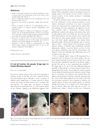
July 2015 in “British Journal of Dermatology” This article discusses the pseudo 'fringe sign' in frontal fibrosing alopecia, highlighting that it is not solely related to traction, and it reports no new clinical results.
 117 citations
,
March 2013 in “Journal of the European Academy of Dermatology and Venereology”
117 citations
,
March 2013 in “Journal of the European Academy of Dermatology and Venereology” This study reported that while no effective treatment exists for frontal fibrosing alopecia, oral 5-alpha-reductase inhibitors showed the most promise, inducing a good clinical response in 45% of patients.
 31 citations
,
April 2010 in “British journal of dermatology/British journal of dermatology, Supplement”
31 citations
,
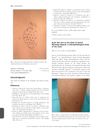
April 2010 in “British journal of dermatology/British journal of dermatology, Supplement” This report describes two patients with frontal fibrosing alopecia who developed acute hair loss on their limbs, revealing that the limb alopecia had similar histological features to scalp alopecia.
 27 citations
,
September 2009 in “British journal of nursing”
27 citations
,
September 2009 in “British journal of nursing” This article discusses the role of emollient therapy in managing atopic eczema and other dry skin conditions and reports no new clinical findings.
 17 citations
,
August 2001 in “Australasian journal of dermatology”
17 citations
,
August 2001 in “Australasian journal of dermatology” This case report describes a 50-year-old woman who developed drug-induced hepatitis after using spironolactone for androgenetic alopecia, with symptoms resolving upon discontinuation.
 6 citations
,
December 2008 in “Clinics in Dermatology”
6 citations
,
December 2008 in “Clinics in Dermatology” This study presents four cases of delusions of parasitosis and introduces escitalopram as a potential therapy, highlighting its fewer side effects compared to the commonly used pimozide.
 5 citations
,
July 2006 in “Contact dermatitis”
5 citations
,
July 2006 in “Contact dermatitis” This case report indicates that contact dermatitis on the face can result from using a bleaching ointment containing ammonium bisulfite during hair-dyeing.
 4 citations
,
July 2005 in “International Journal of Dermatology”
4 citations
,
July 2005 in “International Journal of Dermatology” This article does not contain an abstract and presents no new clinical findings, instead discussing prior cases and literature on infant alopecia universalis and the potential role of topical PUVA therapy.
 1 citations
,
October 2013 in “BMJ”
1 citations
,
October 2013 in “BMJ” This case study reports a man with rapid hair thinning, whitening, and sparse beard, linked to an increased proportion of hair follicles in catagen or telogen phase and peribulbar lymphocytic infiltrate.