 April 2023 in “JAAD international”
 This study observed that among a Moroccan population with frontal fibrosing alopecia, common comorbidities included lichen planus pigmentosus (36.8%), rosacea (28.9%), thyroid disorders (23.7%), and dyslipidemia (21.1%), highlighting potential relationships mediated by shared inflammatory or metabolic pathways.
 March 2023 in “International Journal of Biomedicine”
 This review discusses telogen effluvium, including its causes, symptoms, diagnostic methods, and treatment strategies, without presenting new clinical findings.
March 2023 in “Indian Journal of Rheumatology” This study identified three clusters of autoantibodies in children with systemic lupus erythematosus, each associated with specific clinical manifestations at diagnosis.

This study found a significant association between premature greying of hair and deficiencies in vitamin D, vitamin B12, hypothyroidism, and disrupted iron profiles, alongside lifestyle factors like stress and smoking.
 January 2023 in “Tehnika”
 This article discusses the challenges in diagnosing and treating autoimmune diseases, emphasizing the need for regenerative medicine approaches to address the root causes rather than just suppressing symptoms.
 August 2022 in “Our Dermatology Online”
 This study found that dermoscopy can help differentiate between types of diffuse alopecia in females, with yellow dots common in telogen effluvium and hair diameter diversity over 20% significant in female androgenetic alopecia.
 June 2022 in “Journal of the turkish academy of dermatology”
 This study from Turkey observed that the COVID-19 pandemic adversely affected dermatology patients, particularly by interrupting treatments and restricting outpatient visits.
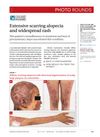 March 2022 in “The Journal of Family Practice”
 Following treatment plans is crucial to prevent worsening skin and hair conditions.
 December 2021 in “Journal of oncology research reviews & reports”
 This article discusses the treatment options for women with polycystic ovarian syndrome and notes the need for further research to improve patient management.
 November 2021 in “Permskij medicinskij žurnal”
 This study found that women with menstrual dysfunction showed higher rates of magnesium, iron, and vitamin D deficiencies compared to women with normal menstrual function.
 August 2021 in “Journal of medical science and clinical research”
 This case report describes an 11-month-old infant with Biotinidase deficiency who exhibited multifocal seizures, neuroregression, alopecia, and skin issues, highlighting prompt diagnosis and the dramatic clinical response to biotin treatment.
August 2021 in “Journal of Pakistan Association of Dermatologists” This study found that cutaneous manifestations in patients undergoing hemodialysis are common and often worsen with longer treatment duration.
 June 2021 in “International Journal of Research in Medical Sciences & Technology”
 This article reviews various causes and treatments for alopecia, including nutritional deficiencies, stress, and hormonal changes, and reports no new clinical results.
 May 2021 in “Біомедична інженерія і технологія”
 This review discusses the potential of the stromal-vascular fraction from adipose tissue for regenerative medicine but reports no clinical outcomes; the authors highlight the need for official protocols and regulations.
 March 2021 in “CRC Press eBooks”
 This review discusses the characteristics and diagnostic methods of androgenetic alopecia and reports no new clinical results; it highlights trichoscopy as a key tool, replacing scalp biopsies.
 January 2021 in “Journal of Allergy and Therapy”
 This article reviews the phases of hair growth and differences between androgenetic alopecia and telogen effluvium but provides no new clinical findings on Electric Follicle Stimulation.
 September 2020 in “Osmangazi tıp dergisi”
 This study found that vitamin D, vitamin B12, and iron deficiencies, along with thyroid dysfunction, may be associated with telogen effluvium.
 September 2019 in “Journal of Investigative Dermatology”
 This qualitative study found that healthcare professionals view psychosocial needs as a major reason for offering therapeutic education and self-management support for psoriasis, but efficacy remains uncertain.
 September 2019 in “Journal of Investigative Dermatology”
 This study found that a history of smoking significantly predicted a more refractory course of palmoplantar pustulosis, with associated comorbidities often including hypertension, type 2 diabetes mellitus, and thyroid diseases.
 July 2019 in “Acta Scientiae Veterinariae”
 This case report describes a Canadian Husky dog with sertolioma that exhibited dermatological symptoms and aggressive behavior, both of which improved significantly after surgery.
June 2019 in “Kufa journal for veterinary medical sciences” This study found that vitamin C deficiency in neonatal dairy calves is closely associated with skin problems like dermatosis, but treatment with vitamin C led to improvements.
May 2019 in “Journal of Evidence Based Medicine and Healthcare” In this study, 1.9% of patients at a dermatology outpatient department were diagnosed with alopecia areata, with the most common affected age group being 20-40 years.
February 2019 in “Veterinarski glasnik” Guinea pigs' skin issues in the lumbar area may be caused by dermatological problems and need proper care.
January 2019 in “Zenodo (CERN European Organization for Nuclear Research)” In this study, chronic telogen effluvium and female pattern hair loss were the most common types of non-scarring diffuse hair loss among Indian women aged 15-45, with anemia frequently present across cases.
 January 2019 in “SAGE Open Medical Case Reports”
 This paper reports a rare case where AL amyloidosis presented as isolated scalp alopecia, underscoring the importance of considering systemic amyloidosis in the differential diagnosis of alopecia.
 November 2018 in “Journal of investigative dermatology, venereology and cosmetology”
 This study found that Biofield Energy Healing significantly increased the proliferation of human hair follicle dermal papilla cells in vitro, suggesting it may promote hair growth.
August 2018 in “Ayurline: IJ-RIM” This review discusses the role of diet and lifestyle in managing alopecia and reports no new clinical results.
 April 2018 in “Journal of Investigative Dermatology”
 This study found that BMP signaling is involved in regulating melanogenesis, pigment transfer, and melanocyte migration, contributing to our understanding of skin pigmentation mechanisms.
 April 2018 in “The journal of investigative dermatology/Journal of investigative dermatology”
 This study suggests that mitochondrial dysfunction might contribute to the pathogenesis of Lichen planopilaris by triggering a metabolic shift that leads to chronic inflammation and hair follicle damage.
 April 2018 in “Assiut Veterinary Medical Journal/Maǧallaẗ Asyūṭ al-ṭibiyyaẗ al-baytariyyaẗ”
 This study found that fecal zinc concentration can serve as a biomarker for early diagnosis of zinc deficiency in lambs, complementing serum zinc evaluations.