April 2019 in “Journal of Investigative Dermatology” This study observed that simvastatin promoted hair regrowth in a mouse model of alopecia areata by reducing inflammatory markers and T cell proliferation, partly through disruption of isoprenoid metabolite production.
17 citations
,
July 2018 in “Environmental and Experimental Botany” The researchers reported that silencing the NtNCED3-2 gene in tobacco reduced ABA content and drought tolerance, inhibited root and leaf development, and decreased photosynthetic ability due to altered isoprenoid metabolism.
3 citations
,
November 2022 in “Frontiers in Plant Science” This study found that microwave-assisted extraction significantly increased the yield of secondary metabolites, including phenolic and flavonoid content, from Nardostachys jatamansi, enhancing its anti-Alzheimer's potential compared to conventional extraction methods.
July 2025 in “Food Safety and Health” This study used metabolomics to identify distinctive metabolic and phenolic profiles in American ginseng (Panax quinquefolius) from various regions, revealing specific biomarkers that can help differentiate between ginseng from Northeast China, Shandong, and the United States.
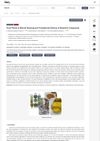
This review highlights the potential of plant-derived natural compounds as biocompatible and biodegradable materials in dermal and transdermal delivery systems, emphasizing their unexplored benefits and detailing recent advances in isolation techniques and drug delivery technologies.
26 citations
,
June 2016 in “Frontiers in Plant Science” This study describes a method to isolate and analyze young and mature type VI trichomes from wild tomato species using autofluorescence-based cell sorting.
 August 2025 in “Current Botany”
 This study suggests that Acrotrema arnottianum, a herb used in traditional medicine, contains biologically active metabolites like squalene and α-Tocopherol. It showed antibacterial effects against Staphylococcus aureus and antifungal properties against Candida albicans, while demonstrating antioxidant activity.
55 citations
,
April 2022 in “Frontiers in Immunology” This review examines the role of cholesterol metabolism in coronavirus infections, discussing its potential as a target for antiviral strategies and a marker for monitoring infection status, but presents no new results.
 August 2022 in “International journal of research in pharmacy and chemistry”
 This review summarizes the chemical composition and pharmacological properties of Teak (Tectona grandis) but presents no new research findings, emphasizing its use in traditional medicine and therapeutic potentials.
 6 citations
,
April 2023 in “Frontiers in plant science”
6 citations
,
April 2023 in “Frontiers in plant science” In this study, NREs from lentil root nodules, specifically Serratia plymuthica 33GS and Serratia sp. R6, significantly enhanced lentil growth, altered root exudation, and modulated rhizospheric microbial communities in a greenhouse setting.
 5 citations
,
March 2024 in “Acta Scientiarum Polonorum Technologia Alimentaria”
5 citations
,
March 2024 in “Acta Scientiarum Polonorum Technologia Alimentaria” This study synthesized existing research on 11 tropical seed varieties, underscoring their potential in food, pharmaceutical, and agricultural industries due to their phytochemicals and nutrients, such as phenolics and vitamins, which could reduce waste and support sustainable practices.
 3 citations
,
January 2017 in “Revista chilena de nutrición”
3 citations
,
January 2017 in “Revista chilena de nutrición” This review highlights that several clinical and epidemiological studies link a diet high in terpenoid compounds with a decreased risk of prostate cancer, supporting the potential use of terpenoids as therapeutic ingredients in treating this disease.
 January 2020 in “bioRxiv (Cold Spring Harbor Laboratory)”
 This study found that the ethyl acetate extract of Semecarpus anacardium leaves demonstrated cytotoxicity against MCF-7 cancer cells and induced apoptosis, suggesting potential as a cancer treatment with fewer side effects.
 24 citations
,
October 2008 in “International Braz J Urol”
24 citations
,
October 2008 in “International Braz J Urol” In this study, short-term treatment with lovastatin showed no effect on symptom severity, prostate volume, or PSA levels in men with prostatic enlargement from presumed benign prostatic hyperplasia.
 10 citations
,
October 2018 in “Plant Biotechnology”
10 citations
,
October 2018 in “Plant Biotechnology” This study identified two cytochrome P450 enzymes in Avicennia marina leaves that may contribute to the biosynthesis of triterpenoids, potentially responsible for the plant's medicinal properties.

This chapter explores the potential of phytochemicals in modulating human endocrine function, emphasizing the growing interest in plant-derived alternatives to synthetic medications for managing metabolic and hormonal disorders often linked to chemical exposures and lifestyle factors.
 83 citations
,
June 2018 in “Frontiers in immunology”
83 citations
,
June 2018 in “Frontiers in immunology” This review discusses the roles of αβ and γδ T cells in skin health and disease and reports no new clinical results; the authors highlight potential therapeutic developments.
 193 citations
,
February 2015 in “Nature Communications”
193 citations
,
February 2015 in “Nature Communications” Fungi-produced compounds can change plant root growth.
 55 citations
,
November 2018 in “American journal of human genetics”
55 citations
,
November 2018 in “American journal of human genetics” This study identified five mutations in the gene LSS in individuals with unexplained hypotrichosis simplex, highlighting a potential role of mislocalized LSS proteins in disrupting hair follicle biology.
 31 citations
,
January 1981 in “Pharmacology & Therapeutics”
31 citations
,
January 1981 in “Pharmacology & Therapeutics” In this study, 13-cis-5S*,8S*-epidioxy-5,8-dihydroretinoic acid was found to be significantly more cytotoxic to cancer cell lines than other retinoic acid analogs evaluated.
 15 citations
,
September 2018 in “Indian Research Journal of Pharmacy and Science”
15 citations
,
September 2018 in “Indian Research Journal of Pharmacy and Science” This article reviews the historical and therapeutic aspects of aromatherapy, discussing its effects on psychological and physical well-being but providing no new clinical findings.
 3 citations
,
March 2021 in “International journal of pharmaceutical sciences review and research”
3 citations
,
March 2021 in “International journal of pharmaceutical sciences review and research” This review discusses the chemical constituents and diverse pharmacological activities of Glycyrrhiza glabra (liquorice) but reports no new clinical results, emphasizing its potential for developing new therapeutic formulations.
 September 2025 in “Journal of Phytonanotechnology and Pharmaceutical Sciences”
 This comprehensive review reports on the therapeutic potential and bioactive components of licorice (Glycyrrhiza glabra Linn), highlighting its diverse pharmacological properties and health benefits but also noting associated toxicity and adverse effects in medicinal and food applications.
 April 2025 in “International Journal of Ayurvedic Medicine”
 This review reports the potential therapeutic effects of Semecarpus anacardium Linn. (Bhallataka), noting its compounds like anacardic acid may have anti-inflammatory, antioxidant, and anticancer properties, but emphasizes that further research is necessary to confirm these effects and determine safety due to inconsistent study methods.
 January 2024 in “International Research Journal Of Modernization In Engineering Technology And Science”
 This review analyzes various studies indicating that liquorice may offer dermatological benefits due to its anti-inflammatory, antioxidant, and antimicrobial properties, potentially aiding in acne, eczema, dandruff, skin pigmentation, collagen synthesis, and hair growth.
 46 citations
,
September 2014 in “Steroids”
46 citations
,
September 2014 in “Steroids” This review suggests that brassinosteroids may have similar biological activities in both plants and other organisms, prompting further exploration of steroid regulation mechanisms across different life forms.
 8 citations
,
July 2024 in “PLoS ONE”
8 citations
,
July 2024 in “PLoS ONE” In a comparative genomic study, researchers observed significant genetic differences among the three chemical races of the alga Botryococcus braunii, leading them to propose reclassifying these races as distinct species based on their unique genomic characteristics.
 September 2021 in “International Journal of Biomedicine”
 This study found that SNPs in the MVK, ARPC1B, and CA2 genes may indicate a genetic predisposition for severe acne related to steroidogenesis.

This study found that proretinal nanoparticles, applied topically, are safe and effective for penetration into hair follicles, enhancing retinoid biological activity in the skin while reducing irritation compared to conventional retinal formulations.
 125 citations
,
May 2019 in “Phytomedicine”
125 citations
,
May 2019 in “Phytomedicine” This review discusses the historical development, mechanisms of action, and potential new clinical applications of the drug cepharanthine, highlighting its multi-faceted pharmacological properties; it reports no new clinical results.